
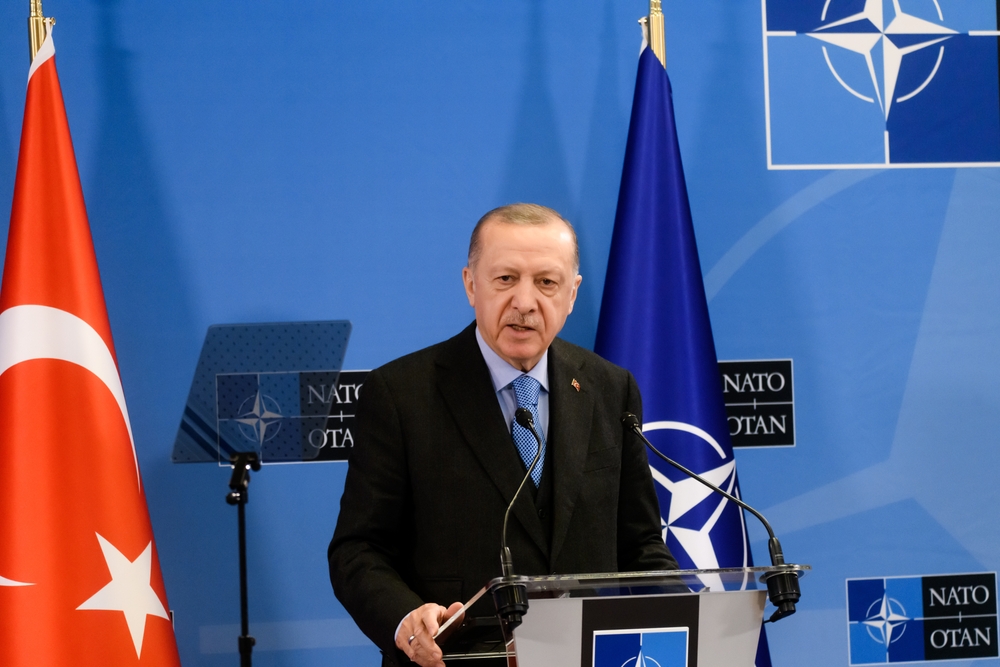
The landscape of Turkish foreign policy is undergoing a notable transformation aimed at enhancing strategic autonomy. Ankara’s latest defense pact with key players in the Middle East signals its intent to construct a security framework that aligns with its national interests, while asserting itself as a pivotal player on the global stage.
Understanding the Mecca Defense Agreement
On August 7, 2026, Turkey, Saudi Arabia, and Pakistan formalized their mutual defense commitments through the Mecca Defense Agreement. This trilateral pact is comparable to NATO’s Article 5, asserting that an armed attack on one signatory is perceived as an attack on all. Turkish Foreign Minister Hakan Fidan has emphasized that this defense mechanism isn’t aimed at Iran or any other specific nation, thus framing it as a cooperative rather than a confrontational arrangement. President Recep Tayyip Erdoğan has hinted that this framework could potentially include other nations, such as Egypt, indicating plans for future expansion.
This agreement is a testament to Turkey’s evolving posture from mere strategic autonomy to a structured security architecture. Through the establishment of institutional features, such as a ministerial committee and a permanent secretariat, the Mecca agreement sets the stage for enduring defense collaboration among the parties involved. The primary goal is not only to provide a collective security framework but also to enhance regional stability amidst ongoing geopolitical tensions.
The Implications for NATO and the West
Turkey’s dual engagement—remaining a NATO member while building a security network outside the Alliance—poses significant challenges for NATO’s cohesion. The question arises: Will Turkey prioritize its commitments to NATO, or will its new alliances dictate its course of action in times of crisis? As this institutional framework solidifies, NATO must assess how it will adapt to an ally that is simultaneously forming a parallel security architecture.
Turkey’s previous acquisition of the Russian S-400 missile system serves as a precursor to current dynamics. The fallout from that transaction illuminated the complexities between NATO membership and individual state autonomy. Unlike procurement issues, security commitments like those established in the Mecca agreement are inherently more difficult to unwind, creating a new layer of strategic implications for NATO and its member states.
Turkey’s Broader Strategic Vision
The alliances formed through the Mecca agreement are underpinned by the existing defense relationships Turkey has cultivated in the region. The trilateral framework builds upon previously established arrangements, notably between Saudi Arabia and Pakistan. With Turkey contributing advanced military capabilities and defense technology, this partnership reflects not only military interests but also a comprehensive approach to regional stability.
Furthermore, Turkey’s emphasis on Islamic solidarity within this framework must be contextualized. While it provides a powerful political narrative, the core substance of these relationships—security cooperation, military technology exchange, and strategic deterrence—will ultimately define the partnership’s resilience in times of geopolitical tension. The durability of these alliances will hinge on the alignment of mutual interests in the face of real crises.
The Path Ahead for European Security
As Turkey expands its security network beyond NATO, European nations must reassess their perceptions of Ankara’s role. The Mecca agreement highlights a shift towards a fluid security environment, characterized by overlapping partnerships among regional powers. Turkey exemplifies a model where a nation can navigate both Western and regional alliances simultaneously, a paradigm that may complicate traditional security frameworks.
The implications of the Mecca agreement extend beyond Turkey, calling for a renewed evaluation of how European and NATO members perceive commitment and cooperation in a multi-faceted security landscape. The crux of the matter remains whether NATO is prepared to accommodate an ally that increasingly finds its voice in external partnerships. The challenge now is to maintain coherence within the Alliance while recognizing the growing complexity of Turkey’s strategic ambitions.