
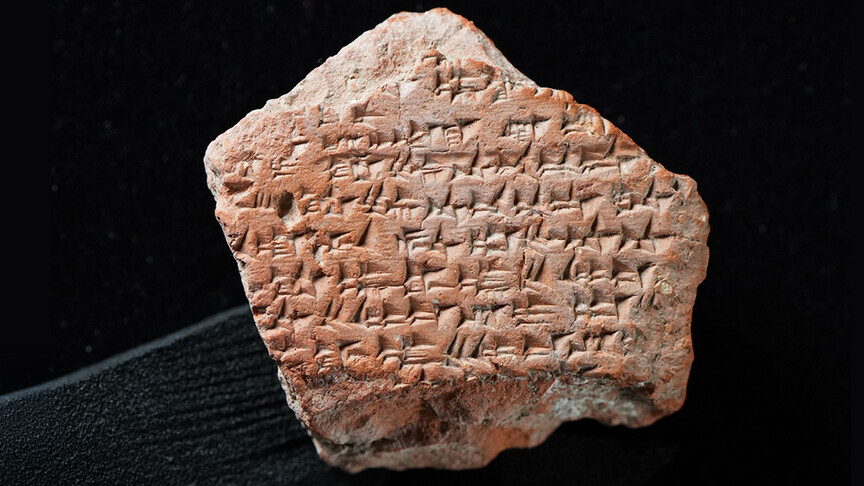
A remarkable archaeological discovery has emerged from Hattusa, the ancient capital of the Hittite Empire located in central Türkiye. A cuneiform tablet fragment identified as part of the Kadesh Peace Treaty has been uncovered, as announced by Culture and Tourism Minister Mehmet Nuri Ersoy. This significant find underscores the historical significance of peace-related documents from ancient civilizations.
Uncovering the Past: A Fragment of Peace
During recent excavations at Buyukkale, an area of Hattusa, archaeologists unearthed a fragment that contains provisions related to the treatment of individuals seeking refuge after fleeing their homes. Minister Ersoy shared that this piece of history reflects the enduring legacy of Anatolia as a hub for peace and diplomacy. He emphasizes the powerful messages inherent in ancient texts, especially as they resonate with contemporary issues concerning safety and human dignity.
The specific lines inscribed on the tablet refer to displaced individuals fleeing the territories of Egypt and the Hittite kingdom, known as Hatti. The discovery showcases the concern for humanitarian treatment and the protection of housing, themes that remain relevant through centuries. “We have found traces of peace dating back thousands of years in the soil of Anatolia,” Ersoy noted, highlighting the ongoing relevance of such historical documents.
A Year of Examination and Analysis
The newly discovered fragment was recovered near Building E at Buyukkale and spent nearly a year undergoing scientific analysis. Scholars confirmed its connection to the Kadesh Peace Treaty, which marked the end of hostilities between Hittite King Hattusili III and Egyptian King Ramesses II. This treaty, stemming from the aftermath of the Battle of Kadesh in the 13th century BC, is regarded as one of the earliest known written peace agreements.
Despite the fragment’s incomplete state, the readable sections pertain to Articles 12 to 20 of the treaty, discussing the responsibilities of both nations towards individuals seeking asylum from violence. This nuanced understanding of hospitality and protection in ancient diplomacy provides valuable insights into the humanitarian principles that have pervaded history.
Adding to the Legacy of Hattusa
The Kadesh Peace Treaty boasts two versions: the Egyptian account inscribed in hieroglyphs and the Akkadian replica etched on clay tablets found in Hattusa. Previous excavations from 1906 to 1912 unveiled several portions of this treaty, and Hattusa, now a UNESCO World Heritage Site, stands as a testament to the Hittite Empire’s historical significance. This site played a crucial role in shaping the political landscape of Anatolia during the second millennium BC.
The newly discovered fragment will not only enhance the existing collection of treaty pieces housed in various global museums but will also aid in reconstructing the complete narrative of the Kadesh Peace Treaty. Ongoing excavations at Buyukkale may yet reveal more fragments, further enriching our understanding of ancient diplomacy and humanitarianism.
In conclusion, this discovery reiterates the importance of peace as a timeless endeavor, as encapsulated in the words of Minister Ersoy, who reflects on the responsibilities humanity holds today. With a call for a future where all individuals, especially marginalized communities, can experience safety and tranquility, the ancient wisdom inscribed in the clay of Hattusa offers a poignant reminder of enduring values.