
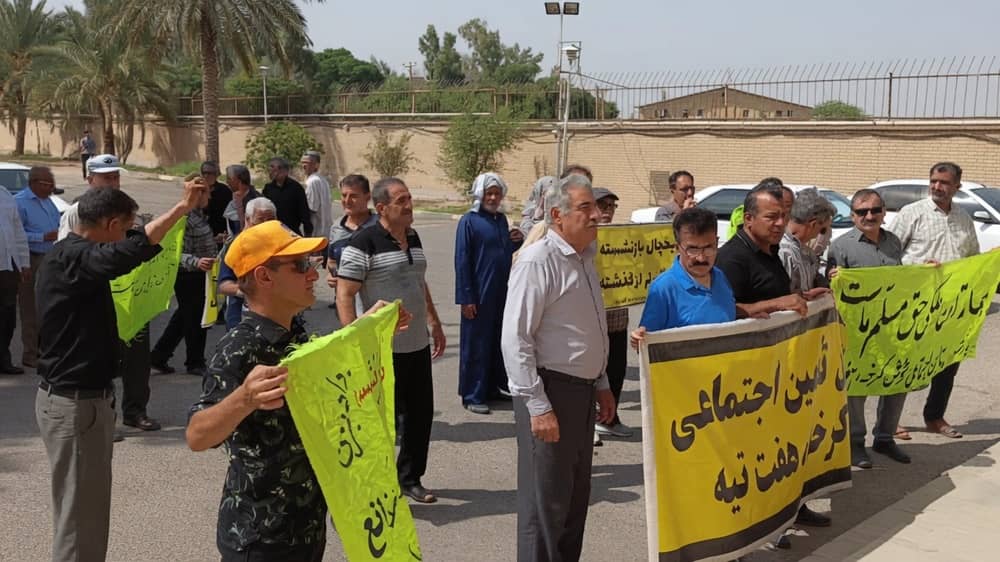
The ongoing economic crisis in Iran has escalated, driving public unrest across multiple cities. On September 21, 2026, retirees took to the streets in at least six locations, expressing their frustrations over the plunging value of the rial and deteriorating living conditions. This situation underscores the growing discontent among citizens, who are increasingly vocal about their economic hardships.
The Rising Wave of Protests
In various cities such as Rasht, Isfahan, Kermanshah, Tabriz, Sanandaj, and Bijar, Social Security retirees held demonstrations, as indicated by footage shared on social media. The protesters voiced their grievances with chants like “Our wages are in rials, our expenses are in dollars,” highlighting the stark contrast between their stagnant incomes and soaring inflation. Additionally, they demanded the release of imprisoned workers and teachers, suggesting that their economic dissatisfaction is intertwined with broader political concerns.
The currency crisis serves as a stark backdrop to this unrest. According to reports, the free-market dollar surged to approximately 231,000 tomans on September 21—up by 20% from the previous month. Families are particularly affected as they prepare for the new school year, with basic educational supplies costing millions of tomans. This financial strain has left nearly one million children outside the formal education system, further compounding the challenges faced by Iranian families.
Alarming News from State Media
In tandem with public unrest, Iranian state media expressed escalating alarm about the country’s economic situation. On September 21, **Hamshahri** reiterated a warning that recent events—such as the revocation of Bank Mellat’s license in Istanbul and restrictions on gas revenue—are indicative of a coordinated economic threat. The report noted that Iran’s ability to access funds is becoming increasingly limited, which raises concerns about the regime’s financial sustainability.
Moreover, another report revealed that around 400 containers of Iranian goods exported to the United Arab Emirates were returned, adding to the mounting disruption in trade. Although no official reasons were given for these returns, it reflects the broader difficulties Iranian exporters face, particularly at a time when the regime is seeking alternative trade routes to withstand external sanctions.
Enhanced Security Measures and Mobilization
Against this backdrop of growing civil unrest, Iranian authorities are expanding their security measures, particularly through the mobilization of Basij forces across the country. On September 21, the **IRNA** reported plans for mass assemblies of Basij units in various provinces. These initiatives demonstrate the regime’s increasing concern that economic hardships could lead to widespread social unrest, prompting a preemptive security response.
The geographical scope of these mobilizations is noteworthy. What initially began as concentrated events in Tehran is transforming into a more extensive campaign reaching various regions. This expansion signals the government’s heightened focus on educational institutions, perceived as potential hotbeds for dissent, as students return to school.
The Intersection of Economic Challenges and Public Sentiment
Recent developments illustrate a troubling pattern: widespread protests by retirees, a plummeting currency, elevated living costs, and a narrowing economic landscape as acknowledged by state media. The Iranian government is responding to these issues not merely as economic challenges but as existential security threats, which has led to an increase in organized Basij mobilizations.
In hindsight, Iran’s history of protest waves—from 2017 to 2026—highlights the volatility of public sentiment, particularly when economic grievances resonate within broader societal issues. As the situation unfolds, the convergence of deteriorating living conditions and a tightening economic grip may spark renewed political unrest, compelling the regime to adopt increasingly stringent security measures. The stakes are high as economic discontent could once again evolve into a significant challenge to the existing political order in Iran.