
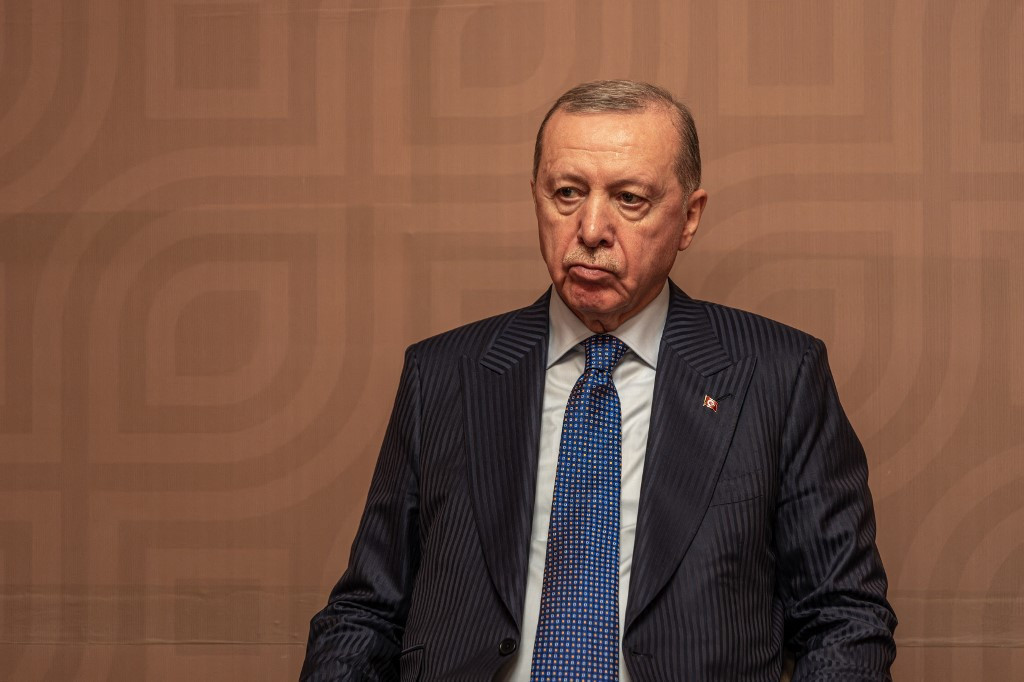
Turkish President Recep Tayyip Erdogan has recently advocated for significant reforms to the United Nations Security Council (UNSC), suggesting the elimination of veto powers held by its five permanent members. Erdogan contends that the current setup reflects outdated structures which fail to address the complexities of contemporary global issues. He shared his insights in an opinion piece ahead of the UN General Assembly meeting in New York, highlighting the pressing need for adaptation in global decision-making.
Need for Change in Global Governance
Erdogan cited recent global challenges—such as pandemics, energy crises, and regional conflicts—as evidence that allowing just a few nations to dictate the resolution of international crises is no longer viable. He emphasized, “The adaptation of global decision-making mechanisms to today’s circumstances can no longer be postponed.” The current UNSC, established in 1945, comprises five permanent members—China, France, Russia, the United Kingdom, and the United States—each equipped with veto power. Originally, these nations were given permanent status due to their pivotal roles in founding the UN and maintaining global peace. However, Erdogan argues that simply adding new permanent members would not resolve the core issue of power concentration.
Instead, he proposes a model where members of the Security Council are elected for fixed terms by the General Assembly. Under this system, re-election would require gaining majority support, effectively democratizing the decision-making process. Erdogan’s vision involves strengthening the General Assembly’s authority and ensuring that the Security Council remains accountable to it. His repeated mantra, “The world is bigger than five,” encapsulates this call for a more inclusive and representative global governance structure.
Longstanding Discussions on Reform
Calls for reforming the UNSC are not new. In September 2024, UN member states adopted the “Pact for the Future,” which committed to making the Security Council more inclusive and representative. The agreement highlighted Africa’s underrepresentation as a significant concern and outlined the necessity for ongoing negotiations regarding the council’s composition and the future of the veto power. Despite these discussions, substantial changes to the council’s structure have yet to materialize.
The reform process remains heavily focused on critical questions, including the ideal number of council members, which regions should gain representation, and the fate of the veto. The complexity of these discussions underscores the challenges of modernizing an institution that has remained largely unchanged since its inception.
Impact of the Veto Power
The veto power significantly impacts the functioning of the Security Council, enabling each permanent member to block any resolution, even those with widespread support. For instance, Russia exercised its veto in March 2024 to block a resolution aimed at extending the mandate of a UN panel overseeing North Korea’s nuclear activities. This capability allows a small group of nations to determine whether the UN can effectively respond to international crises.
Erdogan argues that preserving the current system only perpetuates outdated hierarchies within global governance. He believes the rapid developments of the past 25 years demonstrate that no balance of power is permanent, nor should any system remain static. His administration is pledging to promote efforts that abolish the veto power, enhance the authority of non-permanent council members, and bolster the General Assembly’s role in critical international decisions.
In conclusion, Erdogan’s call for reform resonates with a broader demand for a more equitable global governance framework. As global challenges grow increasingly complex, the need for a responsive and representative UN Security Council becomes ever more critical. Achieving significant reform may require widespread international support and a collective will to envision a new order that reflects the realities of the 21st century.