
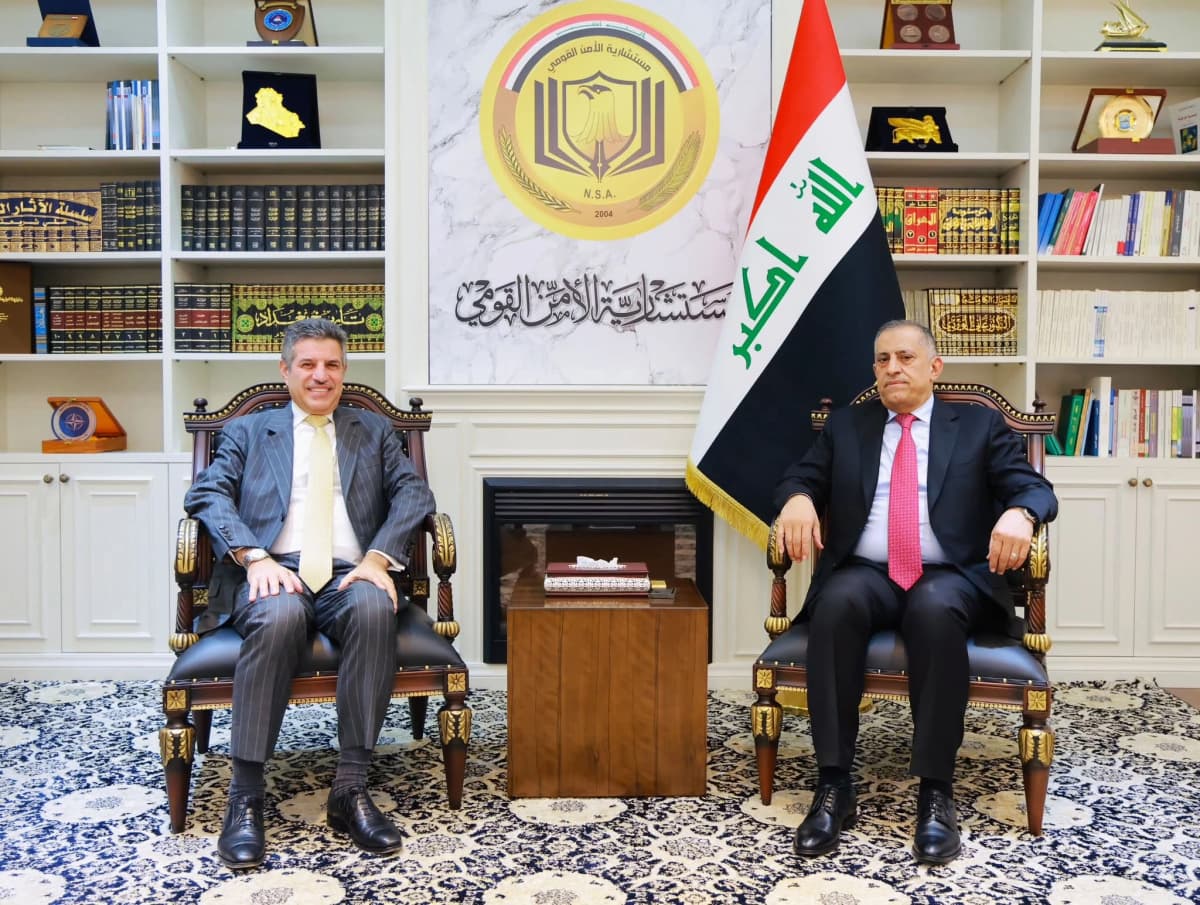
In recent discussions in Erbil, the Iraqi National Security Advisor, Qasim al-Aboudi, met with U.S. Chargé d’Affaires Steven Fagin to address crucial topics concerning Iraq’s security landscape. As the deadline set by the Iraqi government to disarm various armed factions approaches, this dialogue underscores the complexities of maintaining regional stability and the balance of power.
Current Context of Armed Factions in Iraq
The talks took place amidst increasing pressure on the Iraqi leadership to rein in armed groups as part of a broader push for enhanced security control. Prime Minister Ali al-Zaidi has been vocal about his administration’s commitment to restricting arms to state-sanctioned bodies. His government aims to combat corruption and foster a conducive environment for investment, all while ensuring a comprehensive approach to security reforms.
Al-Aboudi highlighted Iraq’s dedication to achieving a balance in its relationships with neighboring countries, which is pivotal for long-term stability. He reiterated the urgency to implement measures against the monopolization of weaponry by non-state actors. As the deadline for disarmament looms, the government faces the challenge of convincing varied factions to comply with these directives.
Challenges in Disarmament Efforts
Despite some factions expressing willingness to disarm, others, such as Kataib Hezbollah and Harakat al-Nujaba, have firmly rejected such demands. These groups have significant political clout and followings, making it difficult for the government to enforce compliance effectively. An influential Iraqi politician, Izzat Shabandar, noted that the September 30 deadline is flexible, indicating that the government might not achieve comprehensive disarmament by that date.
The U.S. has also emphasized the importance of dismantling terrorist groups operating within Iraq’s borders. Recent conversations between U.S. officials and the Iraqi leadership have centered on regional security threats posed by these militias. The discussions emphasize the need for Iraq to fully exercise its sovereignty and curtail any external aggression emanating from its territory.
The Role of International Relations
Following a significant meeting between Prime Minister al-Zaidi and U.S. State Secretary Marco Rubio, both sides affirmed their shared interest in pursuing measures that prevent attacks from militant groups. Understanding that regional dynamics greatly influence Iraq’s internal stability, the Iraqi government aims to develop diplomatic channels that can facilitate peace and security.
As the situation evolves, ongoing dialogues are critical to establishing a framework for cooperation between the Iraqi leadership and armed groups. The outcomes of these discussions will not only influence Iraq’s national security strategy but also shape the future of its sovereignty in a region marked by persistent instability.
In conclusion, Iraq’s path toward disarmament involves navigating complex relationships among various factions and addressing ongoing security concerns. The government’s ability to enforce arms restrictions while maintaining diplomatic relations with regional players will be crucial in establishing a secure and stable nation. The upcoming months may prove pivotal as pressures mount for compliance and the realization of comprehensive security reforms.