
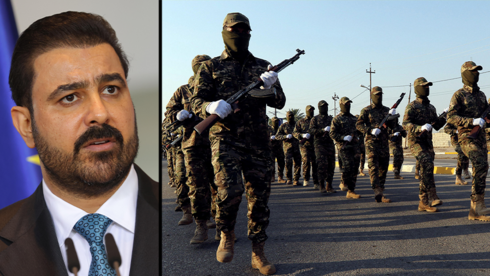
The deadline for the disarmament of Iraqi militias, originally scheduled for June, was expected to coincide with the culmination of the U.S.-led coalition’s mission in Iraq. The Iraqi government believed that the withdrawal of American forces would effectively negate the militias’ historical rationale for retaining arms outside the purview of state control. However, as the September 30 deadline approaches, many armed factions remain defiant, with groups like Harakat al-Nujaba and Kataib Hezbollah openly rejecting government mandates.
Militia Resistance and Government Responses
Nujaba’s spokesperson, Hussein Ali al-Mousawi, articulated the group’s stance last month, asserting, “We will not give up our weapons.” He claimed that attempts to monopolize weaponry were unjustly targeted at the resistance factions and motivated by dictate from American and Israeli authorities. This perspective fundamentally questions Baghdad’s assumption that the withdrawal of foreign troops will nullify the justification for maintaining armed militia groups. For Nujaba, the remnants of American influence persist, even post-withdrawal.
Iraqi Prime Minister Ali al-Zaidi recently communicated an updated timeline for disarmament to The New York Times, pushing the target date to June 30, 2027. This new strategy entails presenting a detailed schedule by September 30, where the initial phase would consist of a 90-day truce during which militias would refrain from attacking, provided they receive assurances that U.S. forces will not engage them. Subsequently, the groups would start relinquishing their arms, theoretically completing the process by mid-2027.
Although al-Zaidi announced this revised plan, doubts were already emerging among Iraqi officials about the feasibility of the September 30 completion. Qasim al-Araji, a senior advisor to the Prime Minister, stated that the committee handling the disarmament wouldn’t be bound by a strict deadline. Some militia factions have expressed a willingness to place their arms under government control or limit their activities to politics; yet, the most formidable groups aligned with Tehran persistently oppose disarmament or have set unattainable conditions.
Demands and Strategic Challenges
Meanwhile, armed factions are voicing their demands in exchange for their willingness to disarm. These include complete withdrawal of U.S. troops from Iraqi territory, enhanced Iraqi air defenses, and removal of foreign troops, such as Turkish forces from northern Iraq. They also seek the termination of perceived American control over Iraqi economic policies. Such demands indicate a broader agenda, extending the conversation beyond mere disarmament and into the realm of altering Iraq’s international relationships.
The ongoing regional conflict has further complicated the situation. Iraqi officials have noted that militia groups perceive the Iranian crisis as a looming threat that fortifies their rationale for retaining arms. Their capabilities have even affected neighboring nations. For instance, Saudi Arabia reported that an attack on its strategic East-West oil pipeline earlier this month was launched from Iraqi territory. While Riyadh chose not to retaliate this time, it vowed to back al-Zaidi’s government—indicating the fraught dynamics at play.
Amidst this complex scenario, some high-ranking officials have suggested a more confrontational strategy post-September 30. Recent reports indicate a plan for Iraqi army units to establish checkpoints and monitor militia weapons. However, the shift towards a more extended negotiation timeline makes immediate action appear less likely. Baghdad is now attempting to strike deals with powerful factions that wield significant political influence, all while working to prevent a destabilizing confrontation in the country.
As the U.S.-led coalition’s withdrawal remains slated for September 30, the timeline for effectively dismantling militia power is now extended into 2027. The Iraqi government’s efforts to cement state control over armed forces are not just about disarmament—they reflect a deeper strategy of navigating a precarious political landscape, rife with competing interests and regional tensions.