
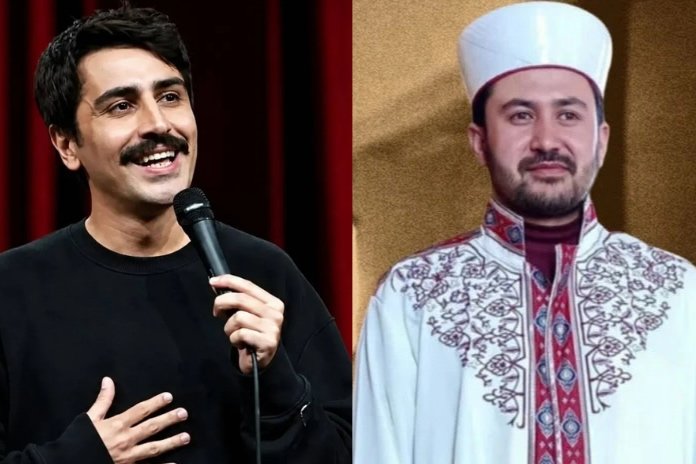
Turkey’s Directorate of Religious Affairs (Diyanet) has initiated a disciplinary investigation involving an imam who expressed solidarity with comedian Deniz Göktaş, currently imprisoned. This development has sparked discussions about freedom of expression and the autonomy of religious institutions in the country.
Details of the Investigation
Imam Yusuf Kılıç was called to Diyanet’s headquarters in Ankara on August 27 to provide a statement related to the inquiry. As of now, no details have been released regarding potential disciplinary actions against him. Kılıç’s message of support for Göktaş followed the comedian’s detention at Istanbul Airport, which was publicized after video footage emerged on July 2. Kılıç publicly criticized the way Göktaş was treated and declared, “As an imam, I stand with you, brother Deniz.”
The Case of Deniz Göktaş
Göktaş faces serious legal challenges, having been jailed while awaiting trial due to the content of his stand-up show “Ölü Deniz” (Dead Sea). He is accused of insulting President Erdoğan, inciting hatred, and praising criminal activity. An indictment has been filed seeking a prison sentence of over 12 years across these three charges, with his first hearing set for September 28.
Lawmakers from the Labor Party (EMEP), Sevda Karaca and İskender Bayhan, have taken this issue to the parliamentary level by submitting a question to Vice President Cevdet Yılmaz. They are demanding clarity regarding the legal grounds for the investigation into Kılıç and questioning whether his message violates any disciplinary codes. Furthermore, they raised concerns about potential profiling or political pressure on Diyanet staff, seeking detailed information on investigations and penalties imposed for critical statements against the government in recent years.
Past Disciplinary Actions Against Kılıç
Kılıç is no stranger to disciplinary scrutiny. Earlier this year, he faced a similar investigation after declining to take his congregation to an election rally for President Erdoğan in İzmir. Following this refusal, he was penalized and transferred from his position after publicly disclosing the incident. Although a court later annulled this sanction, Diyanet initiated another inquiry, leading to further penalties against him.
Concerns over Diyanet’s Independence
The Diyanet is frequently criticized for lacking political independence and for using Friday sermons to promote government agendas. Critics argue that the organization marginalizes religious minorities, such as the Alevis, despite being funded by taxpayers from a diverse range of faiths. With a budget that surpasses many governmental bodies, the Diyanet also manages a vast network of mosques in Western Europe, which has faced allegations of surveilling dissidents within Turkish expatriate communities.
As this investigation unfolds, it remains to be seen how it will affect the broader conversation around political expression and religious autonomy in Turkey. The implications of Kılıç’s case could resonate beyond individual repercussions, highlighting systemic issues surrounding freedom of speech and the role of religious institutions in a politically charged environment.