
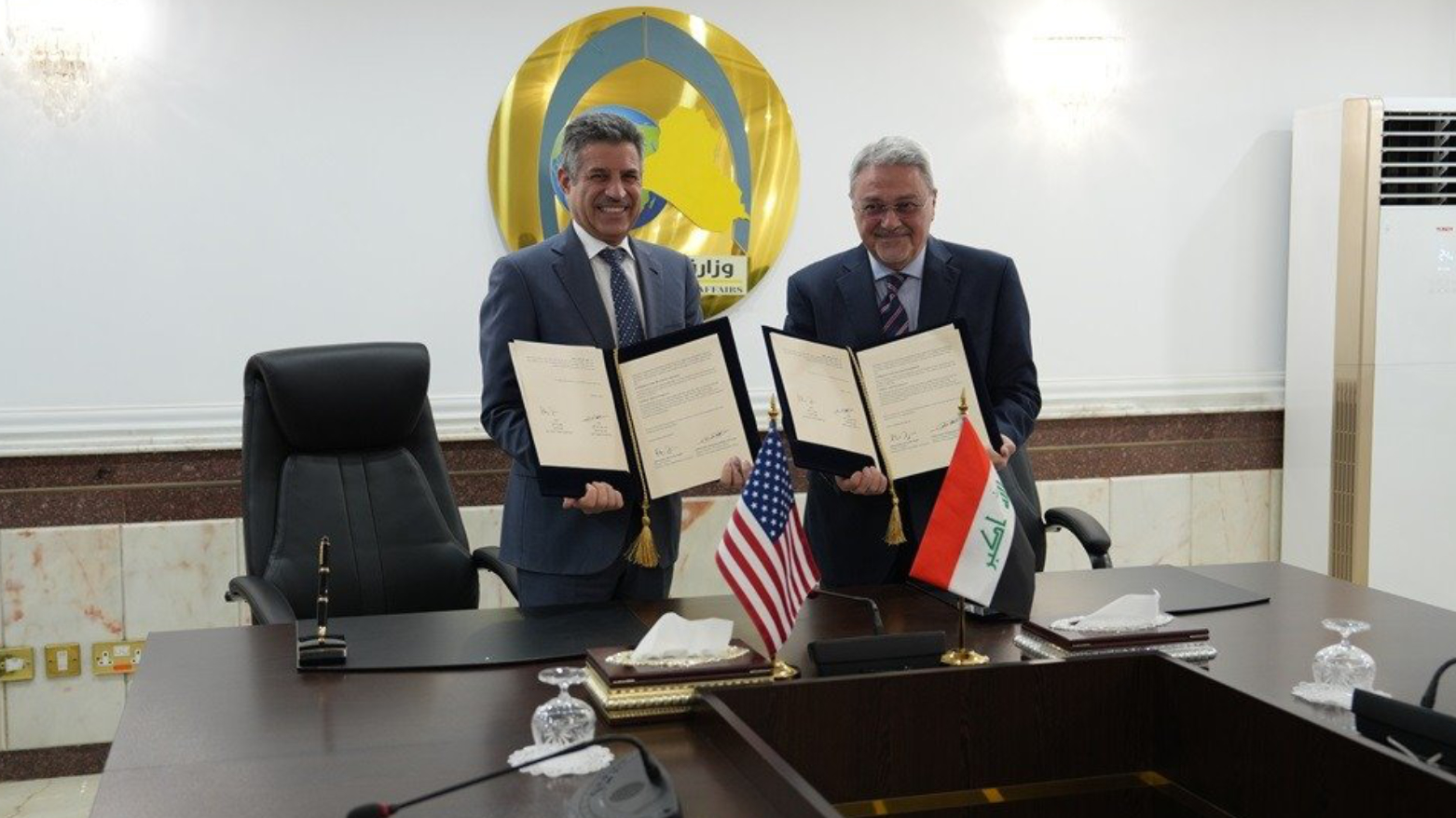
Iraq is taking significant steps to redefine its relationship with the United States, as evidenced by a recent diplomatic agreement. This agreement signifies a pivotal moment in the ongoing transition concerning foreign military presence in the country, particularly as Iraq aims to complete the mission of the International Coalition by the end of September.
Agreement Between Iraq and the United States
On Thursday, the Iraqi government and the U.S. signed a formal agreement that transfers the diplomatic support site of the US Embassy located at Baghdad International Airport to Iraq. This move highlights Iraq’s commitment to managing its relations with Washington more effectively and aims to facilitate the conclusion of foreign troop presence on Iraqi soil. The agreement was signed in a ceremony led by Mohammed Hussein Bahr Al-Uloom, who represents the Iraqi Ministry of Foreign Affairs, and Steven Fagin, serving as the Acting Chargé d’Affaires of the U.S. Embassy in Baghdad.
Iraq’s Strategic Objectives
The Iraqi Ministry of Foreign Affairs articulated that this transfer is a crucial component of the country’s wider strategy to end foreign military operations within its borders. With a deadline set for September 30, Iraq is poised to finalize the necessary measures and ensure that the presence of international military forces complies with national interests. This shift reflects Iraq’s dedication to sovereignty and self-governance, which are essential as the nation evolves.
Strengthening Bilateral Relations
During the signing event, Bahr Al-Uloom emphasized that this agreement represents a landmark step toward enhancing Iraqi-U.S. relations. He envisions a new chapter that shifts the focus toward mutual cooperation, especially in sectors like economics, development, and energy. This pivot indicates a strategic partnership rather than merely a military alliance, indicating that both nations are committed to building a future based on collaboration and shared goals.
US Support and Future Opportunities
Steven Fagin also underscored the American government’s commitment to nurturing amicable ties with Iraq. He expressed U.S. support for the Iraqi administration’s initiatives aimed at fostering bilateral cooperation. By prioritizing agreements and understandings between the two nations, the U.S. aims to endorse initiatives that respect the sovereignty of Iraq while creating avenues for enhanced partnership.
In their discussions, both parties noted that this agreement is just one aspect of a larger framework that seeks to redefine the overall relationship between the two countries. By targeting areas for expanded collaboration, they are looking towards a future where mutual interests pave the way for a deeper and more meaningful alliance.
In summary, the recent agreement signifies a critical transition in Iraq’s relationships with foreign powers, particularly the United States. As Iraq works to conclude the foreign military presence within its borders, both nations appear committed to establishing a partnership focused on mutual respect and collaborative growth. This could mark a turning point in how these nations engage with one another in various sectors moving forward.