
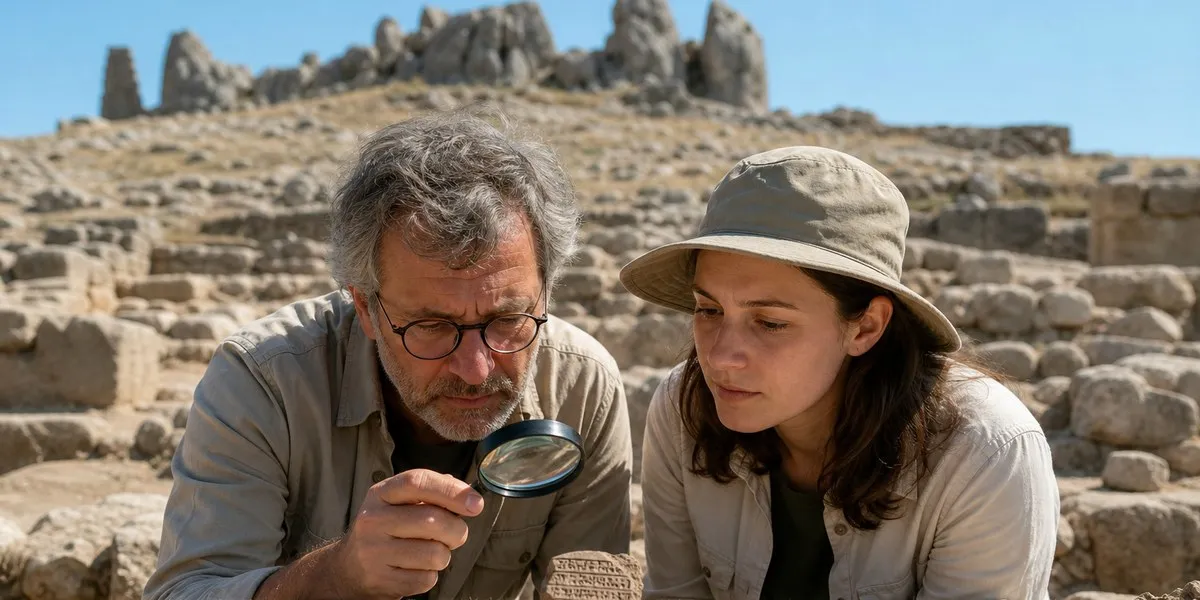
A significant archaeological discovery was made at the ancient Hittite capital of Hattusa, located in modern-day Turkey. Researchers uncovered a fragment of a clay tablet that pertains to the historic Egyptian-Hittite peace treaty. This cuneiform inscription details various provisions, including protections for individuals fleeing between Egypt and Hatti, as well as measures to safeguard homes from destruction.
A Royal Discovery at Hattusa
The tablet fragment was unearthed in 2025 at the Boğazköy-Hattusa site within the Boğazkale district of Çorum Province. This area is believed to have housed the Hittite royal palace during the Bronze Age when Hattusa served as the empire’s capital. Ongoing research of the cuneiform text suggests that what has been found is the front side of one of the Akkadian versions of the historic treaty. According to Turkish Minister of Culture and Tourism Mehmet Nuri Ersoy, this discovery highlights ancient legacies of peace in Anatolia, providing a glimpse into the diplomatic relations of the time.
The Significance of the Egyptian-Hittite Treaty
Known alternatively as the Eternal Treaty or the Silver Treaty, this agreement was established around 1259 BC between Hittite King Hattusili III and Egyptian Pharaoh Ramesses II, effectively concluding years of conflict between the two nations. Often referred to as the oldest surviving peace treaty, this document represents a pivotal moment in international relations. It is sometimes called the Treaty of Kadesh, although it surprisingly omits any reference to the famous Battle of Kadesh that took place in 1274 BC.
The Egyptian hypothesis of the treaty is preserved in hieroglyphs found on the walls of the Ramesseum and the Temple Complex of Amun-Ra at Karnak in Thebes. The Akkadian text fragments located in Hattusa date back to excavations conducted between 1906 and 1912 and are kept in various institutions, including museums in Istanbul, Ankara, Berlin, and St. Petersburg. Intriguingly, a copy of this age-old treaty is also showcased at the United Nations headquarters.
Implications for Archaeological Research
The discovery of this tablet fragment not only supports the historical context of diplomatic interactions between the Hittites and Egyptians but also underscores the importance of archaeological endeavors in revealing the intricacies of ancient civilizations. Understanding treaties like this one contributes to a greater appreciation of how early diplomatic efforts shaped the relationships between powerful states. The preservation and study of such artifacts remain vital for scholars and archaeologists striving to reconstruct the narrative of human history.
In summary, the fragment found in Hattusa serves as a remarkable testament to a long-ago era of peace between two of the ancient world’s great powers. As excavations continue, additional discoveries may further illuminate our understanding of these formative historical moments.