
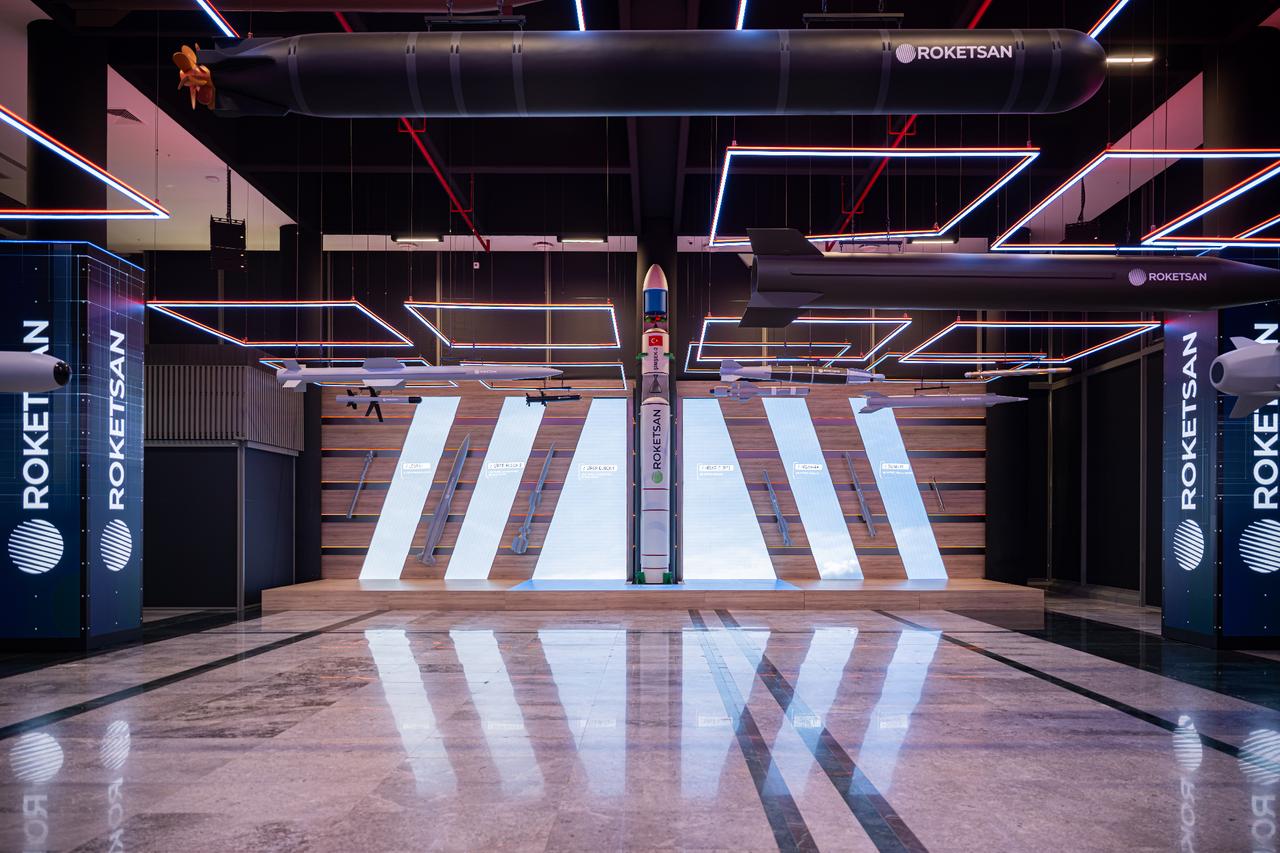
Turkish defense company Roketsan is working on innovative reusable rocket stages to significantly reduce the cost of launching payloads into space. Murat Ikinci, the CEO of Roketsan, shared insights with Türkiye’s state-operated Anadolu Agency, highlighting the company’s aim to strengthen its position in the competitive global aerospace market.
Advancements in the Simsek Program
Roketsan’s initial phases, namely the Simsek 1 and Simsek 2 satellite launch systems, will not feature reusable stages. Ikinci noted that while these systems are foundational, they will provide essential components that contribute to future reusable designs. Both programs are making steady progress according to the planned timeline. “We aim to utilize lessons learned from Simsek 1 and Simsek 2 to enhance the cost-efficiency of our future launch vehicles,” he explained. This strategic approach is crucial to making Türkiye a key player in international aerospace endeavors.
Positioning Within the Global Reusable Rocket Landscape
Roketsan enters a rapidly evolving global market where companies like SpaceX, Blue Origin, and China’s LandSpace have set high standards in reusable rocketry. SpaceX has been particularly successful with its Falcon 9, demonstrating consistent performance through frequent landings and relaunches since 2017. Other players like Rocket Lab and Stoke Space are also innovating in this space, developing fully reusable stages intended to optimize costs and operational flexibility. While Türkiye’s capabilities are still in development, the technologies validated through Simsek 1 and Simsek 2 are expected to play a critical role in future launch systems.
Simsek 1 and 2: Delivering on Their Goals
The Simsek 1 mission is designed to transport a payload of 400 kilograms into low Earth orbit at an altitude of approximately 500 kilometers. Following this, Simsek 2 aims for a more ambitious target with the capability to launch 1.5 tons into orbit, reaching as high as 700 kilometers. Ikinci expressed a strong commitment to achieving these objectives, emphasizing the importance of establishing a launch platform that enables Türkiye to access space independently. “Simsek 1 and Simsek 2 are progressing without complications, and we anticipate successful launches in the near future,” he stated.
Commercialization and International Collaboration
Roketsan aims to position Simsek 2 as a commercial system through strategic international partnerships. This initiative will provide Türkiye the ability to carry satellites into orbit and assist other nations with aerospace capabilities. According to Ikinci, mastering space technologies is critical, as countries tend to keep advanced technologies exclusive and do not share essential systems like navigation or propulsion. To counterbalance this challenge, Roketsan’s strategy focuses on building a collaborative ecosystem within the aerospace supply chain, thus avoiding potential competitive disadvantages.
Ikinci’s remarks underscore Roketsan’s expansive vision, which includes collaborations with approximately 2,500 business partners, mainly in missile production, to enhance their space-focused capabilities. Moreover, as the leading entity in Türkiye’s space engineering, Roketsan is committed to the development of advanced platforms essential for upcoming lunar missions. Participating in the 77th International Astronautical Congress in Antalya, Roketsan is set to explore new partnerships that can further accelerate its reusable rocket initiatives, ensuring that Türkiye establishes a robust foothold in the international space economy.