
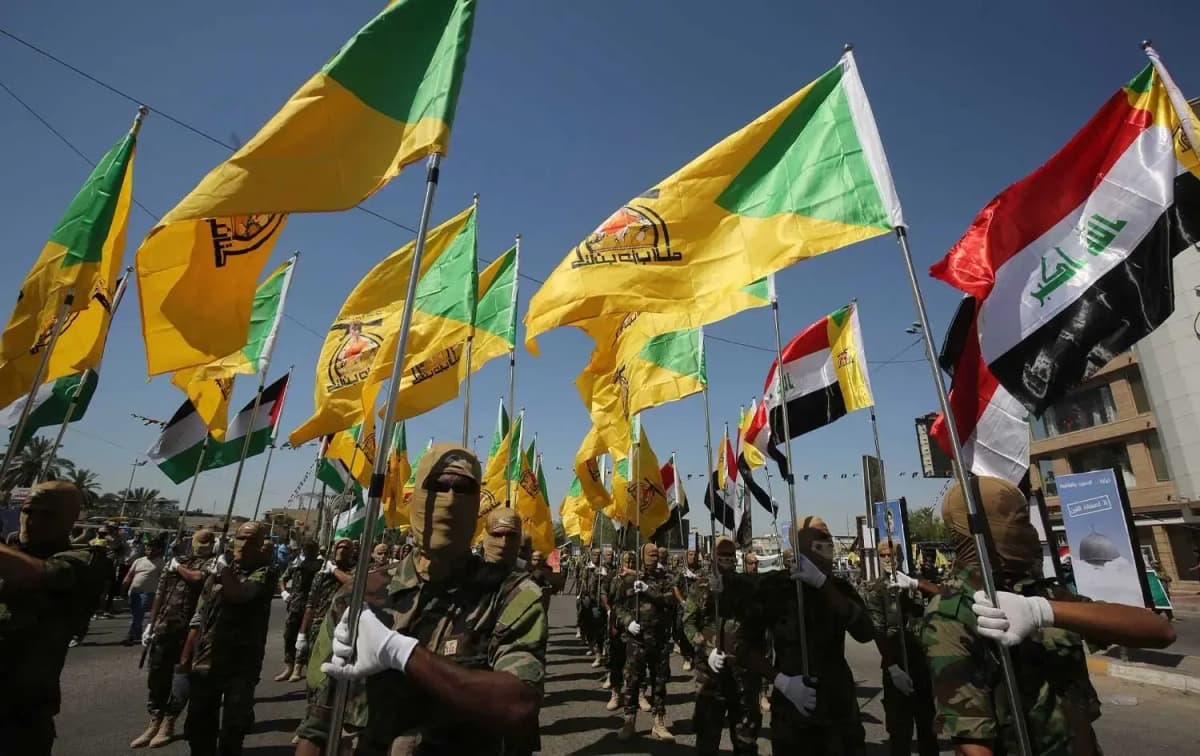
Kata’ib Hezbollah, an Iranian-affiliated militia, has made significant threats regarding Iraqi airspace in light of the U.S.-led Coalition’s impending military withdrawal. The group’s warning underscores the complex power dynamics in the region as tensions escalate between various actors.
The Threat to Iraqi Airspace
On Monday, Kata’ib Hezbollah announced that it would take military action against any “hostile” aircraft that violate Iraqi airspace. This declaration comes as the U.S.-led Global Coalition gears up to conclude its military operations in Iraq this week. Abu Mujahid al-Assaf, a security official with Kata’ib Hezbollah, stated that the group would monitor the skies closely and first offer warnings before engaging hostile aircraft.
Al-Assaf directed a specific message toward Prime Minister Ali al-Zaidi, indicating that continued collaboration with the United States could result in efforts to destabilize his government. “Let it be known to Mr. Zaidi and his supporters: multiple strategies will emerge to overthrow any government that disregards the people’s welfare,” he cautioned, indicating an aggressive stance against perceived betrayal.
Implications for Iraqi Government
The timing of these threats is critical, occurring just days before the September 30 deadline for the Coalition to cease military actions in Iraq. As Iraqi authorities confirmed the commencement of troop withdrawals from Erbil, concerns grew that security vacuums might emerge, creating opportunities for militia groups like Kata’ib Hezbollah to assert more control.
This pressure has also prompted demands for Baghdad to lift what Kata’ib Hezbollah terms an “air blockade” on Iran, threatening retaliatory measures against countries involved in these restrictions after October 1. The group asserted that continued limitations could force it to take decisive actions, including closing border crossings to nations enforcing such blockades.
Regional Tensions and Military Operations
The internal disputes regarding airspace control coincide with Iraq’s suspension of commercial flights between Iran and Iraqi airports. These measures were sparked by U.S. sanctions targeting Iranian airlines, leading to operational disruptions. Ground handling companies have expressed intentions to comply with U.S. directives to avoid the risk of sanctions, demonstrating the extent of external influences on Iraqi sovereignty.
Kata’ib Hezbollah’s latest warnings connect to broader regional dynamics, particularly against the backdrop of U.S. accusations of the group facilitating attacks against Saudi Arabia. These developments are intertwined with Iraq’s ongoing efforts to reestablish security and stability while counterweighing militia power and compliance with international sanctions.
As Baghdad prepares to commemorate the end of the Coalition’s military mission, plans are underway for a significant “Large Sovereignty Conference” on October 1. This gathering aims to affirm Iraq’s independence and control over its military operations, potentially reshaping the domestic landscape and impacting relationships with both local militias and international forces. As tensions continue to rise, all eyes will be on how Iraq navigates its precarious security situation in the coming days.