
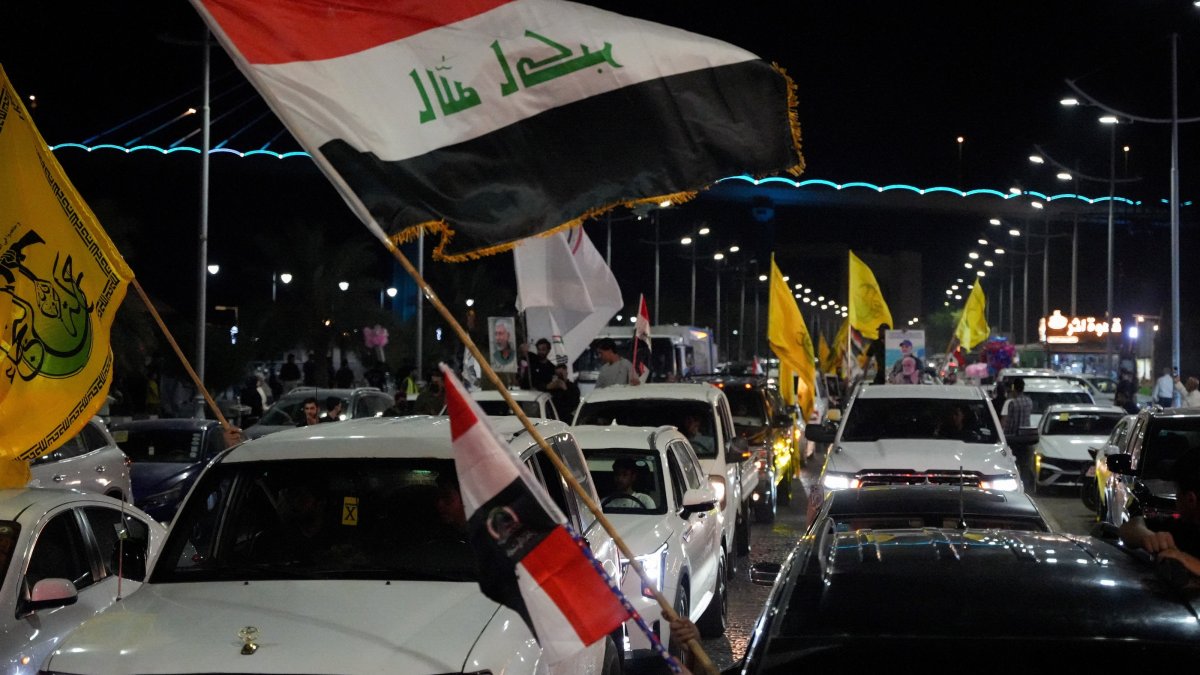
Iran’s Revolutionary Guards recently celebrated the withdrawal of U.S. forces from Iraq, labeling it a “historic victory” and calling for the complete exit of American troops from the Middle East. This announcement follows a significant milestone in the engagement between U.S.-led coalition forces and local military efforts against Daesh, a notorious terrorist organization.
Celebrating a Milestone
In a statement broadcasted via their official media outlets, the Revolutionary Guards expressed their congratulations to “the proud nation of Iraq” and the broader Islamic world for what they termed this historic event. Their announcement came shortly after the U.S.-led coalition, which had been deployed in 2014 to combat Daesh, formally concluded its mission and executed the troop withdrawal. Daesh, which terrorized regions in both Iraq and Syria, was largely defeated in Iraq in 2017 and in Syria in 2019. Nevertheless, coalition forces had remained for a prolonged period to assist in the ongoing fight against residual elements of the group.
When announcing the withdrawal, the Revolutionary Guards stressed that the presence of the United States in the region had fostered insecurity rather than stability. They emphatically stated, “The U.S. must leave the region and entrust the management of security to the nations themselves.” This sentiment reflects growing anti-U.S. sentiments in the region, where many believe that American military involvement has only exacerbated instability.
Implications for Regional Security
The withdrawal of U.S. forces has been welcomed by the Iraqi government as well. Officials assert that this departure removes a key justification for various Iran-aligned militia groups to maintain their arsenals. In this vein, Iraqi Prime Minister Ali al-Zaidi outlined a timeline for disarming these armed factions, now targeting June 30, 2027, as a firm deadline for compliance. Zaidi emphasized that the power to declare war or peace should rest solely with governmental authorities, thereby banning unauthorized military actions.
Despite some factions already relinquishing their weapons, others have been reluctant to disarm, expressing concerns that the U.S. exit could empower Iran-aligned groups, potentially pulling Iraq deeper into regional conflicts. Some armed factions backed by Tehran have declared themselves “not bound by any timeline or agreement” regarding disarmament, showing a clear divide in how various groups respond to the changing security landscape.
Threats to Governance
Kataeb Hezbollah, one of the most prominent of these factions, has vowed to regulate its weaponry but remains defiant regarding timelines set by the Iraqi government. Jaafar al-Husseini, a military spokesperson for the group, asserted that they are currently in discussions to manage their arms but have not yet received an adequate response from the government. This statement underlines the ongoing tensions as various groups navigate the post-U.S. military landscape.
Notably, Kataeb Hezbollah has also issued threats toward the Iraqi government, warning that any administration failing to prioritize the welfare of its citizens could be toppled by any means necessary. The future of security and governance in Iraq hangs in the balance as the dynamics of power continue to shift in a post-occupation environment.
With the departure of U.S. forces, both the Revolutionary Guards and local military factions are poised to play more significant roles in shaping Iraq’s security framework. The next few years will be crucial in determining whether Iraq can stabilize and assert its sovereignty free from external military presence and internal strife.