
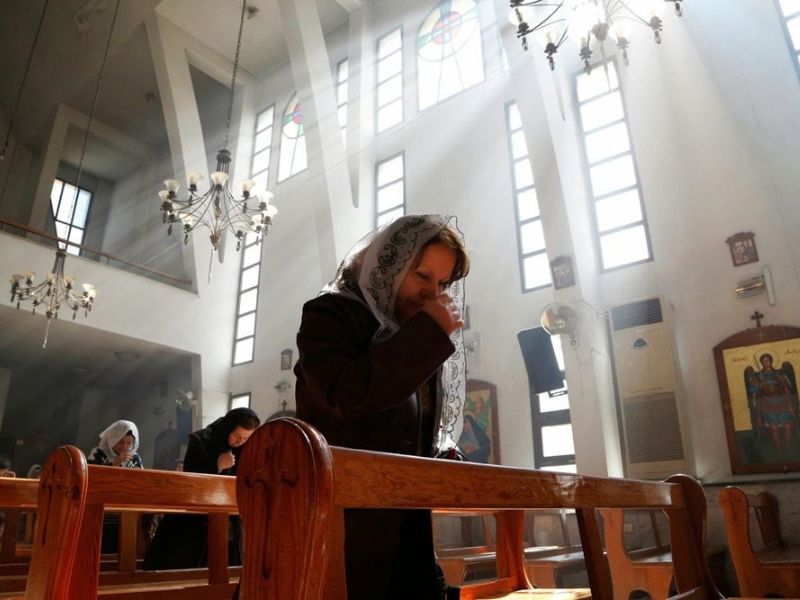
In the summer of 2014, Mariam and her husband Nabil lived a seemingly ordinary life in Iraq. As the couple went about their evening routine—preparing dinner, closing up a family shop, and breaking up arguments between their children—no one could have predicted the upheaval that was about to disrupt their world. It was a night similar to countless others until dire news began to emerge about the advancing threat of the Islamic State (ISIS). Families were advised to flee, leaving behind their homes, churches, and a way of life that stretched back generations.
A Sudden Crisis: The Exodus Begins
As the couple received urgent phone calls from relatives, the reality of the situation became apparent. Nabil swiftly instructed their children to pack their belongings into a single bag, while Mariam faced a daunting decision in their bedroom. She hurriedly selected vital documents and personal items, knowing that their lives were about to change indefinitely. With a final glance at their home, Nabil locked the door, scarcely believing they would not return.
As they joined an exodus of families fleeing toward the safety of Erbil, the streets were filled with cars carrying the memories of lives interrupted. Mariam’s children repeatedly asked when they would go back home, an inquiry that soon went unanswered. Days stretched into months during which the family transitioned from temporary shelters to cramped living conditions with relatives. Nabil struggled to find work, and Mariam realized that friends and neighbors had scattered far and wide, from Iraq to Europe.
The Fragile State of Christianity in Iraq
The forced displacement of families like Mariam’s is just one aspect of a much larger narrative surrounding the decline of Christianity in Iraq. The echoes of this ancient faith can be traced back to early Christianity in Mesopotamia, where communities such as the Assyrians and Chaldeans established their roots long before the modern state of Iraq was formed. However, the rich tapestry of Christian life in regions like Mosul began to fray long before the rise of ISIS. The repercussions of political instability and sectarian violence since the early 2000s had already compelled thousands to leave.
By 2023, it was estimated that Iraq’s Christian population had plummeted from about 1.5 million two decades prior to approximately 150,000, highlighting a staggering loss of nearly 90%. While ISIS certainly accelerated the exodus by instigating widespread violence and terror, the underlying issues that made life untenable for Christians were already in motion. A deteriorating security landscape, targeted attacks on churches, and systemic discrimination created an environment where many felt that staying was no longer an option.
The Impact of ISIS and the Path to Rebuilding
When ISIS seized Mosul in June 2014, the ramifications were catastrophic for Christian communities across the Nineveh Plains. In the face of imminent danger, families fled, leaving their homes, businesses, and centuries of memories behind. Despite the eventual military defeat of ISIS, the scars of that violence—both physical and emotional—have left many families wary of returning to rebuild.
Thus, even with the opportunity to go back, many grappling with memories of trauma and loss found it hard to trust that their lives would be safe. The challenges of returning to a region marked by instability, damaged infrastructure, and the absence of community have deterred many from making the leap back to what was once home. Questions loom large over the sustainability of a Christian presence in Iraq, prompting ongoing discussions about the viability of its future.
The Ongoing Exodus and Future Prospects
Today, the reality for Iraqi Christians is complicated. Even after the fall of ISIS, many still consider leaving, influenced by fears of violence, instability, and limited opportunities. The results are telling: emigration has spurred further departures, with younger generations seeking education or employment abroad, exacerbating the decline of local congregations and Christian community life.
In response, organizations like International Christian Concern (ICC) are actively working to support those who remain, assisting in rebuilding efforts and helping families restore livelihoods. Yet as they navigate the complex questions of safety, security, and the possibility of a stable future, the survival of Christianity in Iraq hangs in the balance. The narrative has shifted from mere survival to a critical examination of how this ancient faith can endure and thrive in a rapidly changing environment. Continued support and focused efforts may offer a glimmer of hope for the continuity of Iraqi Christianity in the generations to come.