
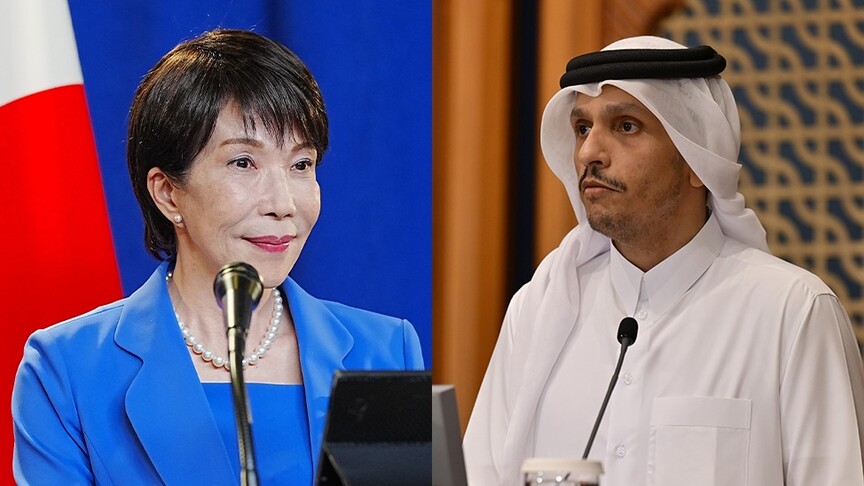
On October 2, 2026, the prime ministers of Japan and Qatar convened in Tokyo to address the escalating tensions between the United States and Iran. This critical meeting focused on the ongoing conflict, which has continued for over six months, raising concerns about the stability of maritime navigation and regional security.
Concerns Over Military Tensions
Japanese Prime Minister Sanae Takaichi expressed her serious worries regarding the military confrontations surrounding Iran, emphasizing the significant disruption to established maritime regulations. After her discussions with Sheikh Mohammed bin Abdulrahman Al Thani, Takaichi shared her thoughts via a post on X, detailing her apprehensions about the current situation. The conflict has led to a flurry of military actions, including US airstrikes on Iranian assets as well as Iranian attacks on US military installations and energy resources across Gulf nations, including Qatar.
Mediation Efforts and Peace Initiatives
Despite the turmoil, efforts to negotiate an end to the ongoing war have persisted. A framework agreement, meditated earlier by Pakistan and Qatar in June, aims to pave the way for a comprehensive peace deal. The agreement not only seeks to stabilize navigation in the strategically crucial waterways but also addresses Iran’s nuclear ambitions. Takaichi recognized the vital role that Qatar is playing as a mediator, expressing her intent to work closely with Qatar for a swift resolution to the crisis.
Strategic Economic Collaboration
In addition to dialogue on the US-Iran conflict, Takaichi and Al Thani discussed bilateral economic relations. The Japanese prime minister highlighted Japan’s plans to establish a comprehensive action plan to boost the economic and energy resilience of Gulf countries, especially Qatar. This initiative aims to go beyond traditional energy sectors, extending to investments and advancements in artificial intelligence, showcasing a mutual desire for diverse cooperation.
Global Economic Implications
The prolonged standoff between the US and Iran has not only threatened regional stability but has also raised alarms about global economic impacts. Japan’s Foreign Minister Toshimitsu Motegi conveyed his significant concerns regarding the ongoing obstruction of safe navigation through the Strait of Hormuz, emphasizing how it affects global trade. The strait is a crucial maritime corridor, and any disruptions here have implications that reverberate well beyond the immediate region, affecting economies worldwide.
By fostering collaboration and seeking peaceful resolutions, Japan and Qatar are working together to strengthen their strategic partnership. As tensions still loom, the commitment of these two nations to enhance cooperation amid regional uncertainties reflects a deeply rooted desire for stability and collective growth. The approach taken by Takaichi and Al Thani demonstrates the intricate balance needed to navigate complex international relations in a challenging geopolitical landscape.