
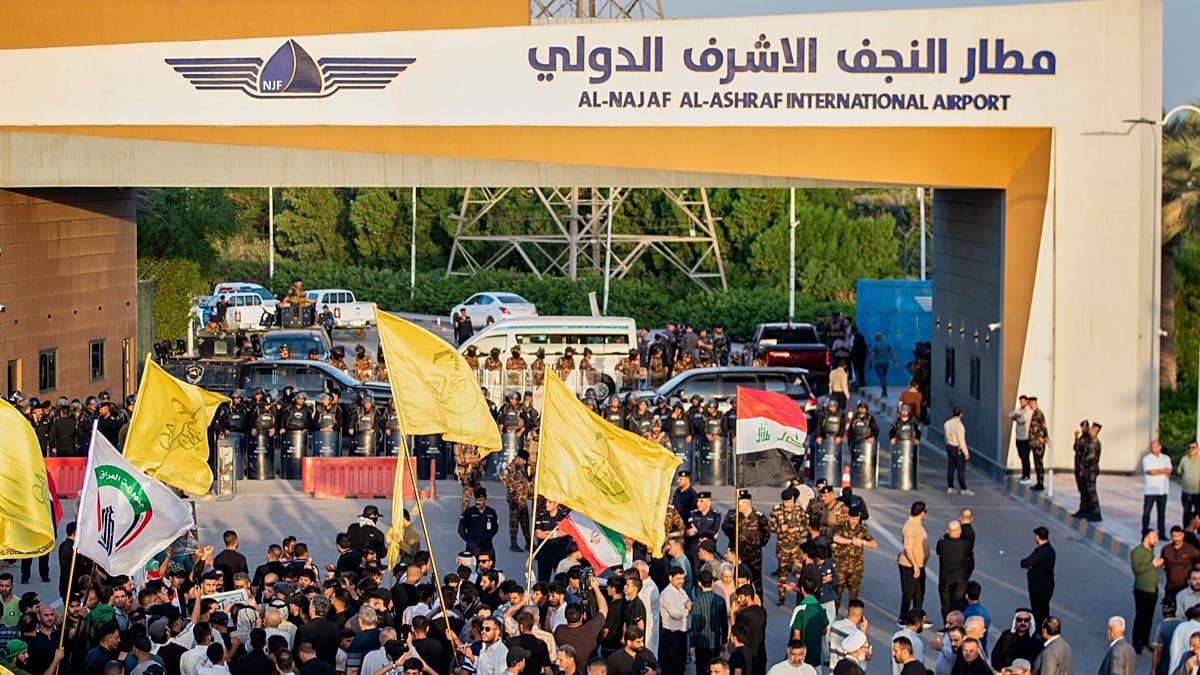
Iran is pressing Iraq to fully restore air travel services between the two nations after limited resumption at one airport. This appeal comes on the heels of a series of challenges faced by both countries regarding air traffic and international sanctions.
Iran’s Call for Action
Iran’s Foreign Ministry has voiced strong criticism against Washington’s attempts to disrupt Iran’s trade and air travel by enforcing U.S. sanctions. The ministry urged Iraqi officials to eliminate the remaining flight restrictions, emphasizing the need for a more independent and responsible approach to resolve tensions between the two nations. Millions of citizens from both Iran and Iraq rely on travel between these countries, underscoring the vital need to normalize air links for better economic and social cooperation.
Despite facing international pressure, Iraq’s state-run Iraqi News Agency reported that flights resumed between Najaf and Iran recently, thanks to the efforts of Prime Minister Ali al-Zaidi. However, the situation remains complicated; foreign ground-handling companies are hesitant to operate due to fears of being penalized under U.S. sanctions. As a result, flights have been suspended from major airports in Baghdad, Erbil, and Sulaimaniyah, forcing passengers to undertake long and arduous land journeys.
U.S. Waiver and its Implications
In a partial relief provision, the U.S. government granted a waiver allowing Iranian airlines—excluding Mahan Air—to operate up to 40 flight services daily to and from Najaf International Airport. The Iraqi prime minister’s office stated that this decision was instrumental in facilitating passenger travel and supporting humanitarian missions. The objective is not only to ensure seamless travel but also to bolster economic activities, tourism, and educational exchanges between the two nations.
Nonetheless, the waiver is not without restrictions. The U.S. Treasury’s temporary license for Iraqi Airways to operate Iran-Najaf flights comes with stringent conditions, focusing on limiting passenger and cargo capacity. The prime minister has expressed gratitude for the U.S. response, portraying it as a cooperative effort aimed at addressing Iraqi concerns.
The Impact of Sanctions on Air Travel
The Iranian government has flagged serious repercussions tied to the restrictions on air travel between Iran and Iraq. Officials noted that these constraints create significant challenges for a variety of stakeholders, including patients, pilgrims, and scholars. The limitations are seen as detrimental not only to individuals but also to the broader economic engagement of both nations.
Following the enforcement of U.S. sanctions on September 23, air traffic was severely affected. Data from FlightRadar24 indicated an alarming 42% drop in flights to and from Tehran’s Imam Khomeini International Airport. The sanctions also caused routes to neighboring countries such as Georgia and Oman to be completely halted. Meanwhile, flights to Dubai were suspended, putting more strain on travel options available to Iranians.
In summary, the situation between Iran and Iraq regarding air travel remains precarious. With ongoing pressures from U.S. sanctions impacting air traffic, both nations are calling for a collaborative approach to ensure that their citizens can travel freely and that their mutual interests can be maintained in the face of international scrutiny.