
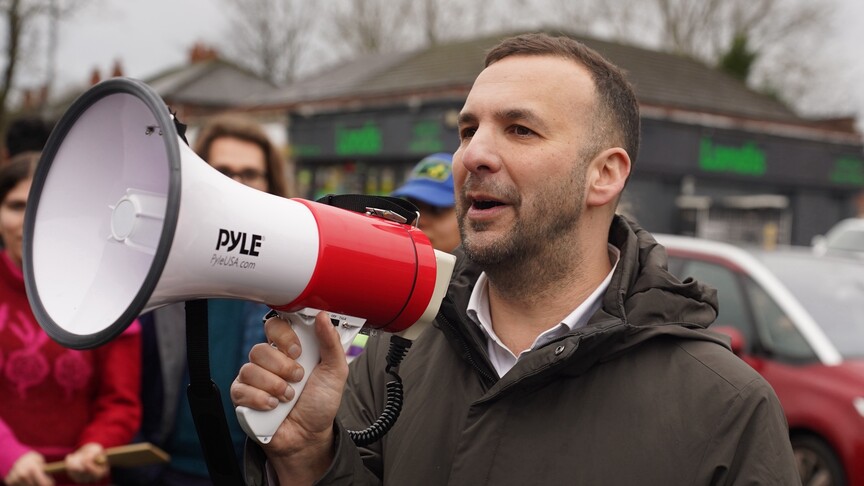
Israel recently took the decision to deny entry to Zack Polanski, the leader of the Green Party of England and Wales, following the party’s recent adoption of a policy that categorizes Zionism as a form of racism. This move has sparked considerable debate and raises important questions about political expression and international relations.
Ban on the Green Party Leader
On Sunday, Israel’s Foreign Minister, Gideon Sa’ar, coordinated with relevant authorities to impose a travel ban on Polanski. This decision came on the heels of a motion approved by Green Party members at their conference in Brighton, which officially aligns the party’s stance against Zionism with their broader political agenda. The motion asserts that Zionism embodies a racist ideology and advocates for a single democratic Palestinian state that would ensure equal rights for all its inhabitants.
Israeli Government’s Response
In response to the Green Party’s new policy, Israel’s Foreign Ministry expressed strong disapproval. The ministry condemned the party for what it described as legitimizing violent resistance against Israel and undermining the Jewish right to self-determination. Citing the International Holocaust Remembrance Alliance’s definition of antisemitism, officials claimed the new policy poses a threat and urged other British political entities, including the ruling Labour Party, to distance themselves from such positions.
Green Party’s Position on the Issue
Despite the backlash, the Green Party remains steadfast in its beliefs. Members rejected any attempts to equate anti-Zionism with antisemitism. They maintain that Zionism represents an ethnonationalist political movement and have reiterated support for Palestinian self-determination. This includes backing the right of return for displaced Palestinians and advocating for an arms embargo on Israel, highlighting their commitment to what they view as human rights and justice.
The Broader Implications
This incident reflects a growing tension in international politics regarding the Israeli-Palestinian conflict, particularly as more political parties and organizations reassess their stances on Zionism and its implications. The ban on Polanski also raises concerns about freedom of expression and the extent to which countries can restrict entry based on political beliefs. As global discourse surrounding these sensitive topics continues to evolve, the implications of this decision may resonate beyond the immediate conflict, influencing how politicians and activists engage with the issue on both sides.
In conclusion, the refusal to let Zack Polanski enter Israel underscores not only the charged nature of the discourse around Zionism and Palestine but also the challenges faced by political parties in expressing their positions on contentious issues without facing repercussions. As debates intensify, both supporters and critics will need to navigate a complex landscape, where the lines between criticism, advocacy, and outright condemnation can often become blurred.