
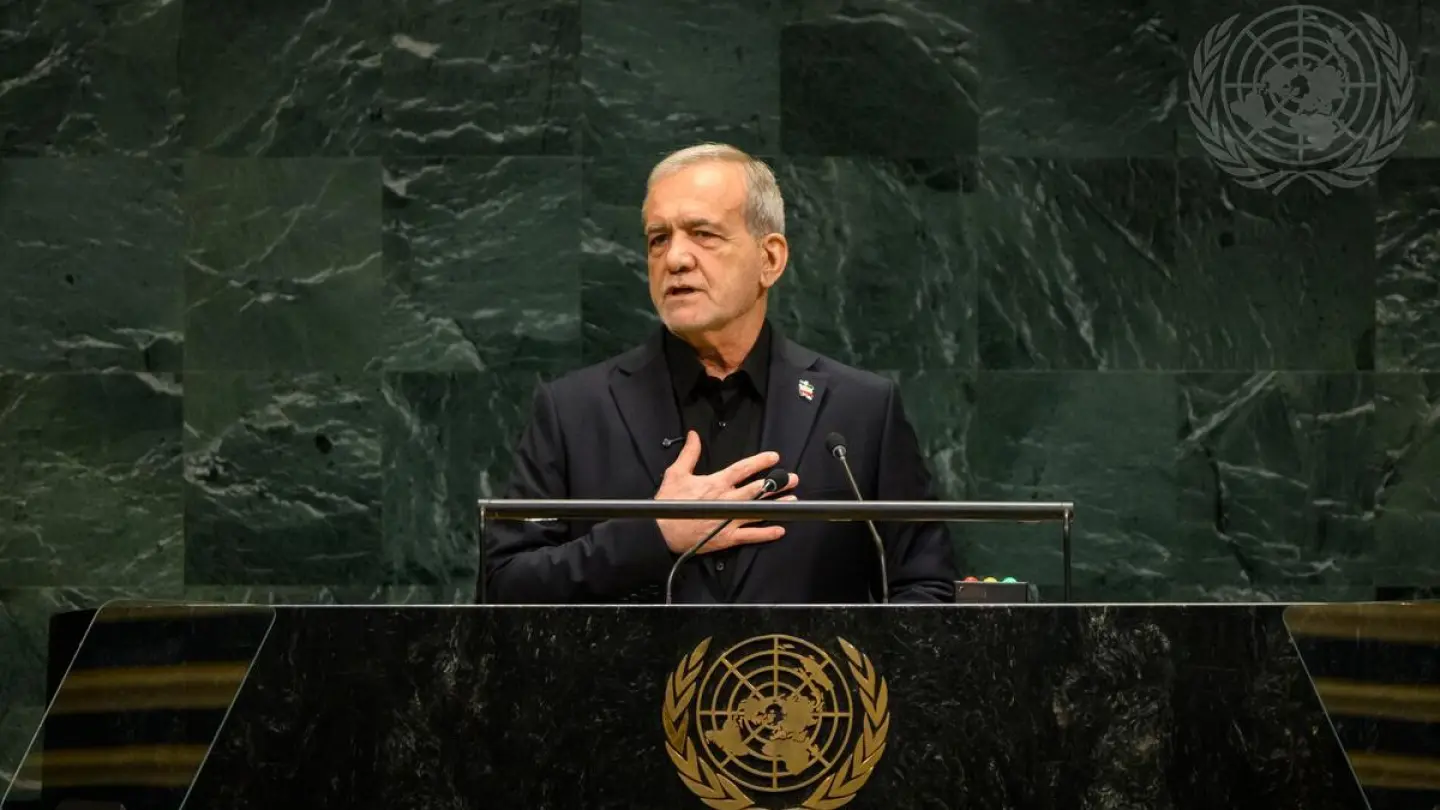
The United Nations recently held its 81st General Assembly, drawing global attention between September 22 and 26. During this session, numerous leaders addressed pressing global issues, but the focus remained predominantly on Israel and accusations regarding its actions against Palestinians. The media coverage often skewed towards condemning Israel while portraying countries like Iran—led by President Masoud Pezeshkian—as peacemakers, despite their significant human rights violations.
Media Bias in Coverage of Israel
A report from the BBC on Israeli Prime Minister Benjamin Netanyahu’s speech cited the Hamas-run health ministry’s figure of over 73,920 casualties in Gaza. However, it neglects to mention that a substantial portion of these fatalities encompasses militants. Furthermore, the report referenced an assertion from genocide scholars, labeling Israel’s actions as genocidal. Yet it conveniently omitted that to join this organization, individuals need only pay a membership fee without any rigorous academic requirements.
Similarly, The New York Times reported on Netanyahu’s speech but prioritized a video of a staged walkout, emphasizing accusations of genocide against Israel. Notably, UN Secretary-General António Guterres remarked on the unprecedented scale of fatalities in Gaza, attaching a profound sense of urgency to the discourse. Ironically, the Iranian delegation was present in the same venue, despite Iran’s track record of brutality against its citizens.
Contrasting Narratives for Iran and Israel
During the same assembly, Pezeshkian’s address received a markedly different treatment by the media. While the coverage acknowledged the ongoing conflict involving Iran, it refrained from addressing the regime’s violent crackdown on domestic protesters just days prior. Reports made fleeting mentions of casualties while framing Iran as a victim of external aggression, all while downplaying the Iranian government’s own brutal measures against dissent.
In Pezeshkian’s speech, he offered an image of Iran as a party ready for dialogue and diplomacy, claiming no interest in “the language of force.” Contrastingly, The New York Times’ depiction of the situation omitted severe figures surrounding Iran’s domestic oppression, further supporting the narrative that positions Iran favorably in the conflict with the U.S. and Israel.
Media Handling of Human Rights Violations
After the General Assembly, Pezeshkian went on to deliver interviews on major networks like CBS and Fox News, where he avoided accountability for Iran’s human rights violations. Many reporters, such as Margaret Brennan, let Pezeshkian’s misleading comments go unchallenged, while their previous interviews with Netanyahu exhibited a strikingly critical stance.
The disparity in treatment between the two leaders highlights a troubling trend in mainstream media. While Israel’s actions are met with severe scrutiny, Iran’s abuses often fall under the radar. Journalists claim to present balanced reporting, yet the contrasting approaches they adopted for each leader reveal a bias that requires greater examination. The Iranian people’s plight remains largely overshadowed by a focus on Israel, providing a skewed narrative that does not do justice to the complexities involved.
In conclusion, the juxtaposition of media coverage surrounding Israel and Iran during the UN General Assembly underscores significant biases that must be acknowledged. While Israel faces widespread condemnation, Iran’s horrifying human rights record is often glossed over, creating a one-dimensional perception of global conflicts. For journalism to regain its integrity, a more balanced approach is essential, where every nation and its people are scrutinized equally, without minimizing the suffering of those in oppressive regimes.