
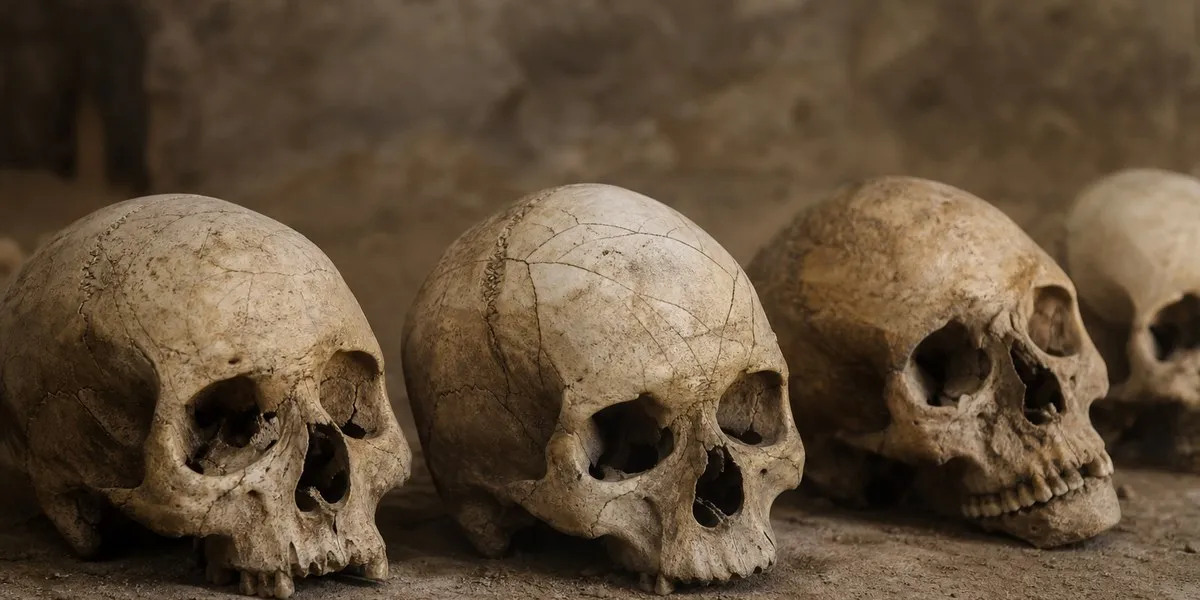
Archaeologist Rosalyn Campbell from Purdue University has uncovered evidence suggesting that human sacrifices may have occurred in ancient Egypt, particularly near the tombs of the first pharaohs. A forensic examination of 46 preserved skulls from burials close to these historic sites indicates fatal injuries on 18 of the specimens. This research, as reported by ScienceAlert, could provide new insights into the burial practices of Egypt’s early dynasties.
Insights from Ancient Burials
The skulls that Campbell analyzed were unearthed from the royal burial complexes at Umm el-Qaab in Abydos, a site that dates back to the First Dynasty, approximately 3078 to 2900 BCE. These individuals were interred alongside Egypt’s earliest rulers, which raises questions about their relationships with the monarchy.
The graves, initially excavated by British Egyptologist Flinders Petrie in the 1920s, contained the remains of numerous individuals in what are referred to as “subsidiary burials.” Petrie postulated that these individuals might have been sacrificed shortly after a king’s death, intended to accompany him in the afterlife. However, he lacked definitive evidence to support this theory.
The Nature of the Injuries
The forensic evaluation revealed that the skulls exhibited linear fractures, commonly resulting from blunt force trauma. Many of the injuries appeared consistent with being struck by broad, flat objects. Additionally, several skulls displayed more severe wounds caused by sharp instruments, including penetrating injuries near the temples and significant lacerations in the eye regions.
The implication of these findings raises the question of whether all individuals buried in this manner died as a result of human sacrifice or whether some may have succumbed to natural causes.
Conclusions and Historical Implications
Campbell acknowledges the complexities surrounding these findings. Although there is a clear indication of trauma on 18 skulls, it remains plausible that some individuals could have died from other factors unrelated to violence. Nevertheless, the distinctive nature of the injuries found lends credence to Petrie’s earlier hypothesis regarding potential sacrificial practices in the aftermath of a ruler’s passing. The study has been documented in the journal Frontiers in Environmental Archaeology, adding a compelling layer to our understanding of Egypt’s ancient burial customs.
In essence, this research opens a window into the complex interplay between life, death, and the afterlife in ancient Egyptian culture, warranting further exploration into historical rituals and societal norms. The discoveries not only advance archaeological scholarship but also spark continued interest in the enigmatic practices of one of history’s most influential civilizations.