
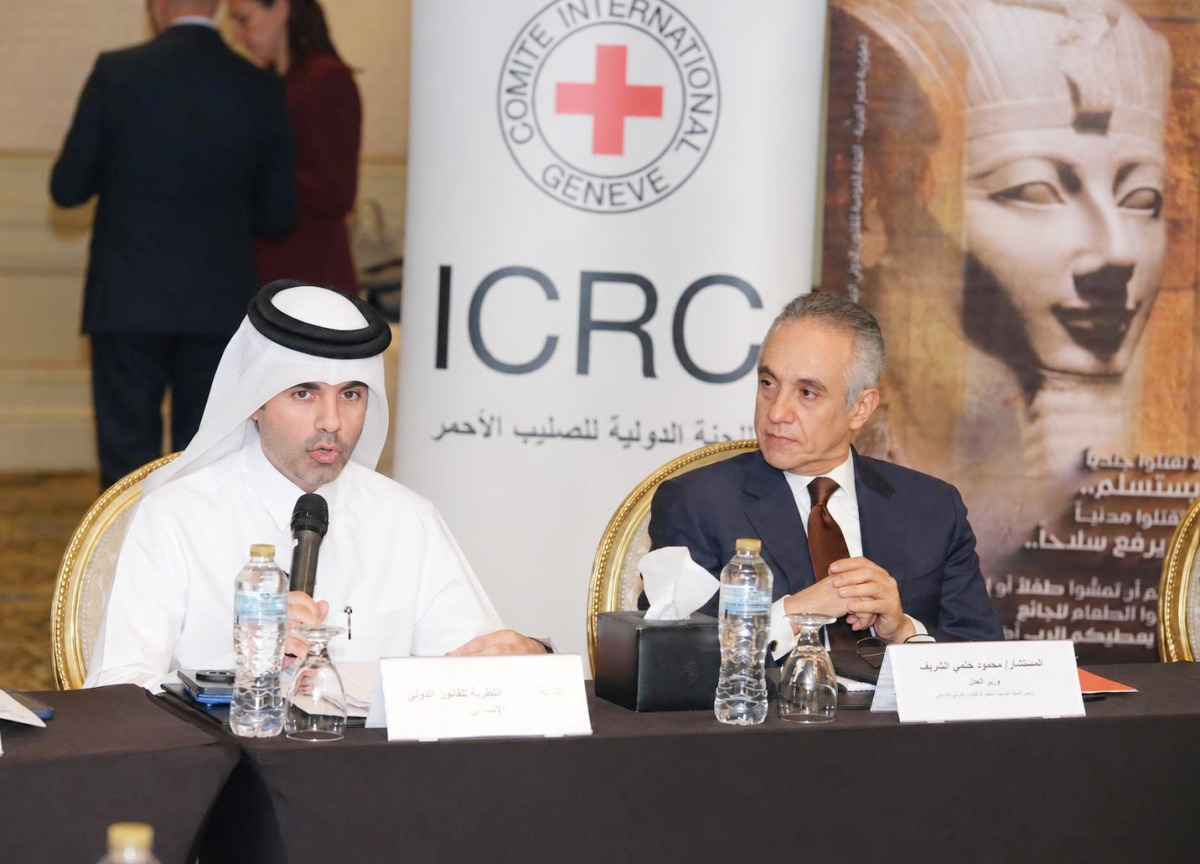
Cairo, Egypt recently hosted a significant workshop focused on the implementation of international humanitarian law (IHL) at the national level, with the participation of the State of Qatar. This event aimed to enhance cooperation among various Arab nations in addressing the complexities of humanitarian law amid evolving global challenges.
Bringing Together National Committees
The workshop united leaders and representatives from national committees on international humanitarian law across Arab countries. Key figures included members from Egypt’s Ministry of Justice, as well as delegates from the International Committee of the Red Cross (ICRC). Qatar’s delegation was headed by H.E. Saeed bin Abdullah Al Suwaidi, Undersecretary of Egypt’s Ministry of Justice. His role as the Chairman of the National Committee for International Humanitarian Law emphasizes Qatar’s commitment to advancing IHL initiatives within the region.
Legal and Moral Imperatives of IHL
During his opening address, Al Suwaidi highlighted that adherence to international humanitarian law transcends legal obligations; it embodies a moral and humanitarian duty. He called for the development of coordinated national systems capable of effectively translating these international obligations into actionable policies, law, and practices. According to Al Suwaidi, fostering such systems is essential for not only regional but also global compliance and action toward humanitarian issues.
Adapting to Modern Warfare Challenges
The rapidly changing landscape of warfare, particularly with new technologies such as artificial intelligence, presents ongoing challenges for compliance with humanitarian law. Al Suwaidi pointed out the urgent need to bolster national frameworks that ensure sustainable adherence to and implementation of IHL. The need to protect cultural heritage and medical services in conflict zones only adds to the complexity of these challenges. As such, he stressed the importance of ongoing evolution in national mechanisms to respond effectively.
Transforming National Committees into Centers of Expertise
Al Suwaidi further discussed the importance of evolving national committees from merely overseeing treaties and providing legal consultations into dynamic centers of expertise. This transformation would allow these committees to act as crucial platforms for collaboration among various sectors, including government, military, medical, and academic institutions. By fostering this interdisciplinary dialogue, committees can become instrumental in shaping effective policies that address current and future challenges in humanitarian law.
Overall, the workshop served as a pivotal gathering for Arab nations to not only share knowledge and expertise but also to create a unified response to the increasingly complex issues surrounding international humanitarian law. By emphasizing cooperation, solidarity, and modernization, Qatar and its Arab partners aim to cultivate a comprehensive culture and institutional framework that upholds the principles of humanitarian law amidst ongoing challenges.