
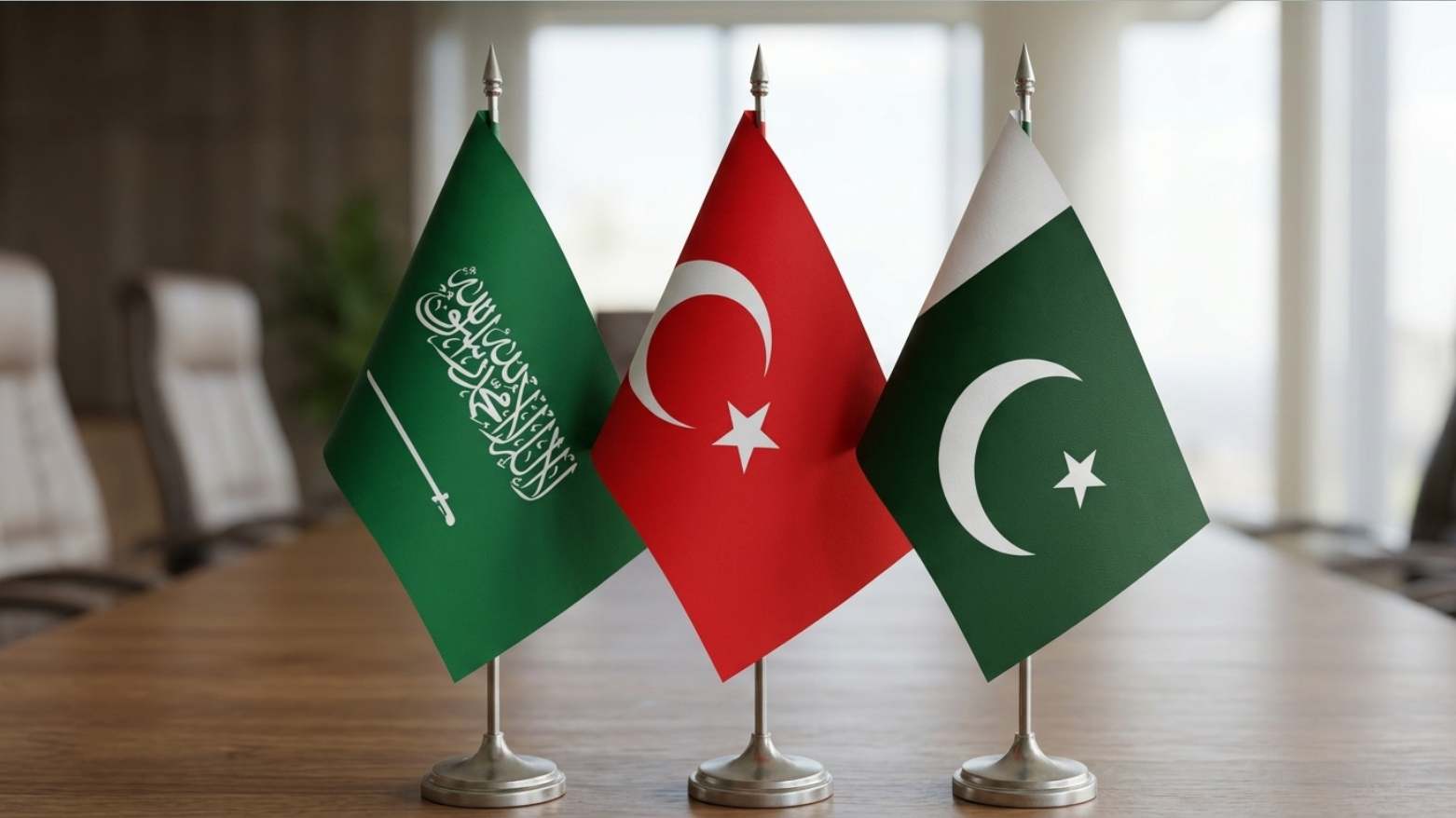
Saudi Arabia, Pakistan, and Turkiye have taken decisive action following a critical emergency meeting held in Riyadh. These three nations have activated their collective defense agreements, ensuring that military forces and necessary resources can be quickly deployed within Saudi Arabia. This development comes in the wake of escalating attacks from the Houthi group, which is aligned with Iran, prompting Saudi Defence Minister Khalid bin Salman to announce the initiation of collective deterrence measures.
Implementation of Collective Defense Measures
The Foreign Office of Pakistan reported that the three countries committed to swiftly providing the necessary military forces and capabilities in accordance with previously approved arrangements and national laws. This coalition had already agreed that any armed aggression against one member would be regarded as an assault on all members. While the joint statement issued following the emergency meeting lacked details on specific troop deployments or timelines, the urgent nature of these steps highlights the seriousness of the current geopolitical landscape.
Military Operations in Yemen
Meanwhile, in Yemen, forces aligned with the Saudi-backed Yemeni government have launched a significant military offensive against the Houthis. The Saudi-led coalition is providing crucial air support, employing around 100 fighter jets to back the operations. Maj. Gen. Turki al-Malki confirmed that air protection has also been established over the Bab el-Mandeb Strait, a strategic maritime route, and that hundreds of Houthi targets have been neutralized. The operation, named “Yemen Dawn,” aims to restore governmental institutions, liberate Sanaa, and dismantle what is described as the Houthi militia’s coup.
As a result of this escalating conflict, the World Health Organization has reported a rising death toll, with at least 959 individuals killed and over 4,200 injured. Furthermore, the UN migration agency revealed that nearly 174,097 individuals have fled the violence, seeking refuge in Djibouti. These numbers paint a grim picture of the humanitarian crisis unfolding due to the ongoing warfare.
Regional Security and Collective Solidarity
The emergency assembly of the Mecca Defence Alliance also addressed the alarming attempts to target sacred sites in Mecca and Medina, along with ongoing assaults against civilian and economic structures within Saudi Arabia. Defence Minister Prince Khalid bin Salman reaffirmed the coalition’s commitment to maintaining solidarity and unity in the face of these “heinous attacks.” The joint statement emphasized that the security of any member is intrinsically linked to the collective security of the alliance.
Moreover, Houthi military spokesperson Yahya Sari announced multiple military operations targeting various strategic locations in Saudi Arabia, including King Khalid International Airport in Riyadh and the Aramco refinery in Rabigh. U.S. Secretary of State Marco Rubio voiced support for Saudi Arabia’s right to defend itself in light of these Houthi attacks. The implementation of the Mecca Pact stands to add another dimension to Saudi Arabia’s military strategy while also receiving backing from Washington, indicating a broader geopolitical alignment against regional threats.
In conclusion, the recent developments among Saudi Arabia, Pakistan, and Turkiye showcase a firm commitment to collective defense measures as tensions escalate in Yemen and threats loom over the Kingdom. The establishment of rapid-response military capabilities underlines the urgency of addressing these challenges in a consistently volatile region.