
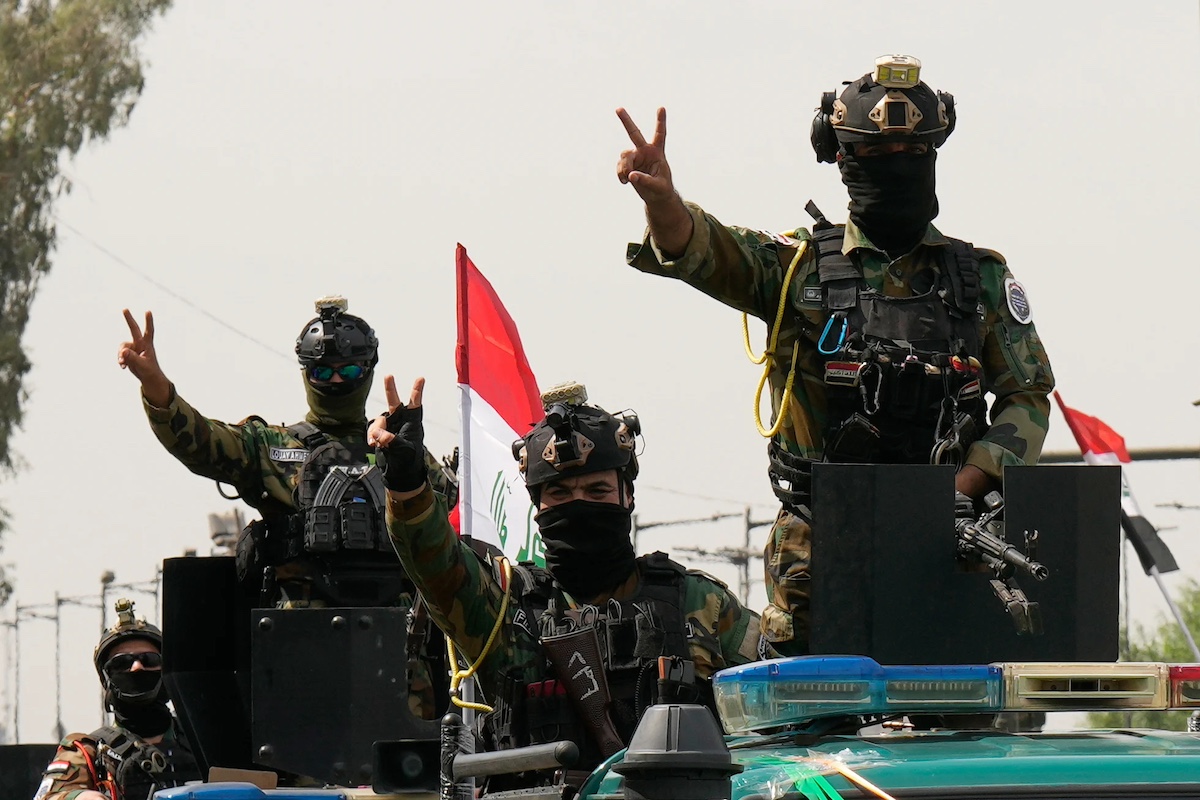
The withdrawal of American forces from Iraq marks a significant turning point rather than a conclusion, signaling a strategic shift from direct military involvement to remote engagement and containment. This transition reflects a broader geopolitical objective aimed at managing regional tensions, particularly concerning Iran’s influence in the Middle East.
Strategic Objectives Behind the Withdrawal
The U.S. seeks to diminish the power of armed groups within Iraq, which are considered pivotal to Iran’s regional strategy. These factions, often viewed as a backbone of the Axis of Resistance, resist disarmament and have no interest in becoming integrated into Iraq’s national military. The U.S. strategy hinges on reframing the narrative: if foreign occupation ceases, these groups lose their justification for resisting, thus positioning them as destabilizing forces opposed to the sovereignty of Iraq.
By withdrawing conventional forces, the U.S. alters the landscape in which these militias operate, attempting to portray them as rogue elements that undermine law and order. This narrative empowers Washington to exert pressure on the Iraqi government to eliminate these groups, ensuring that they cannot disrupt American interests in the region. Consequently, this tactical maneuver aims to neutralize the militias without direct military confrontation, leveraging political and economic tools instead.
A Preparatory Move Against Iran
Another crucial motive behind the U.S. withdrawal is to set the stage for potential confrontations with Iran. Historical lessons from Iraq demonstrate that conventional military occupation can create vacuums that adversaries exploit. By preemptively disbanding Iraq’s resistance forces, the U.S. seeks to prevent them from becoming a refuge for Iranian military elements, particularly the Islamic Revolutionary Guard Corps (IRGC), should tensions escalate.
The absence of armed groups allows the U.S. to secure its strategic interests while limiting the ability of Iran to retaliate indirectly against American forces or allies. This foresight reflects a clear shift in U.S. calculations, aiming to avoid involvement in multi-front conflicts. The U.S. prioritizes establishing alliances with regional partners to bolster its position should a broader conflict with Iran become inevitable.
Challenges to Regional Stability
However, the endeavor to disarm these groups faces significant challenges. The presence of these factions complicates any U.S. strategy to destabilize the Iranian government, serving as a deterrent and pushing the boundaries of conflict away from Iranian territory. As long as these groups remain intact, they pose a formidable obstacle to American objectives.
Moreover, if the resistance groups retain their operational capacity, Iraq risks becoming a battleground for competing interests, rendering any political settlement precarious. The ramifications could spiral into ongoing conflicts, ultimately benefiting entities that profit from instability. Thus, while the U.S. seeks to dismantle these armed militias, it may also inadvertently sow the seeds of chaos in an already volatile region.
The Illusion of Total Withdrawal
The U.S. military pullout is often portrayed as a withdrawal; however, it signifies a strategic pivot rather than an exit. The celebrations in Iraq should not be interpreted as genuine independence. Instead, the U.S. is transitioning from military control to a framework of economic influence and political pressure, affirming its intentions to remain a key player in the region.
As the landscape evolves, the future of Iraq hinges on the fate of these armed groups. Their status will critically impact whether Iraq can achieve a stable independence or remain ensnared in the geopolitics of the U.S. and Iran. In this complex dynamic, the coming years will be pivotal in shaping the security architecture of the Middle East.
Through calculated strategies, the U.S. aims to maintain its influence in Iraq while seeking to mitigate Iranian power. The delicate balance between these competing forces defines the ongoing struggle for the future of the Middle East. Ultimately, the influence of resistance groups will play a vital role in determining not only Iraq’s trajectory but also the broader patterns of stability and conflict in the region.