
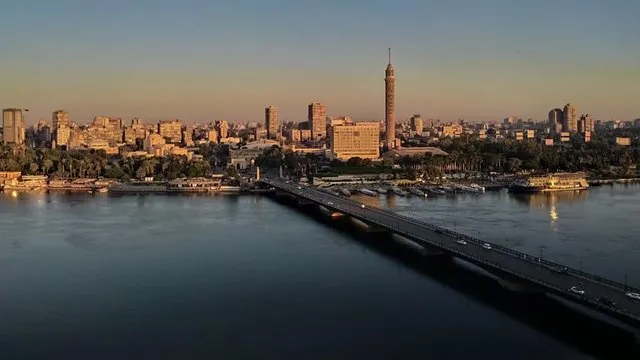
Egyptian President Abdel Fattah al-Sisi recently asserted that Egypt has both a historical and a legal right to its share of the Nile River’s waters. He emphasized that Cairo will address any actions he perceives as threats to its water security. This declaration comes amid tensions between Egypt and Ethiopia concerning the Nile’s water usage and the ongoing construction of hydroelectric dams.
The Importance of the Nile to Egypt’s Survival
The Nile holds unparalleled significance for Egypt, which heavily relies on it for drinking water, agricultural irrigation, and industrial use. With the majority of its land being arid desert, the population is primarily concentrated along the river and its delta. According to a 1959 agreement between Egypt and Sudan, Egypt is allocated around 55.5 billion cubic meters of Nile water each year. However, Ethiopia, not being a signatory to this agreement, contests its validity and does not recognize the established allocation.
The crux of the dispute lies in the differing perspectives on water rights and usage. Ethiopia argues that the earlier agreements between Egypt and Sudan do not apply to it and insists on the right to harness the river’s resources for its economic development.
The Impact of the Grand Ethiopian Renaissance Dam
One of the key points of contention is the Grand Ethiopian Renaissance Dam (GERD), which is a massive hydroelectric project on the Blue Nile, a major tributary of the Nile River. This tributary provides over 80% of the water that reaches Egypt. While Ethiopia views the dam as a critical pillar for its economic growth, allowing for electricity generation and improved energy access, Egypt fears that such a project could significantly reduce its water supply.
Egypt’s concerns intensify during phases such as filling the dam’s reservoir, as changes in water flow could threaten its agricultural and drinking water needs. Cairo maintains that any use of the Nile’s resources must adhere to guidelines that safeguard its water security, while Ethiopia remains opposed to these stipulations.
Continuing Diplomatic Tensions
In response to President al-Sisi’s remarks, the Ethiopian government has reiterated its stance on the issue. The Ministry of Foreign Affairs in Addis Ababa emphasized the necessity of considering geography in any discussions surrounding the Nile. This illustrates Ethiopia’s firm position on utilizing the river for its own requirements, contrasting sharply with Egypt’s appeal to historical agreements and international law.
Despite numerous negotiations aimed at resolving these issues, no comprehensive agreement has been reached among Egypt, Ethiopia, and Sudan regarding the regulation of Nile water usage. Egypt continues to assert its historical claims over the river, while Ethiopia pushes back, insisting on its right to develop its energy resources. Sudan, situated between these two nations, also seeks to manage its interests in the river’s flow.
The Future of Nile Water Relations
The ongoing disputes surrounding the Nile are emblematic of a broader struggle over natural resources in a region where water scarcity is increasingly pressing. As both nations stand firm in their respective positions, the situation remains fragile. With rising populations and agricultural demands, both Egypt and Ethiopia must navigate this delicate balancing act. The outcome of this conflict will be crucial not just for the two countries, but also for regional stability and development as a whole. Al-Sisi’s declarations indicate that Egypt is unwilling to concede its claims, setting the stage for a prolonged dialogue filled with potential escalations. How this situation unfolds remains uncertain, but the Nile, as a lifeline for two nations, continues to be at the heart of a critical geopolitical struggle.