
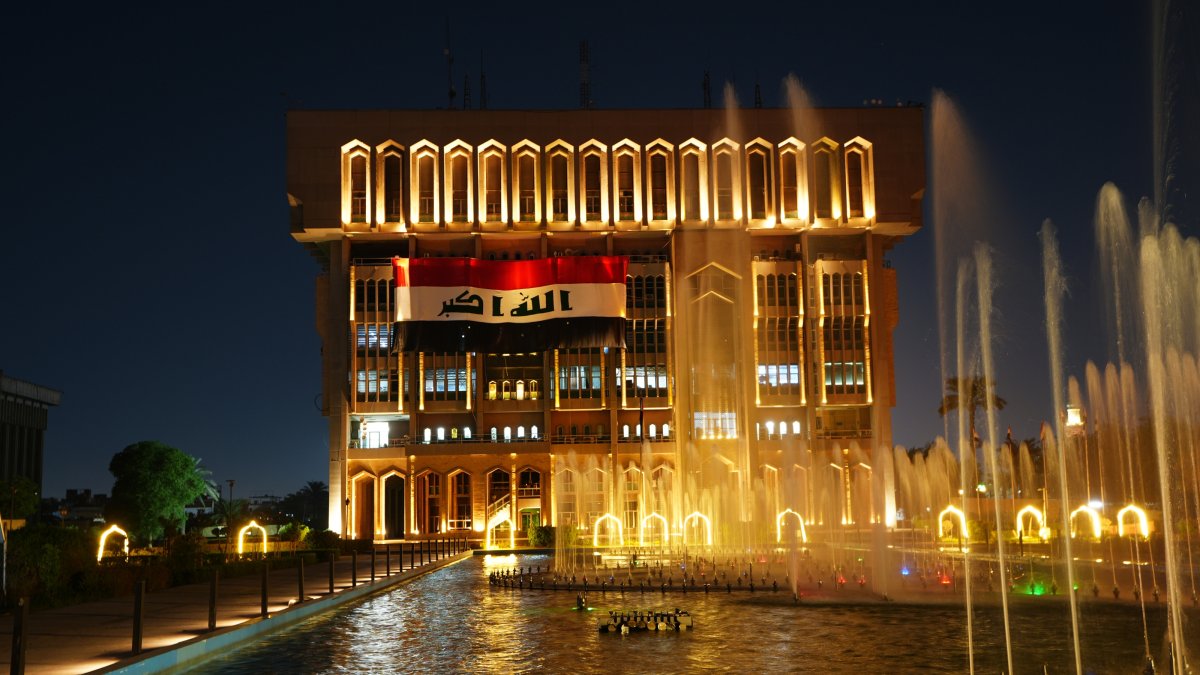
The recent announcement from the United States regarding the withdrawal of troops from Iraq marks a pivotal moment in the region’s history. Officially communicated on September 30, this decision culminated a series of discussions that began in September 2024, ultimately leading to U.S. President Joe Biden’s commitment to fully cease military involvement by 2026. This strategic shift is expected to have lasting implications for Iraq, regional dynamics, and international relations.
End of an Era: The U.S. Military Withdrawal
The complete withdrawal from Iraq represents not only a significant change for U.S. foreign policy but also symbolizes the conclusion of the American military mission initiated during the controversial invasion of 2003. This unilateral action came without the support of NATO or the UN, marking a significant shift in how military interventions are perceived globally. By ending its military presence, the U.S. acknowledges a transition in its role in the Middle East, which many view as a reflection of its diminishing influence in the region.
Iraq celebrates this development as a reclaiming of sovereignty. The government designated September 30 as a national holiday, dubbed Iraq’s Sovereignty Day, to commemorate the departure of foreign military forces. This celebration is not just symbolic; it reflects the Iraqi administration’s intent to establish itself as a more autonomous political entity, further defining its national identity in the face of foreign intervention.
Regional Implications: Iran and the Rise of National Identity
The exit of U.S. forces has been met with mixed reactions, particularly from Iran-backed factions within Iraq. These groups perceive the vacuum left by the departure of U.S. troops as an opportunity to consolidate their influence. Nevertheless, Iran’s current vulnerabilities, heightened by recent military engagements with the U.S. and Israel, suggest limitations on its ability to exert control over Iraqi politics as previously anticipated. This dynamic may ultimately facilitate Iraq’s emergence as a fully sovereign state, untethered from external pressures.
This renewed focus on national identity has resonated across various Iraqi political factions, including Shiite communities, who aim to fortify national unity over sectarian divides. The emphasis on a cohesive national narrative has the potential to elevate Iraq’s standing on the international stage, fostering an environment where it can pursue greater strategic autonomy from both the U.S. and Iran.
Concerns Among Kurdish Regions and Relationships with Türkiye
While the withdrawal signifies an important step for Iraqi sovereignty, it raises alarms among Kurdish populations. One major concern is the potential resurgence of extremist entities linked to Daesh, which could take advantage of the power vacuum created by the departure of U.S. forces. Additionally, the apprehension surrounding possible attacks on Kurdish Peshmerga forces by Iran-backed groups highlights the precarious security situation in the region. The Iraqi government must adopt a proactive approach to address these security challenges in the post-withdrawal landscape.
Furthermore, the American exit carries significant implications for Türkiye. The Turkish government views a more independent Iraq as an opportunity to strengthen bilateral relations, focusing on shared interests like combating terrorism and regional development projects. Recently, Türkiye has engaged with Iraq to facilitate security measures in areas affected by non-state actors, particularly in the Sinjar region, illustrating a collaborative approach to enhancing stability in the region.
In the upcoming months and years, the trajectory of the Iraqi government remains uncertain. However, with the U.S. withdrawal and the Iranian regime’s weakened state, Iraq may lean towards stronger ties with Türkiye. A move towards genuine independence could potentially integrate Iraq into more robust regional frameworks, fostering a cooperative environment for all parties involved.