
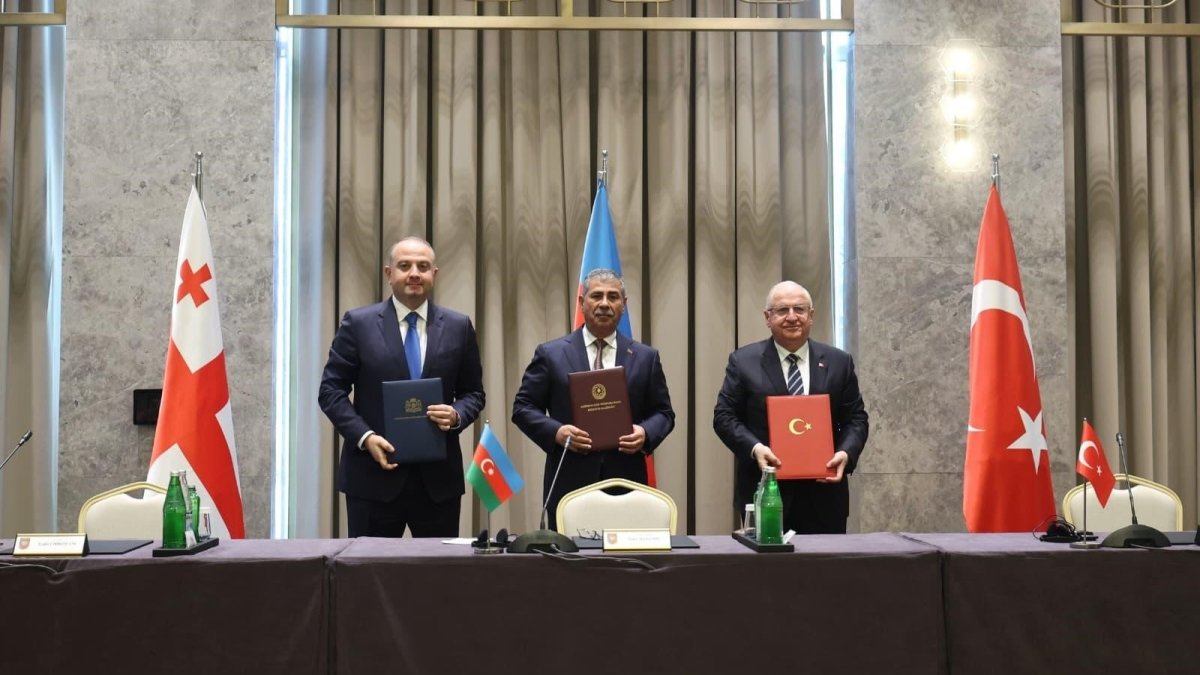
The recent 13th Trilateral Meeting of the Defense Ministers from Türkiye, Azerbaijan, and Georgia took place in Shusha on October 2, marking a crucial development in regional security cooperation. This gathering, attended by Azerbaijani Defense Minister Colonel General Zakir Hasanov, Turkish National Defense Minister Yaşar Güler, and Georgian Deputy Prime Minister and Defense Minister Irakli Chikovani, solidified the view that the security of the Caucasus is intrinsically linked to that of these countries. The meeting concluded with a joint protocol and a press conference, emphasizing the continuing evolution of this minilateral cooperation.
Historical Context and Evolution
Hasanov began the session by recalling prior meetings in Türkiye and Georgia, highlighting the growing significance of this trilateral format, which has now reached its 13th iteration. This framework is no longer a series of casual consultations but has transformed into a structured channel equipped with historical memory and established procedures. Hasanov credited the strength of inter-state relations to the genuine friendship among the leaders, asserting that this trilateral cooperation exemplifies effective regional collaboration, fostering peace, stability, and security.
The tone of the meeting demonstrated their solidarity, with Azerbaijani and Georgian ministers expressing condolences for Turkish military casualties in a plane crash. This diplomatic gesture illustrated the broader social and military dimensions of their cooperation. The ministers reiterated that their nations have enjoyed friendly relations for centuries, emphasizing the importance of mutual trust as a cornerstone for improving these ties.
Shared Goals and Strategic Cooperation
Güler emphasized the concept of strategic cooperation binding Türkiye, Azerbaijan, and Georgia. In a city steeped in Azerbaijani culture, he remarked on their shared history, geography, and strong ties, emphasizing that collaboration has grown increasingly complex. Notably, discussions included recent positive developments in peace talks between Azerbaijan and Armenia, which present new collaborative opportunities for the region.
A focal point for the ministers was the importance of connectivity. The existing projects in energy, transportation, and communications among their countries not only contribute to economic growth but are also vital to regional security. Güler highlighted that the collective responsibility for ensuring the security of these initiatives directly correlates with their stability. Proposed joint military exercises and shared training sessions illustrate the practical aspects of these commitments, underpinning the nations’ promises of mutual support.
Challenges and Future Directions
The meeting addressed the pressing challenges the region faces, reiterating the necessity for collaborative efforts against security threats. Emphasizing their commitment, the ministers discussed potential areas for expanding trilateral exercises and enhancing military capabilities. The dialogue extended into various aspects of defense concerns, recognizing the need for military-technical cooperation and expanded educational frameworks in line with these goals.
Following the discussions, Hasanov outlined that a coherent framework for regional stability and cooperation is indispensable, especially amid rising global tensions and economic uncertainties. At the press conference, he conveyed optimism regarding the deepening ties, stating their intention to grow this collaborative environment further.
Conclusion: A Strengthened Framework for Regional Cooperation
The Shusha protocol provides a mechanism for the three countries to synchronize their security interests while reinforcing the material connections that exist among them. While it does not provide solutions to every issue in the Caucasus, it acknowledges the interplay between shared sovereignty and cooperative stability. If the agreements made on October 2 are implemented effectively, this meeting will stand as a significant step toward viewing the security of the Caucasus, Türkiye, Azerbaijan, and Georgia as a unified endeavor, ultimately enhancing regional stability.