
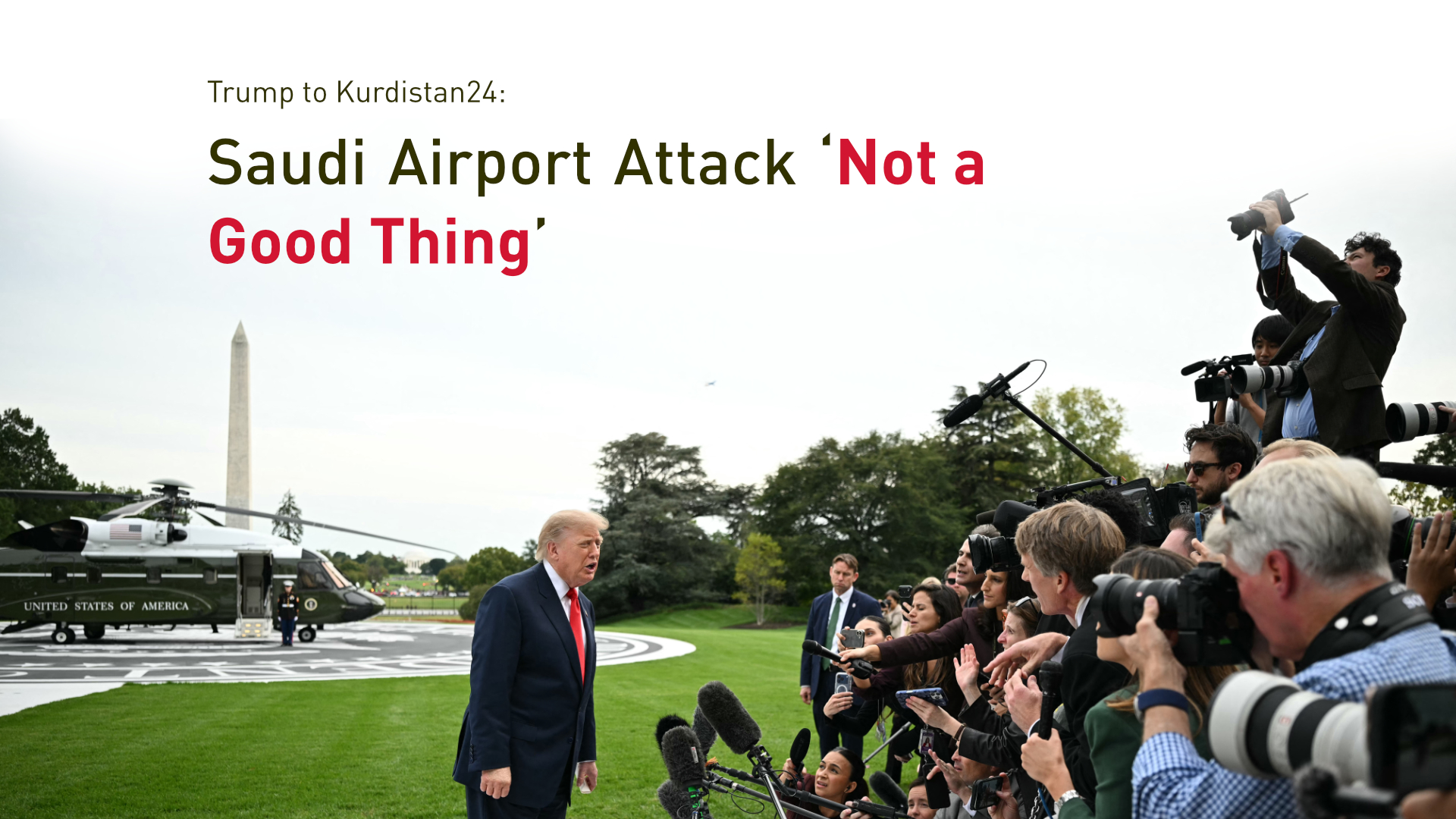
U.S. President Donald Trump voiced his concerns regarding the recent attack launched by the Houthi forces on Riyadh’s King Khalid International Airport. Speaking to Kurdistan24, he described the situation as “not a good thing” amid escalating tensions between the Iran-backed Houthis and Saudi Arabia, which is supporting the Yemeni government in their protracted conflict.
Response to Houthi Attacks
On October 10, Trump expressed his dissatisfaction with the attack during a conversation with Kurdistan24’s Washington bureau director. He remarked, “It is not good, it is not a good thing. I am not happy about it.” His comments followed a series of violent engagements between the Saudi forces and the Houthis, an Iran-supported group. Saudi Arabia reported that these attacks had resulted in the deaths of three of its citizens at the airport and targeted a Saudia Airlines aircraft. Although the Houthis claimed responsibility, initial reports from Saudi authorities did not disclose the culpable parties regarding the casualties.
Escalating Military Operations
Following these events, military actions intensified within Yemen, with the Saudi-led coalition declaring the destruction of 136 military targets linked to the Houthis. Coalition spokesperson Turki al-Maliki emphasized that these operations were aimed at diminishing Houthi military capacities. Reports indicated that missile strikes had also targeted the Houthi-controlled Saada governorate, highlighting a marked escalation in the conflict. The ongoing strife has once again affected civilian life and aviation, with FlyDubai canceling flights to multiple Saudi destinations and Pakistan International Airlines halting its operations to Riyadh.
Broader Regional Impact
The conflict’s reverberations extend beyond the immediate military battles, impacting civilian infrastructure in both Saudi Arabia and Yemen. Heavy explosions were reported in Sanaa, the Houthi-controlled Yemeni capital, as a result of ongoing conflict, leaving several individuals injured. Simultaneously, Saudi strikes were reported to have claimed lives near the airport in Sanaa. This growing confrontation has raised alarms in Washington, as it pushes the boundaries of the conflict beyond its traditional borders.
Trump also made mention of energy relations between the U.S. and Russia, noting a significant agreement focused on fuel that would see increased deliveries of Russian oil and diesel to American markets. While he acknowledged the deal’s importance, specific details regarding its scale and timelines were not provided. His comments on energy come at a time when regional conflicts are threatening major shipping routes and energy security in the area.
In retrospect, the conflict, which reignited significantly in July, has increasingly become a matter of regional security, affecting not only the border dynamics between Yemen and Saudi Arabia but also the stability of international air travel and trade routes critical to both nations. The strategic Bab al-Mandab Strait remains a significant area of interest, as both the Houthis and Saudi-backed forces vie for control over crucial territories.
President Trump’s remarks to Kurdistan24 signal a notable concern from the U.S. as the conflict unfolds. While he did not provide an outline for a specific U.S. policy response, his dissatisfaction with the Houthi attacks underscores the seriousness with which Washington views this rising tension. For Saudi Arabia, the implications are clear: The conflict in Yemen is now critically impacting civilian infrastructure, demanding urgent attention and measures as hostilities show no signs of abating.