
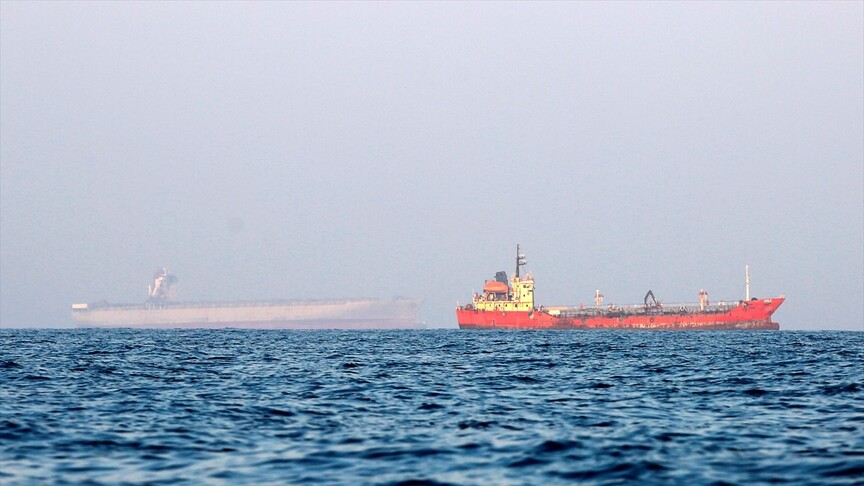
Tensions continue to escalate in the Strait of Hormuz as a senior Iranian security official makes bold accusations against the United States military and its regional allies. The situation highlights the complexities of international relations in a vital maritime corridor that holds immense strategic significance.
Accusations of Oil-Smuggling Operations
Mohsen Rezaei, the secretary of Iran’s Supreme National Security Council, claimed that U.S. Central Command (CENTCOM) head, Admiral Brad Cooper, is orchestrating oil-smuggling activities in collaboration with the armed forces of the United Arab Emirates. In an interview with state-run Press TV over the weekend, Rezaei accused the UAE military of aiding in these clandestine operations, which allegedly involve small boats transporting oil to larger tankers. He stated that Iranian forces have targeted these vessels nightly for the past few months, although specific details about the scale and implications of these operations remain unclear.
As of now, there has been no response from U.S. or UAE representatives regarding Rezaei’s allegations. This silence only adds to the mounting uncertainty surrounding maritime security in the region, a situation complicated further by ongoing military engagements.
The Strategic Importance of the Strait of Hormuz
Rezaei strongly rejected claims made by U.S. President Donald Trump that the Strait of Hormuz is open and insisted that Iran maintains control over this strategically significant waterway. “From now on, we will maintain control over the management of the Strait of Hormuz,” he asserted. This assertion not only emphasizes Iran’s claim over the area but also signals potential threats to maritime traffic, which Rezaei noted remains considerably below pre-war levels.
He accused the U.S. and its allies of utilizing smuggling networks for oil transportation, suggesting a failure in international maritime law enforcement. The stability of this vital trade route is critical, as a significant percentage of the world’s oil supply passes through the Strait of Hormuz, making its security essential for global energy markets.
Threats to U.S. Infrastructure
In a notable escalation of rhetoric, Rezaei warned that should hostilities reignite, Iran could target U.S.-linked technological infrastructures in the region. He indicated that while these assets are currently not part of Iran’s military targets, the situation could change rapidly if conflict escalates. He highlighted the potential impact by discussing the valuation of such infrastructure, estimating it at over $2 trillion.
The implication of this threat is significant; it suggests that not only are military targets in play, but also critical civilian and technological infrastructure in the region could be at risk. This warning serves to underscore the interconnected nature of modern warfare, where cyber operations and traditional military engagements increasingly overlap.
Ongoing Military Tensions
The backdrop to these fiery declarations is a history of conflict between the U.S. and Iran, including a war initiated by the U.S. and Israel against Iran earlier this year. Tehran responded with missile and drone strikes throughout the region and effectively closed the Strait of Hormuz to shipping activities. The U.S. later implemented a naval blockade on Iranian ports, amplifying tensions further.
A memorandum of understanding was signed in June to ensure freedom of navigation in the Strait of Hormuz, but its implementation has stalled amid ongoing disputes over regional security issues. The prevailing uncertainty raises questions about the effectiveness of diplomatic mechanisms aimed at diffusing tensions in such a critical maritime zone.
In a landscape fraught with challenges, the dynamics between the U.S., Iran, and regional allies will have to navigate complicated geopolitical waters in the coming months. The spotlight is now firmly fixed on the Strait of Hormuz as a potential flashpoint for conflict, leaving many to ponder the implications for global security and energy supplies.