
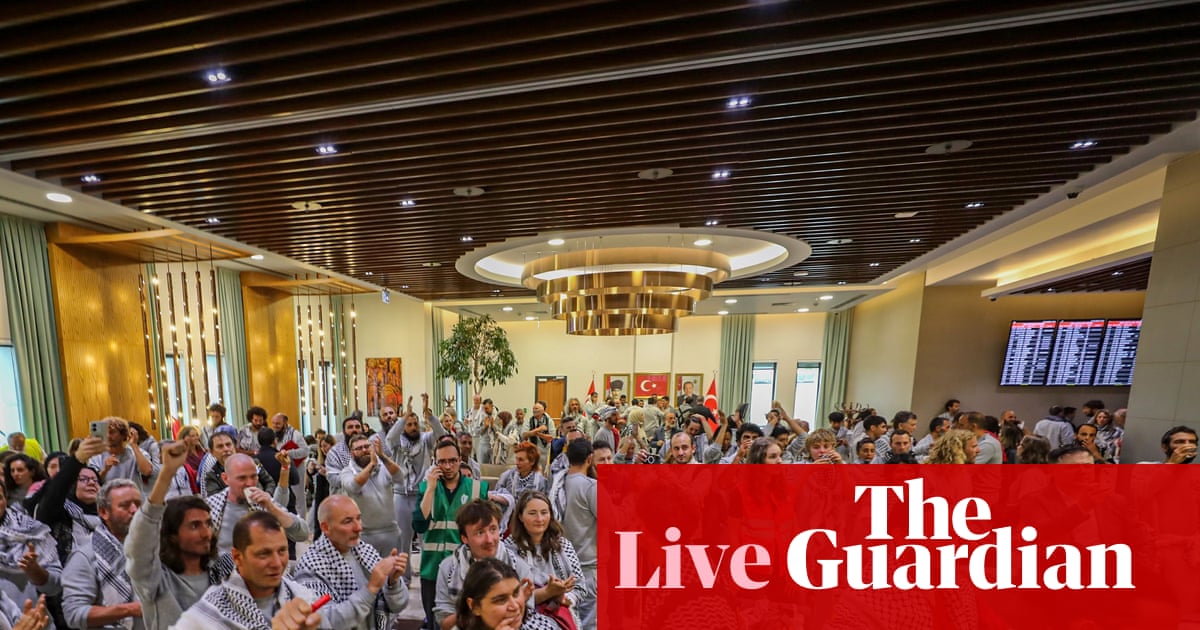
In a concerning turn of events, the Global Sumud Flotilla activists, which included a contingent from Australia, were recently released from Israeli detention. After approximately 80 hours of being held, the 428 activists have now arrived in Istanbul, where they are reflecting on their ordeal. Among the group were 11 Australians, who are currently undergoing medical check-ups and preparing for consultations with lawyers before heading back home.
### Treatment in Detention Raises Eyebrows
Zack Schofield, one of the Australians onboard, described the appalling conditions the group faced during their time in detention. He remarked that many activists had gone days without food and had even been denied water for two days. In a poignant statement, he underscored that while their situation was dire, it paled in comparison to the daily struggles faced by Palestinians in the occupied territories. This perspective highlights the broader humanitarian crisis beyond their personal experiences, calling attention to the ongoing issues in the region.
Schofield’s comments have sparked a call to action for the Australian government. He urged officials to sever ties with Israel, advocating for an end to military support and the provision of arms, urging a reevaluation of Australia’s diplomatic stance towards the nation.
### Outrage from Australian Officials
Tanya Plibersek, Australia’s Minister for Social Services, condemned the treatment of the flotilla activists, labeling the behavior of Israeli officials as disgraceful. She expressed satisfaction that Australia’s foreign minister has articulated this stance to the Israeli government. Meanwhile, Greens senator Nick McKim escalated the rhetoric, describing the actions of a senior Israeli official as a form of torture and labeling Israel a rogue state. McKim indicated that stronger diplomatic responses are needed, demanding action from the Australian Prime Minister.
### Contradictory Claims from Israeli Authorities
In the wake of the flotilla incident, Dr. Hillel Newman, Israel’s ambassador to Australia, publicly claimed that no harm came to the detainees. He insisted that the Israeli Defense Forces conducted the interception with sensitivity, dismissing accusations of mistreatment as unfounded. However, this assertion has been met with skepticism, as reports and testimonies from the detainees paint an entirely different picture.
Chris O’Connor, father of one of the detained Australians, refuted Newman’s claims, recounting alleged instances of violence and psychological torture that his daughter had faced during a previous detention. His testimony, which included chilling details about physical assaults and inhumane treatment, stands in stark contrast to the narrative pushed by Israeli authorities.
### Conclusion: A Call for Accountability
These events have ignited urgent discussions about human rights and international relations. The contrasting narratives highlight a critical need for transparency and accountability, not only regarding the treatment of activists but also concerning the ongoing humanitarian situation in the Palestinian territories. As the dust settles on this incident, the call for a reevaluation of Australia’s foreign policy grows louder, with activists and officials urging the government to take a stand for human rights on the global stage.