
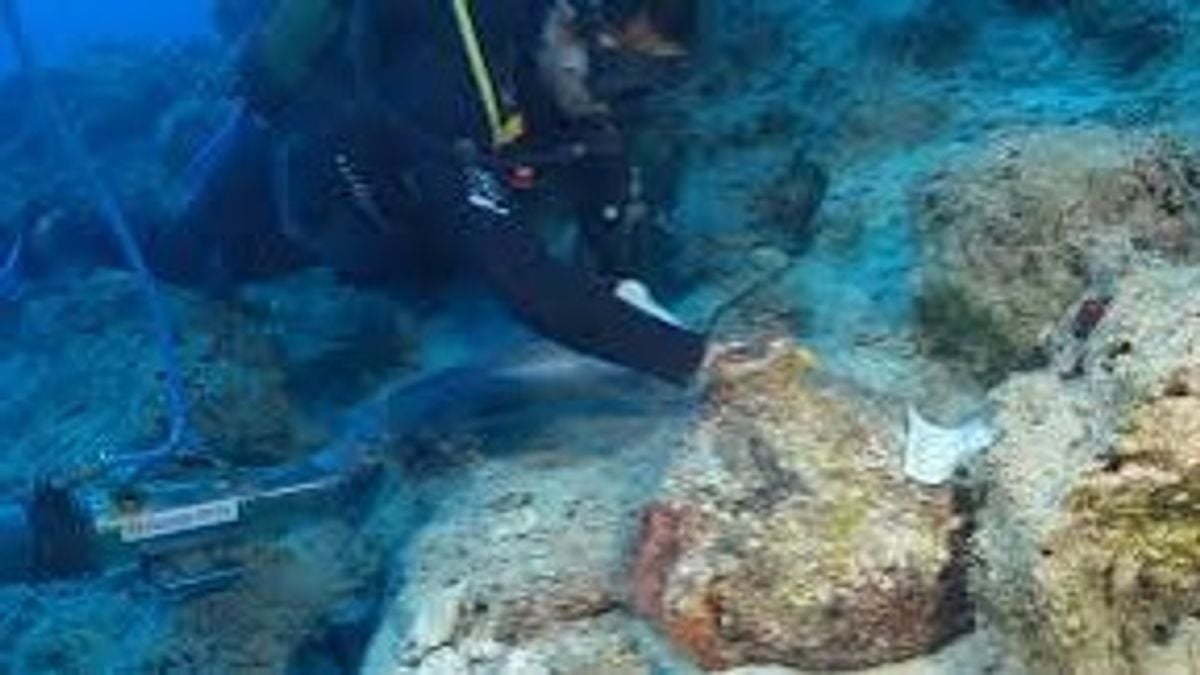
Archaeologists have made a groundbreaking discovery off the coast of Turkey: the oldest known shipwreck in the world. Dating back nearly 5,000 years, this ancient wooden cargo vessel offers insights into maritime history from a time long before recorded civilization. This discovery, led by Hakan Öniz, is significant not only for its age but also for the cultural context it provides, coinciding with the construction of the Great Pyramid of Giza.
Significance of the Discovery
The shipwreck, estimated to have sunk between 4,400 and 4,700 years ago, was found near Kekova Island in Antalya, Turkey. The remains of the vessel were located just 30 meters beneath the surface, where various artifacts were revealed. Turkish Minister of Culture and Tourism, Mehmet Nuri Ersoy, highlighted the significance of the findings, noting that one amphora recovered from the wreck displayed complex markings and two holes, hinting at its purpose and journey. According to Öniz, this moment marks a rare opportunity as they are the first modern individuals to touch these artifacts after millennia underwater.
Details of the Ship and Artifacts
The ship itself measured approximately 10 meters in length and served as a trade vessel operating in the Mediterranean Sea. During the exploration, divers unearthed three large stone anchors and over thirty ceramic storage pots known as amphorae. These amphorae played a crucial role in ancient trade, as they were commonly used to transport goods such as oil, wine, and grains. However, the wooden structure of the ship has deteriorated significantly over time, making it impossible to utilize methods like radiocarbon dating for age estimation. Instead, researchers have relied on comparative analysis of ancient decorations to authenticate the ship’s time period, confidently identifying it as belonging to the Early Bronze Age.
Conservation Efforts and Future Research
As the artifacts were retrieved, they were immediately brought to the surface for careful conservation efforts. Dr. Karin Sowada has taken the initiative to study these amphorae in detail to better understand their historical context and use. The significance of these findings extends beyond just the ship itself; they provide a glimpse into ancient trade practices and the ways in which cultures interacted across the Mediterranean.
As more research is conducted, these artifacts can offer key insights not only into ancient maritime activity but also into the broader socio-economic conditions that shaped early human civilization. The world looks forward to what further studies of this ancient shipwreck may uncover, adding depth to our understanding of this pivotal time in history.
In summary, the discovery of the world’s oldest shipwreck off the coast of Turkey is not just a sensational archaeological find; it is a treasure trove of information about our past. As exploration continues and conservation efforts progress, this remarkable wreck will undoubtedly continue to shed light on the lives of those who sailed the Mediterranean nearly 5,000 years ago.