
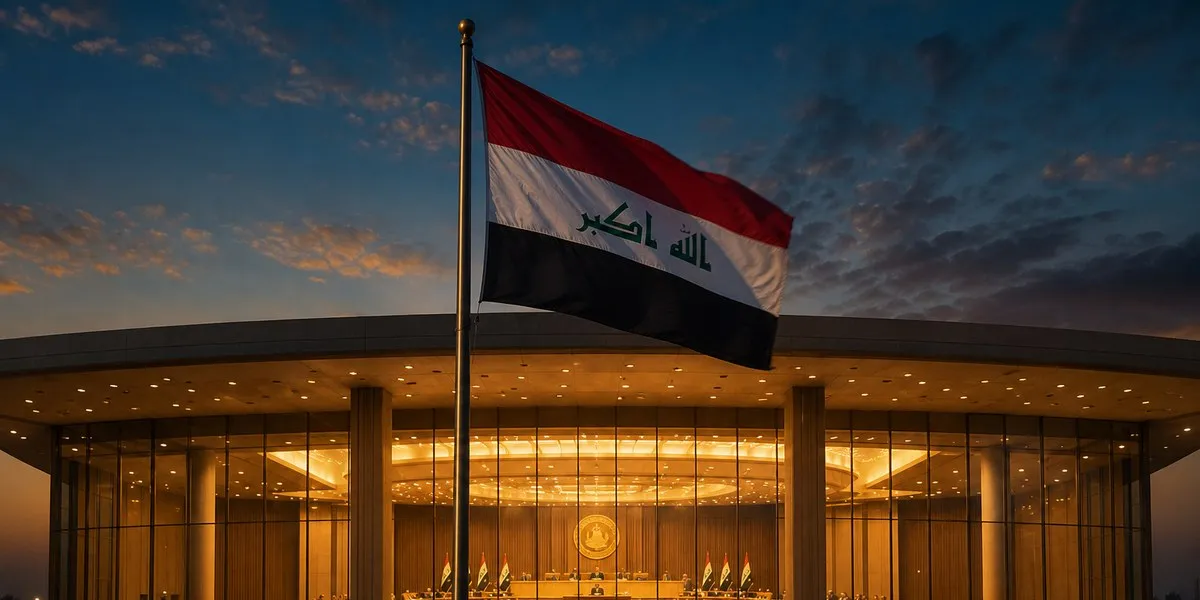
On October 15, Iraq’s parliament finalized the formation of the government cabinet by approving candidates for vacant positions. Among those appointed were three new deputy prime ministers, one of whom is Laith al-Khazali, an individual currently facing sanctions from the United States.
Laith al-Khazali and US Sanctions
Laith al-Khazali is the brother of Qais al-Khazali, the head of the Iranian-backed militia Asaib Ahl al-Haq. In 2007, he was detained by U.S. forces due to suspicions of his involvement in an attack that claimed the lives of five American military personnel in Karbala. He remained in custody until his release in June 2009. In 2019, the U.S. Treasury Department sanctioned him, citing his leadership role within Asaib Ahl al-Haq and accusations of human rights abuses linked to the 2007 incident.
The U.S. government had yet to issue a statement regarding al-Khazali’s recent appointment at the time of this report. Republican Congressman Joe Wilson took to social media to decry the appointment, labeling al-Khazali a “sanctioned terrorist” and a “puppet of Iran.” He emphasized that members of Asaib Ahl al-Haq had previously killed both American and Iraqi citizens, raising concerns about al-Khazali’s significant political role.
New Government Appointments
Alongside the three deputy prime ministers, Iraq’s parliament also appointed new ministers for key portfolios including interior, defense, planning, higher education and scientific research, and culture. This round of appointments effectively filled the last outstanding cabinet vacancies, as other positions had been settled five months earlier.
Prime Minister Ali al-Zaidi expressed optimism about the future, stating that with these vacancies now filled, the government could enter a phase of sustained and accelerated progress. He reiterated a commitment to advancing the government’s agenda and acknowledged the challenging domestic and international conditions, particularly economic and security issues stemming from regional conflicts.
Al-Zaidi also committed to tackling corruption, strengthening Iraq’s sovereignty, and ensuring the full withdrawal of U.S. troops from Iraqi territory. He emphasized the need to disarm non-state armed groups, noting that while some powerful factions remain defiant, Asaib Ahl al-Haq is among those that have agreed to disarm. The complex political landscape in Iraq presents ongoing challenges for governance and security, especially with influential militias still operational.