
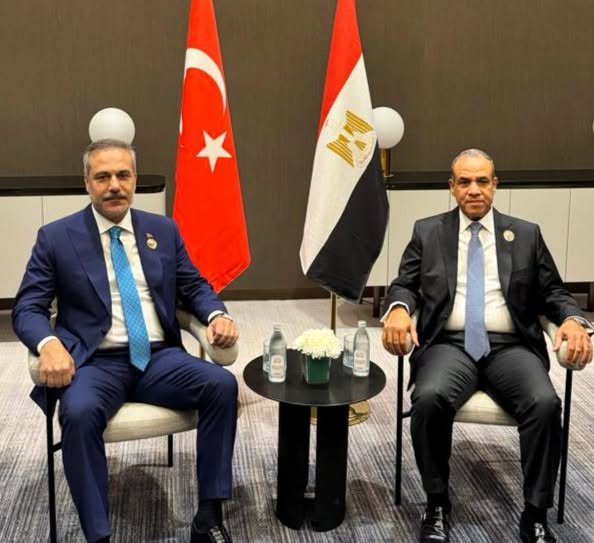
Egypt has been actively engaging in diplomatic efforts to address regional issues during a recent series of meetings in Baghdad. Foreign Minister Badr Abdelatty represented Egypt at the 52nd session of the Organisation of Islamic Cooperation’s Council of Foreign Ministers. Discussions centered on various challenges, including escalating tensions in Iran, Yemen, Sudan, Libya, Syria, the role of the United Nations in reform, and the ongoing Palestinian situation.
Addressing Regional Tensions with Iran and Yemen
In a pivotal meeting with Turkish Foreign Minister Hakan Fidan, Abdelatty explored the current developments concerning Iran. Both officials emphasized the need to de-escalate tensions in the region, calling for a revival of diplomatic dialogues, particularly between the United States and Iran. Abdelatty underlined Egypt’s commitment to regional stability, advocating for enhanced coordination through a quadrilateral mechanism. He rejected any threats against Gulf states or attempts to leverage strategic waterways as means of pressure or military escalation.
The discussions extended to Yemen, where both ministers reaffirmed their dedication to supporting state institutions while condemning any attacks targeting Saudi Arabia. The necessity of preserving Yemen’s territorial integrity and national unity was a crucial point in their dialogue, highlighting Egypt’s commitment to facilitating a peaceful political resolution to the ongoing crisis.
Stability in Sudan, Libya, and Syria
Touching on the unrest in Sudan, Abdelatty emphasized the importance of maintaining the nation’s unity, sovereignty, and institutional integrity. He called for a political settlement to resolve the tumultuous situation. In Libya, he reiterated the urgency of overcoming divisions and unifying national institutions to restore stability. Regarding Syria, Abdelatty defended the country’s sovereignty and territorial rights, expressing strong opposition to Israeli military actions within Syrian borders.
In addition to these discussions, Abdelatty connected with UN Deputy Secretary-General Amina Mohammed to address Egypt’s partnership with the United Nations and broader reform initiatives. He highlighted the necessity for changes within the Security Council to ensure fair representation for African nations, in alignment with the Ezulwini Consensus and the Sirte Declaration. The conversations also included evaluating potential candidates for the next UN secretary-general, emphasizing the need for qualified individuals with integrity and diplomatic acumen.
Strengthening OIC and Addressing the Palestinian Question
The series of meetings also featured Abdelatty’s discussion with newly appointed OIC Secretary-General Ismail Ould Cheikh Ahmed. He reiterated Egypt’s steadfast support for both the strengthening and reform of the OIC. They discussed the Palestinian issue and the situation in Jerusalem, with Abdelatty firmly opposing any actions that might alter the city’s historical and legal status.
In addition, Abdelatty met with Yemeni Foreign Minister Afrah Abdulaziz Al-Zouba to reinforce Egypt’s support for Yemen’s sovereignty and the need for diplomatic endeavors to address its crisis. They exchanged views on regional security, particularly concerning the Red Sea and Bab al-Mandab, underlining the critical nature of preserving freedom of navigation and averting conflicts that could escalate further. Abdelatty concluded by asserting that Saudi Arabia’s security is integral to Egypt’s national security, further solidifying Egypt’s role as a stabilizing force in the region.
Through these dialogues, Egypt emerges as a pivotal actor in striving for stability, peace, and collaboration across the Middle East, emphasizing the significance of dialogue in resolving conflicts.