
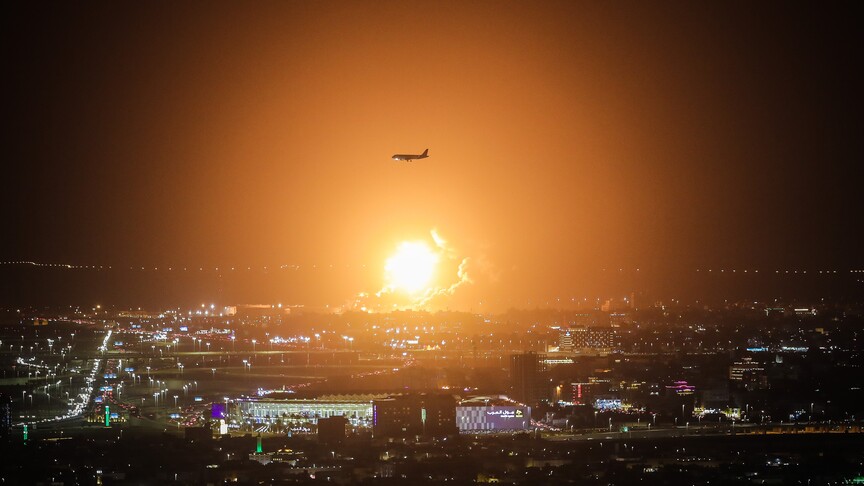
Iraq is currently conducting an investigation into recent drone attacks that targeted Saudi Arabia and the United Arab Emirates (UAE), with collaboration from both nations. This information was shared by Sabah al-Numan, the spokesperson for Iraq’s armed forces, emphasizing the seriousness of the inquiry.
Investigation Details
According to al-Numan, the high-level investigation committee is actively engaged in compiling evidence and data related to the attacks on its neighboring countries. The investigation will include an analysis of forensics and radar information, with direct communication and cooperation between Iraqi officials and their counterparts in Riyadh and Abu Dhabi. Al-Numan assured that there are no rushed timelines for releasing findings, underscoring the meticulous nature of the work being undertaken.
Security Strategies in Focus
Central to Iraq’s approach is the emphasis on maintaining the security of its neighboring countries, which al-Numan labeled as a “red line.” He articulated the importance of restricting weapon access to state-controlled entities, equating this measure to a necessary security strategy rather than a mere political stance. This declaration signifies Iraq’s commitment to ensuring that power stays centralized within the government’s hands, a move intended to bolster regional stability.
Furthermore, al-Numan made it clear that Iraq would respond firmly to any actions undermining its sovereign decisions. Those found culpable for any violations will face significant legal and military repercussions, particularly under the Counter-Terrorism Law, which shows Iraq’s intent to uphold its sovereignty strictly.
Recent Incidents Heightening Tensions
This investigation comes in the wake of specific incidents that have escalated tensions in the region. Notably, the UAE reported a drone strike launching from Iraqi territory that resulted in a fire near the Barakah Nuclear Power Plant. Similarly, Saudi Arabia announced it successfully intercepted three drones that had crossed into its airspace from Iraq. Such provocations have intensified the already volatile atmosphere, particularly following prior U.S. and Israeli military actions against Iran, leading to retaliatory responses from Tehran.
In light of these ongoing tensions, a ceasefire was brokered through Pakistani mediation effective April 8. However, discussions in Islamabad failed to yield a comprehensive long-term resolution, illustrating the complexities involved. In response to the heightened conflict in the region, U.S. President Donald Trump extended a truce indefinitely while maintaining a maritime blockade to restrict Iranian shipping through the vital Strait of Hormuz.
The dynamics in the Middle East remain intricate, and the collaboration between Iraq, Saudi Arabia, and UAE could prove pivotal in addressing the underlying issues that threaten regional safety and stability. The outcome of Iraq’s investigative efforts will likely play a crucial role in shaping future diplomatic relations and security strategies among these neighboring nations.