
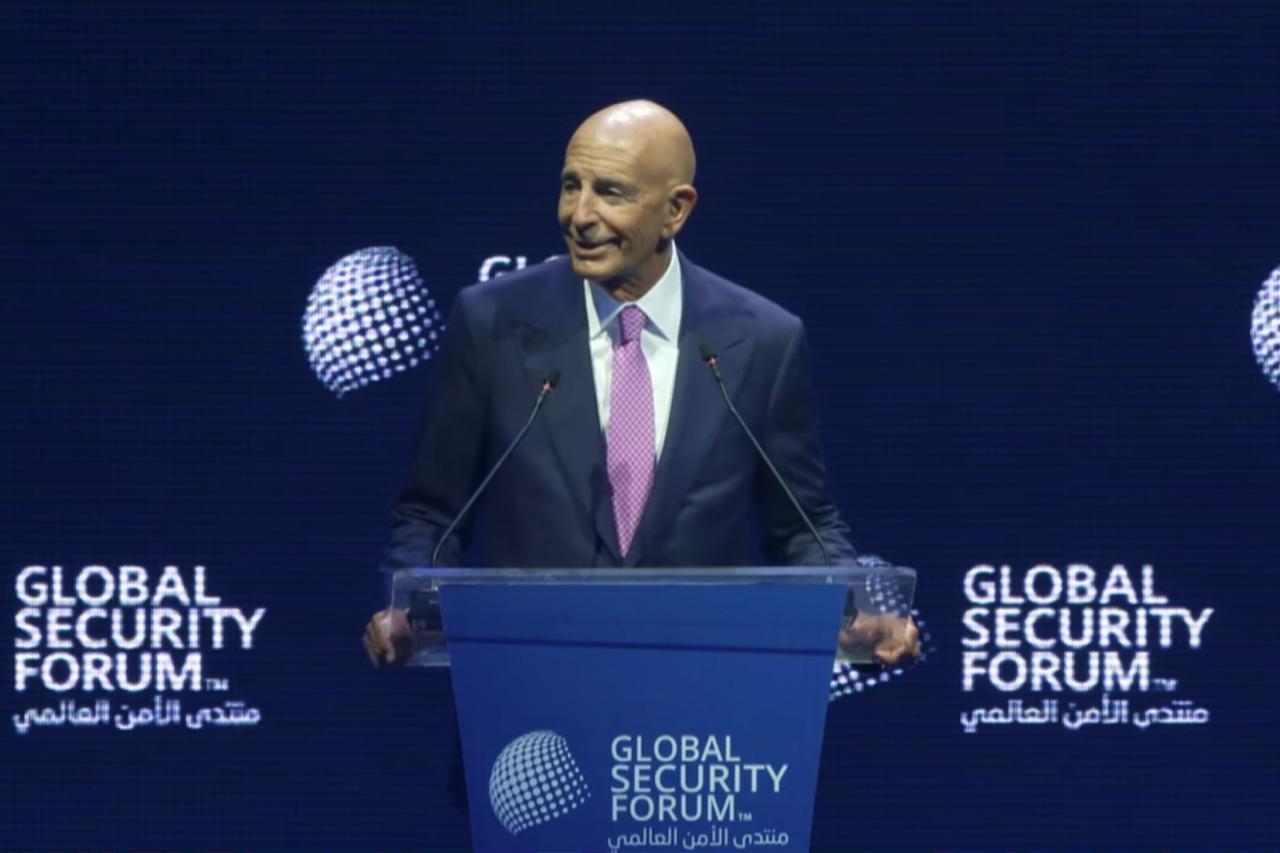
U.S. Ambassador to Türkiye, Tom Barrack, recently discussed the tensions between Israel and Türkiye during the Global Security Forum in Doha. While he is optimistic that a direct military conflict is unlikely, he highlighted the potential for escalation following an Israeli airstrike near the Turkish border. Barrack emphasized the need for regional solutions to the ongoing crises in Iran and Yemen.
Risk of Conflict Between Israel and Türkiye
Barrack expressed confidence that neither Israel nor Türkiye seeks an open conflict. He stated, “Israel is way too smart to actually pick a real fight with Türkiye,” and underscored that Türkiye would not welcome such a scenario either. His remarks come in the wake of an Israeli airstrike on the Abu al-Duhur military airbase in Syria, just close enough to the Turkish border to raise alarms. The strike occurred on August 18 and targeted the airbase’s runway, damaging infrastructure but thankfully avoiding any casualties. Barrack pointed out that Türkiye was not forewarned about the strike, which could have easily led to a dangerous confrontation had Turkish jets been mobilized in response.
Support for Regional Allies
As the U.S. envoy for Syria and Iraq, Barrack emphasized Washington’s logistical support for Saudi Arabia while abstaining from direct ground combat against the Houthis. He expressed uncertainty about the implications of the Mecca defense pact that might see Türkiye join forces with Saudi Arabia and other nations against Houthi militants in Yemen. The pact’s ramifications could suggest a range of military commitments, from Turkish ground troops to American air support. Barrack remarked, “Everybody’s trying to figure it out,” indicating the complexities of aligning various national interests in the region. He reiterated U.S. intentions to back Saudi Arabia’s efforts while highlighting that America’s involvement in ground battles abroad may prove unproductive.
Addressing Broader Regional Challenges
Turning to Yemen, Barrack highlighted the difficulties faced by Saudi Arabia, stating, “These kinetic reactions have never worked.” He hinted at the pressing need for a diplomatic resolution, recommending Saudi-Houthi talks facilitated by Oman. When asked about America’s role in addressing broader Middle Eastern issues, he asserted, “That’s not America’s job,” clearly advocating for local solutions over foreign interventions. Such a stance aligns with Barrack’s broader critique of past U.S. interventions, which he characterized as misguided attempts to initiate regime changes, often resulting in unintended consequences.
A Shift in U.S. Foreign Policy
Reflecting on the U.S. position in global politics, Barrack expressed that the current administration is not abandoning its allies but is rather signaling a realignment of international relations. He mentioned, “America is the guarantor to the world for the last 80 years. It’s no longer there,” implying a shift in focus towards fostering dialogue rather than military interventions. Barrack’s vision for future diplomacy hinges on patience and dialogue among conflicting nations, advocating for a peace summit environment where conflicting parties can openly discuss their issues. Such an approach suggests a transitional phase in U.S. foreign policy, moving away from military engagements towards collaborative solutions.
In summary, Ambassador Tom Barrack’s insights underscore a multifaceted and nuanced understanding of the Middle Eastern geopolitical landscape, particularly regarding the relations between Türkiye, Israel, and other regional actors. His emphasis on dialogue and local strategies presents a shift towards more collaborative approaches in addressing complex international crises.