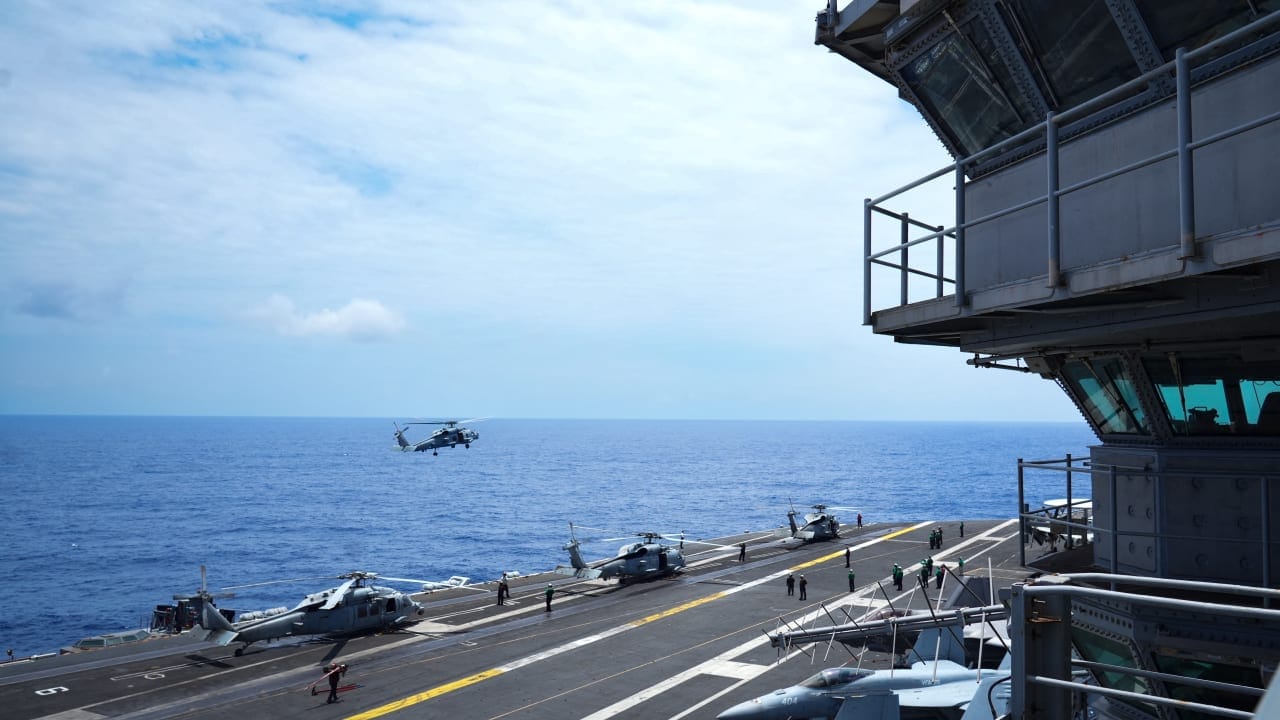
The recent deployment of U.S. military assets to the Middle East signals a significant strategic shift, with heightened tensions in the region. The Pentagon has confirmed that the USS Theodore Roosevelt carrier strike group and the 13th Marine Expeditionary Unit are heading to the area, with an expected arrival by the end of November.
Military Movements in the Middle East
Additionally, the USS Makin Island amphibious ready group has set sail from San Diego, transporting the 13th Marine Expeditionary Unit. This operational maneuver comes alongside two existing aircraft carriers in the region: the USS George H.W. Bush, which arrived in April, and the USS George Washington, which replaced the USS Abraham Lincoln in August. The USS Theodore Roosevelt’s deployment is intended to provide support to U.S. Central Command and to relieve the USS George Washington.
Strategic Implications of Enhanced Military Presence
Military analysts have noted that this increased U.S. presence aims to bolster U.S. options as diplomatic tensions rise, particularly concerning Iran. Reports suggest that President Trump may be contemplating intensified strikes on Iran following the midterm elections. Enhanced military capabilities will provide the U.S. government with a wider array of strategic responses, especially in light of the ongoing complexities in regional geopolitics.
While military rotations and reinforcements are routine, recent developments suggest a prelude to potential escalations. Approximately 3,000 U.S. troops are currently stationed across Israel performing critical roles such as operating air defense systems, supporting aviation missions, and managing logistics. Further troop deployments and additional aircraft are anticipated in the near future, preparing the U.S. military for any unexpected developments.
The Broader Context Regarding U.S. Military Strategy
This movement of U.S. military resources is not just a reflection of immediate geopolitical needs but also underscores a longer-term strategy regarding U.S. interests in the Middle East. The increased presence of naval assets allows the Pentagon to position itself more favorably in the event of any conflict, updating its response capabilities and ensuring readiness against evolving threats. This strategy also involves careful assessments of Iran’s activities, which have stirred concerns among U.S. and allied nations alike.
In summary, the U.S. military’s recent deployments to the Middle East are notable not only for their scale but also for their implications on broader geopolitical dynamics. As the region faces potential escalations, these military maneuvers embody both deterrent measures and a commitment to U.S. strategic interests in one of the world’s most volatile regions.