French President Emmanuel Macron recently accused foreign leaders of trying to exploit France’s current social unrest for their own political agendas. This statement comes in the wake of widespread protests and riots triggered by escalating living costs. The unrest has led to significant violence and looting, drawing attention from leaders across the globe, some of whom are seeking to further their own interests rather than support France in addressing the underlying issues.
International Reactions to French Unrest
Various political figures, including U.S. President Donald Trump, have taken to social media to comment on the turmoil, making provocative and unverified claims about the causes behind the unrest. Trump has specifically pointed the finger at Muslim migrants, encouraging Macron to take drastic measures such as closing borders. Macron characterized this kind of rhetoric as not only misleading but harmful, emphasizing its potential to misinform the public and spread fear.
Macron addressed these manipulative tactics by stating that “foreign manipulation of information” is rampant following incidents of rioting in prominent French cities like Paris. He expressed frustration at how foreign leaders, by sensationalizing the situation, risk inciting further divides and misunderstanding. While it is common for political leaders to exploit social unrest, Macron underscored the necessity for clarity and truth during such volatile times.
False Narratives and Misinformation
During a press conference, when asked about his comments, Macron acknowledged that he was indeed referring to figures such as Trump, among others. He pointed out the dissemination of AI-generated images that depict false scenarios of chaos and conflict in France, which have perpetuated the narrative of an “invasion” by migrants. Macron emphasized that these narratives bear no resemblance to reality and only serve to exacerbate tensions both domestically and internationally.
Macron’s stance calls for greater accountability among international leaders who may unknowingly spread these fallacies. French Foreign Minister Jean-Noel Barrot reiterated this point, suggesting that his office could provide clarifications to concerned countries to help counteract these baseless claims. Misinformation has the potential to destabilize relationships and breed animosity, making it crucial for leaders to base their comments on verified facts rather than conjecture.
Macron’s Broader Mission
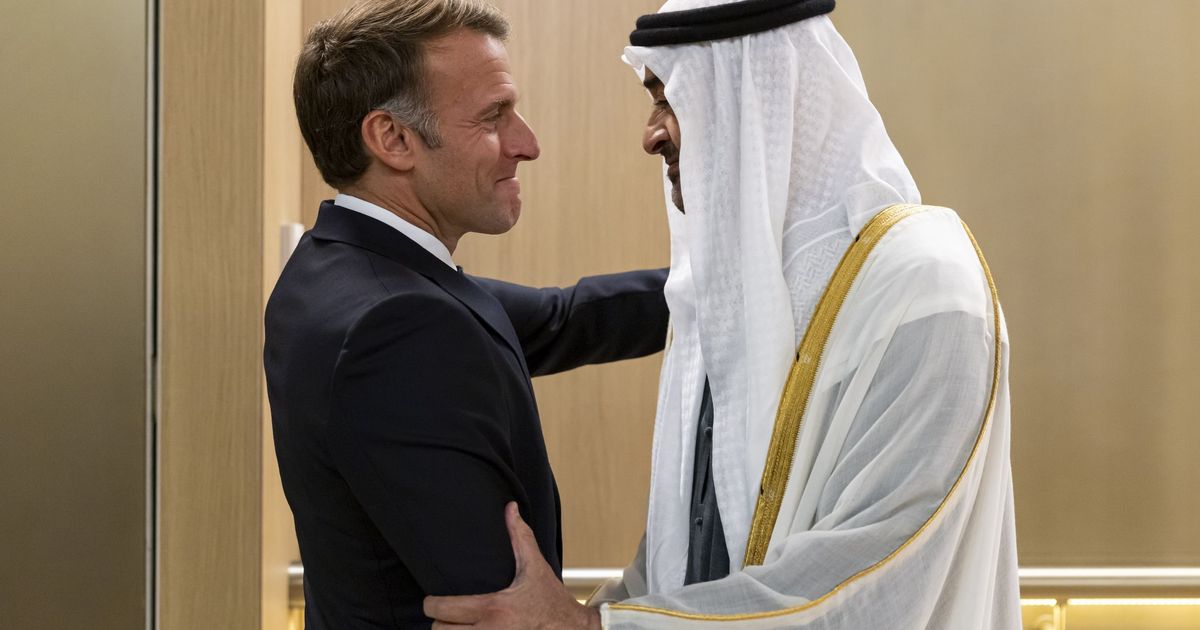
In addition to tackling the misinformation surrounding France’s internal issues, Macron has been actively engaged in external affairs aimed at addressing energy concerns. Recently, he concluded a tour to key energy suppliers in the Gulf region, securing substantial oil and diesel imports to help alleviate rising energy costs in France. This initiative is particularly vital as the country grapples with an energy crisis that has been exacerbated by international tensions and market fluctuations.
The president’s office announced that he successfully negotiated an additional 100,000 metric tons of diesel per month from the United Arab Emirates, along with a possible further supply from Bahrain. This strategic maneuver aims to fortify France’s energy security and reduce reliance on fluctuating global markets. Moreover, Macron anticipates that the commitments made during this trip could fulfill nearly 295,000 additional tons of diesel needs monthly, representing over 10% of France’s total consumption.
In summary, Macron’s recent comments reinforce the notion that political exploitation in times of crisis can undermine public trust and worsen societal divides. As he navigates both domestic unrest and international energy challenges, his focus remains on fostering informed dialogue and securing France’s economic interests against a backdrop of misinformation and unrest.