
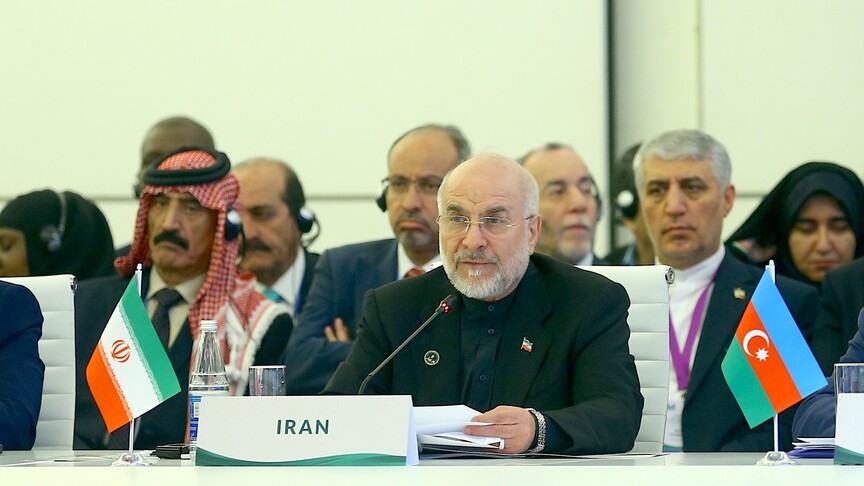
Iranian Parliament Speaker Mohammad Bagher Qalibaf recently held a significant meeting with Supreme Leader Ayatollah Mojtaba Khamenei. The discussion was centered on the evolving military, economic, and information warfare landscape involving the United States and Israel. This encounter represents a crucial moment for Iran, as it underscores the nation’s focus on strengthening its defense and enhancing domestic stability.
Strategizing National Defense and Unity
The primary agenda of the meeting was to fortify Iran’s national capabilities while ensuring social cohesion and unity among its citizens. Both leaders acknowledged the need for improved collaboration between the government and parliament to tackle pressing economic issues and overall livelihood concerns. By discussing strategies to enhance cooperation, they aim to bolster the nation’s resilience against external pressures and internal challenges.
During the meeting, Qalibaf updated Khamenei on parliamentary initiatives since the onset of the US-Israeli conflict against Iran, which escalated on February 28. He elaborated on the ongoing and future plans being developed to tackle the myriad challenges facing the country. This briefing indicates a proactive approach to governance and highlights the importance of legislative support in addressing national crises.
Strengthening Strategic Partnerships
Additionally, the leaders emphasized the importance of advancing relationships with Iran’s strategic allies. These partnerships can play a critical role in countering external threats and establishing a united front in the face of ongoing regional uncertainties. By fostering these alliances, Iran seeks to enhance its geopolitical standing and create a buffer against adversarial actions from the US and Israel.
In the context of leadership dynamics, this meeting is particularly noteworthy as Khamenei has largely remained out of the public eye since taking over the reins in March. Since the passing of his father, Ayatollah Ali Khamenei, in the wake of US-Israeli attacks, Khamenei has primarily communicated through written statements, raising questions about his health and influence within Iran’s political framework. His rare appearances have generated significant speculation, adding another layer of complexity to the nation’s internal and external affairs.
Context of Ongoing Conflicts
The meeting occurs amid escalating tensions between Tehran and Washington, particularly concerning security measures in the Strait of Hormuz—a critical channel for global oil transportation. These strained relations reflect the broader conflict that has been intensifying over the years. The Iranian leadership’s commitment to addressing these challenges highlights the urgency and importance of cohesive strategies, both domestically and internationally.
As the political landscape in Iran continues to evolve, the outcome of such discussions will likely have far-reaching implications. With economic sanctions and military threats looming, the Iranian leadership is focused on developing a robust response in defense of its national interests. Fostering unity within the government and parliament, while strengthening external alliances, will be vital in navigating the complexities of modern geopolitical conflicts.
In conclusion, Qalibaf’s meeting with Khamenei marks a significant moment in Iran’s ongoing struggle against external pressures. By addressing the nation’s military, economic, and informational strategies, the leaders are laying the groundwork for a unified front in confronting the challenges ahead. The developing situation will be crucial to watch as Iran seeks to assert its sovereignty in the face of adversity.