
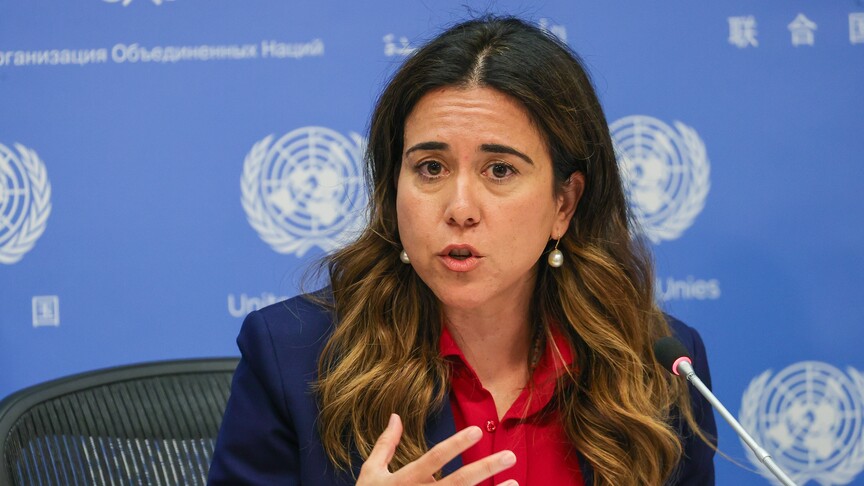
On Wednesday, Lana Nusseibeh, the UAE Minister of State and Envoy to the UN and EU, announced her candidacy for the position of UN Secretary-General after receiving formal nomination from the United Arab Emirates.
Nusseibeh’s Commitment to Diplomacy
In her announcement, Nusseibeh emphasized her extensive experience within the United Nations, stating, “I have spent much of my professional life working in and around the United Nations, and I have seen first-hand what determined diplomacy can achieve.” This dedication to diplomacy highlights her understanding of the complexities involved in international relations, as well as her commitment to fostering constructive dialogue among nations.
However, she also acknowledged the challenges that arise when diplomatic efforts falter. Nusseibeh pointed out that “when the distance between what we promise and what we deliver grows, trust erodes, and so does our ability to act.” This statement reflects a growing concern among global leaders about the need for accountability and effectiveness in international governance, especially at a time when global issues demand decisive action.
Taking a Step Back for a Greater Cause
To focus entirely on her candidacy, Nusseibeh has temporarily stepped back from her responsibilities in the UAE government. This move indicates her serious commitment to the role and her intention to navigate the complicated process of becoming the next Secretary-General. UAE President Sheikh Mohamed bin Zayed Al Nahyan formally submitted her nomination in a letter addressed to the Presidents of the UN General Assembly and Security Council. This high-level endorsement reflects the UAE’s strategic positioning within international platforms.
Nusseibeh’s nomination comes on the heels of a series of unproductive voting rounds within the Security Council, where six attempts to identify a candidate acceptable to all five permanent members— the United States, Russia, China, the United Kingdom, and France— have been unsuccessful. The latest straw poll, conducted on October 16, is part of the ongoing efforts to find a successor to Antonio Guterres, whose current term concludes on December 31. This prolonged selection process underscores the complexities and intricacies involved in global governance and the urgent need for a leader who can rise to the occasion.
As the world faces numerous challenges—from climate change to geopolitical tensions—the role of the UN Secretary-General has never been more critical. Nusseibeh’s candidacy offers a fresh perspective and the potential for innovative solutions to the pressing issues of our time. Her leadership may serve as a bridge to rebuilding trust among nations, ensuring that diplomacy is both effective and accountable.
Nusseibeh’s experience and insights could play a pivotal role in reshaping how the United Nations approaches diplomatic relations and crisis management in the future. As she embarks on this campaign, both the UAE and the international community will be closely monitoring her progress and contributions to the dialogue surrounding global governance.
In conclusion, Lana Nusseibeh’s candidacy marks a significant moment not only for the UAE but also for the broader context of international diplomacy. With a focus on trust, accountability, and effective governance, her vision could inspire countries to align their actions with their promises, fostering a more harmonious global environment.