
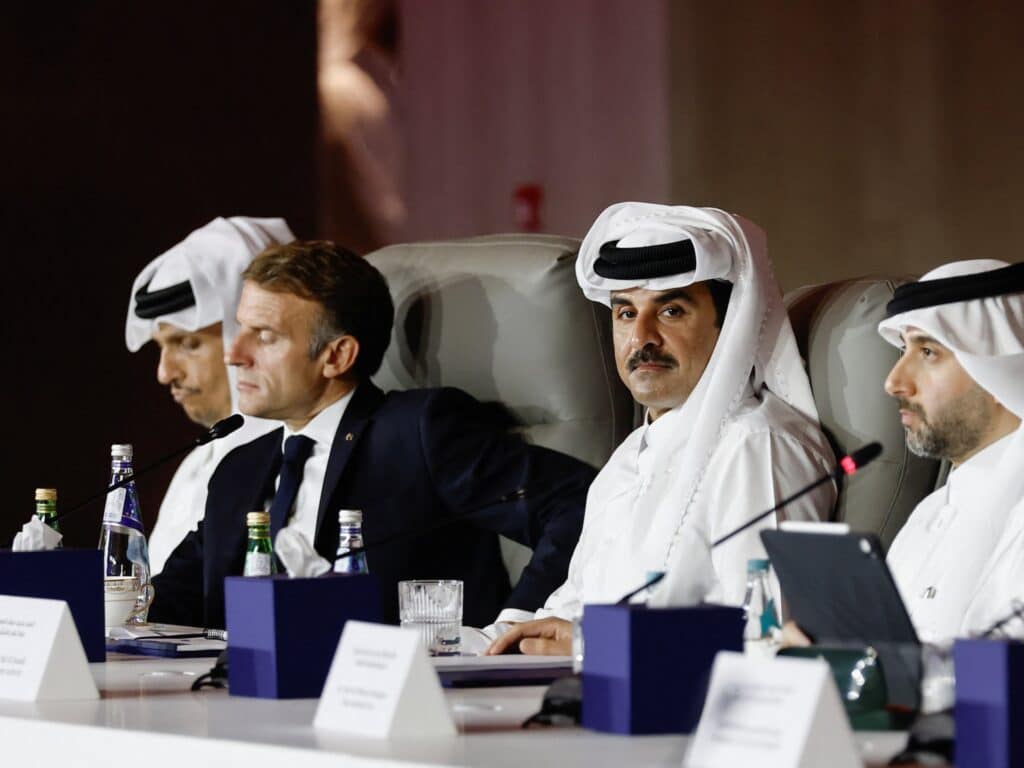
Qatar and France are jointly advocating for crucial maritime freedom and humanitarian efforts in the Middle East. In a recent meeting between Qatar’s Emir, Sheikh Tamim bin Hamad Al Thani, and French President Emmanuel Macron in Doha, both leaders emphasized the importance of ensuring free navigation in the Strait of Hormuz and the effective implementation of a ceasefire in Gaza. Their collaborative stance aims to address pressing geopolitical tensions in the region.
Freedom of Navigation in the Strait of Hormuz
Following their meeting, Qatar and France issued a statement underlining the necessity for unhindered navigation through the Strait of Hormuz, free from constraints or fees. This waterway is vital for global oil shipments, making its stability crucial for international trade. The leaders specifically condemned recent military actions by Iran, labeling them serious violations of international law. Diplomatic discussions, led by Qatari mediator Ibrahim bin Sultan Al Hashmi, are ongoing to alleviate tensions and facilitate maritime operations in the region. Iran’s Foreign Minister Abbas Araghchi has expressed a willingness to reengage in diplomatic talks, signaling a potential avenue for reducing hostilities.
Humanitarian Concerns in Gaza
On the issue of Gaza, both Sheikh Tamim and Macron called for the withdrawal of Israeli military forces in accordance with previously established agreements. They highlighted the urgent need for humanitarian assistance to reach those affected by conflict without delays or preconditions. The United Nations World Food Programme reports that about 1.4 million people in Gaza, nearly two-thirds of the population, are suffering from severe food insecurity, exacerbating the current humanitarian crisis. The leaders emphasized the importance of ensuring that aid is delivered safely and effectively to those in desperate need.
Opposition to Annexation and Settlement Policies
France and Qatar reaffirmed their opposition to any potential annexation of the West Bank and called for a cessation of Israeli settlement expansion and violence from settlers. Their joint statement reflects a commitment to uphold Palestinian rights and promote a peaceful resolution to ongoing conflicts. Additionally, the two nations extended their support for the effective implementation of the Trilateral Framework Agreement in Lebanon, which aims to restore sovereignty, disarm Hezbollah, and ensure the complete withdrawal of Israeli forces. They also warned against the potential security vacuum that could arise after the expiration of the UN peacekeeping mission’s mandate.
Collaborative Economic Initiatives
Both countries expressed readiness to collaborate on stabilization and economic recovery projects in Syria, coordinating their efforts with the Syrian government. The conversation between Qatar and France extends beyond political issues; they are also keen on enhancing defense, security, and economic partnership. President Macron’s regional tour, which included stops in Kuwait, the United Arab Emirates, Bahrain, and Saudi Arabia, aims to bolster strategic partnerships and economic ties in the Gulf region.
In summary, the collaboration between Qatar and France focuses on essential regional concerns such as maritime security, humanitarian aid, and political stability. Their commitment to ensuring freedom of navigation, addressing humanitarian crises, and opposing territorial annexation highlights a broader strategy for fostering peace and cooperation in a region often marred by conflict. As both nations work toward these objectives, their roles in shaping Middle Eastern geopolitics will be pivotal in the years to come.