
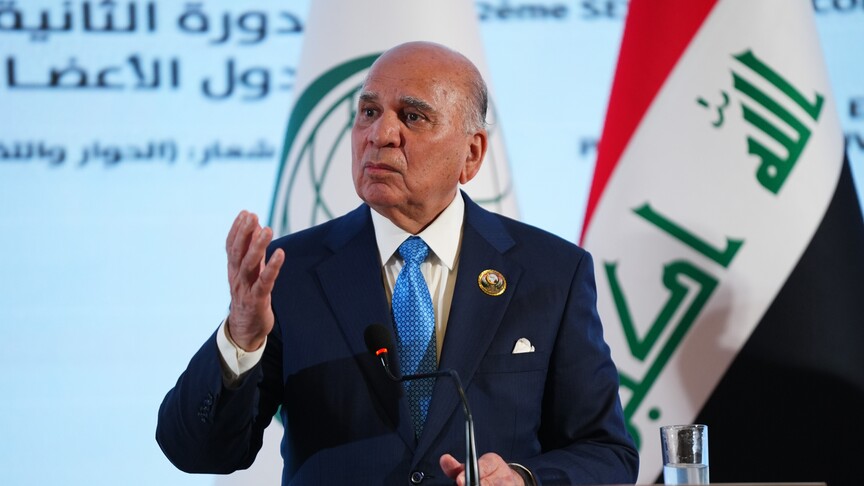
Iraq has made a significant declaration, emphasizing that it will not tolerate its land being utilized for attacks against Saudi Arabia or any other neighboring nations. This announcement comes in light of a series of assaults targeting Saudi territories, further complicating the already tense dynamics in the region.
Iraq’s Firm Stance on Regional Security
In a recent phone conversation between Iraqi Foreign Minister Fuad Hussein and Saudi Foreign Minister Prince Faisal bin Farhan, the Iraqi government condemned the hostile actions directed at Saudi Arabia. During this exchange, Hussein reiterated Iraq’s commitment to ensuring that its territory is not used as a springboard for aggression against Saudi Arabia or any other nation. His statements reflect Iraq’s broader effort to maintain stability and peace within the region, and to protect civilian populations from cross-border conflict.
Hussein’s commitment highlights the Iraqi government’s recognition of the importance of regional security. The ongoing attacks not only threaten Saudi territory but also put Iraqi citizens at risk. By taking a clear stance against such hostilities, Iraq is signaling its intention to uphold peace and avoid further escalation of tensions.
Strengthening Relations Amidst Tensions
Prince Faisal bin Farhan underscored Saudi Arabia’s support for Iraq’s initiatives aimed at de-escalation during their conversation. He pointed out the necessity for continued cooperation among neighboring nations to bolster stability. This response indicates a willingness on the part of Saudi Arabia to work alongside Iraq to mitigate tensions and present a unified front against external threats.
The two ministers also explored ways to enhance bilateral relations, with a particular focus on security issues. Strengthening these ties is essential not only for the two countries but also for broader regional security. Joint efforts could lead to a better coordinated approach in addressing the threats posed by militant groups and other adversarial entities.
Historical Context of Regional Conflicts
Just last week, Iraqi Prime Minister Ali al-Zaidi reiterated Iraq’s stance against the use of its territory for attacks on Saudi Arabia during his meeting with Crown Prince Mohammed bin Salman. He condemned the Houthi assaults on Saudi Arabia’s civilian infrastructures, showcasing Iraq’s proactive approach in denouncing violence and supporting its regional ally.
This development comes after a series of drone attacks on Saudi Arabia’s East-West oil pipeline, which were traced back to locations in Iraq. While the Saudi government opted for restraint initially, requesting a window for Iraq to take necessary preventive measures, the situation highlights the delicate balance of power and the intricate web of regional relationships.
Ongoing military tensions between Yemen’s Houthi forces and Saudi Arabia have only exacerbated the security landscape. The conflict has roots that trace back several years but has witnessed a resurgence of hostilities since July, escalating fears of a broader regional conflict.
Path Forward for Iraq and Saudi Arabia
Given the complexities of the situation, Iraq’s declaration is integral in setting a clear boundary around its sovereignty while aligning itself with Saudi interests. For both nations, fostering dialogue and collaboration appears essential in maneuvering through these challenging circumstances. As Iraq continues to engage with its neighbors, the hope is that these diplomatic efforts will yield a more secure and peaceful environment for all involved.