
Turkey’s Defense Minister Yaşar Güler has confirmed that the country does not plan to engage in combat with Yemen’s Houthi rebels as part of its trilateral defense pact with Saudi Arabia and Pakistan. He emphasized that Turkey’s military assistance to Riyadh would focus on deterrence and preventing further conflict in the region. This statement comes against the backdrop of the Mecca Joint Defense Agreement, signed by Turkey, Saudi Arabia, and Pakistan in August, which is now awaiting ratification by the Turkish Parliament.
Clarification on Military Involvement
Güler made it clear that Turkey does not foresee any direct involvement in clashes with the Houthis. Speaking to Star TV, he stated that the primary goal of Turkey’s military involvement would not be to engage in hostilities but to bolster regional stability and prevent escalating tensions. He compared the prospective military support for Saudi Arabia to Turkey’s existing collaboration with Qatar, which is focused primarily on deterrence rather than direct conflict engagement.
The trilateral agreement stipulates that any armed attack on one member country is viewed as an attack on all. This aspect has raised questions regarding the degree of Turkey’s military commitment, especially considering the ongoing attacks by the Houthis on Saudi Arabia. Güler clarified that any potential military assistance would be contingent on the Turkish Parliament ratifying the agreement and completing necessary legalities. Once that occurs, Turkey will consider Saudi Arabia’s requests within the framework of parliamentary authorization to decide the extent and nature of its support.
Maritime Agreements with Egypt
In addition to its defense strategies, Turkey is looking to enhance relations in the Eastern Mediterranean. Güler announced that Turkey is open to negotiating a maritime boundary agreement with Egypt, indicating that such a deal could be beneficial for Cairo. He emphasized that by partnering with Turkey, Egypt could secure around 15,000 square kilometers (approximately 5,800 square miles) of maritime territory, a significant addition compared to pursuing arrangements with Greece.
This proposal reflects Turkey’s broader strategy to strengthen regional ties amidst competing maritime claims and energy interests that have long created diplomatic strains. Güler reiterated that Turkey is ready to formalize an agreement concerning the delineation of maritime jurisdictions, which would foster more cooperative relations in a region characterized by complex claims.
Broader Defense Cooperation Initiatives
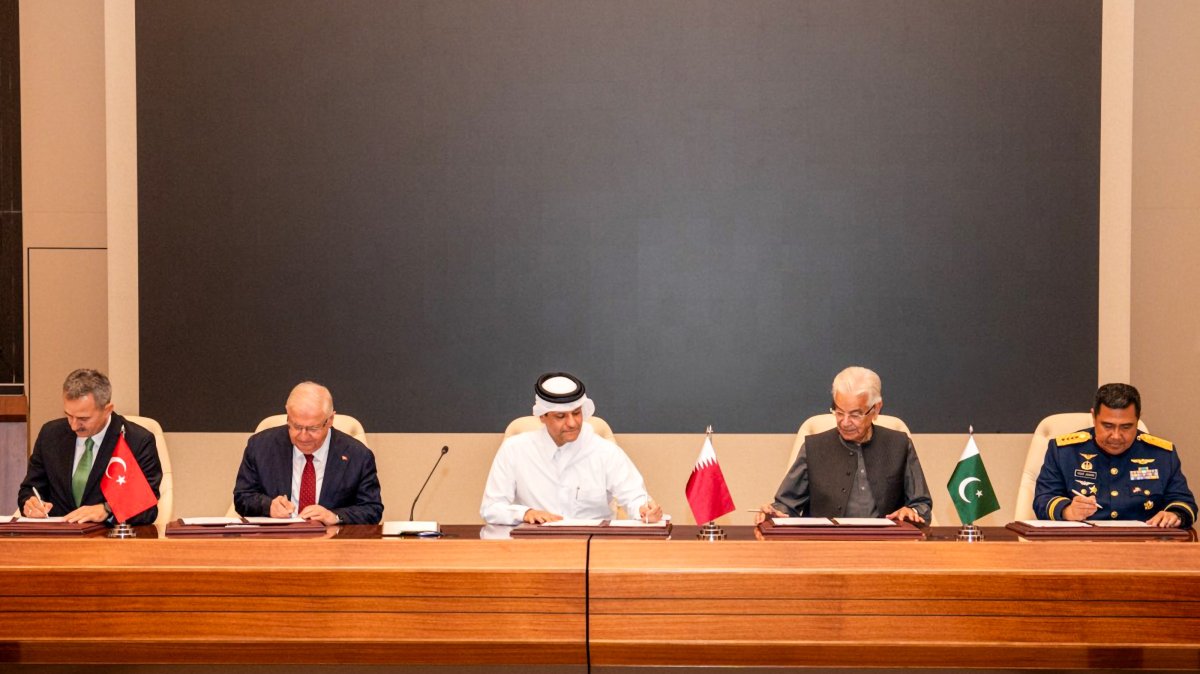
Güler also pointed to the Badr Memorandum of Understanding, recently signed by Turkey, Qatar, Indonesia, and Pakistan, as a milestone in expanding multilateral military cooperation. This memorandum aims to align the defense capabilities of the involved nations and bolster their strategic partnerships. Built on shared goals and mutual trust, the agreement seeks to enhance defense relations through increased coordination and cooperation.
He noted that Turkey will continue to pursue defense partnerships that contribute to regional stability, amplify collective deterrence, and strengthen security cooperation with international allies. This proactive approach underscores Turkey’s commitment to enhancing its security landscape and engaging in constructive partnerships that promote peace and stability in the region.