
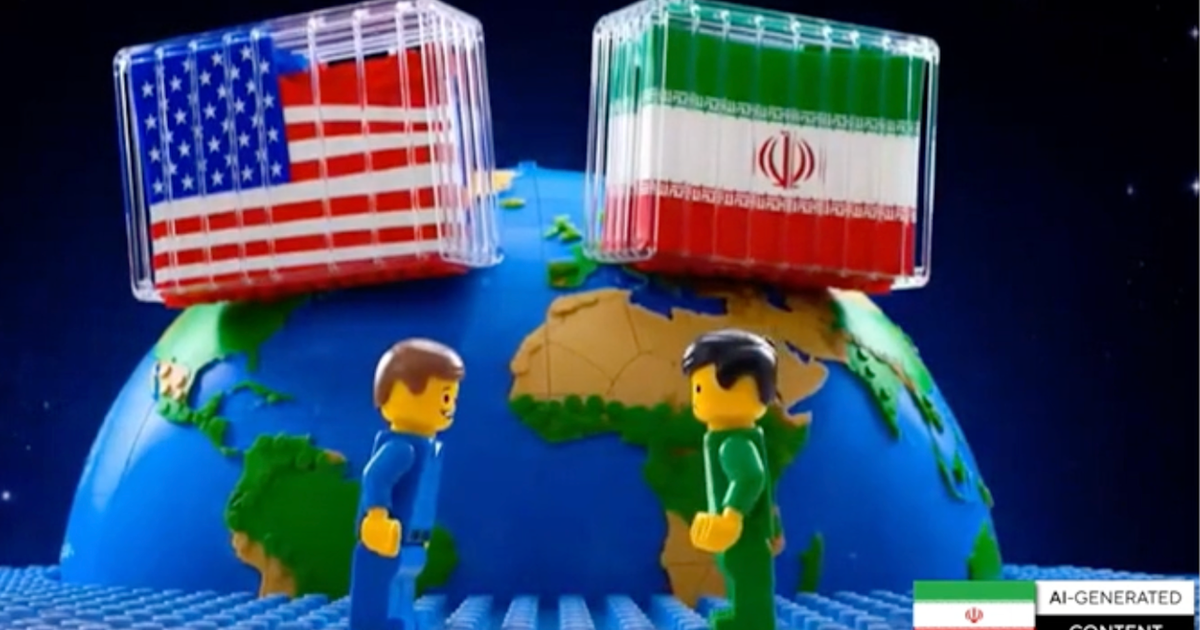
As the conflict with Iran nears its three-month milestone, a significant battle is unfolding beyond the battlefield—a digital propaganda war. The United States and Iran are engaged in a fierce competition for influence and narrative control online, with many observers noting that Iran appears to be gaining the upper hand.
The Historical Context of Political Satire
Political satire has long served as a potent weapon during wartime. A notable example comes from World War II, when the German military advanced across Europe in a shocking series of invasions. While serious strategies dominated military efforts, cultural figures like Charlie Chaplin used humor and mockery as a way to undermine the image of oppressive leaders, particularly Adolf Hitler. As Bret Schafer, a senior director at the Institute for Strategic Dialogue, points out, the essence of satire lies in its ability to ridicule those in power. “It emasculates them,” he states, emphasizing that such ridicule can be far more damaging than criticism.
The Rise of Iranian Propaganda
Despite America’s historical prowess in media and marketing, especially through platforms like Hollywood, it seems Iran has effectively turned the tides in this digital war. Schafer’s research indicates a staggering thirtyfold increase in the engagement of Iranian social media accounts on the platform X in just 50 days following the commencement of hostilities. This surge is particularly evident when incidents, such as former President Trump’s posts, are adeptly countered by Iranian authorities. The Iranian Embassy in Tajikistan even managed to secure over 24 million views on a response post—an impressive feat for an account typically overlooked.
While the dismissive nature of traditional diplomatic channels often leads to minimal engagement online, the more striking and visual approach adopted by Iranian propagandists has proven captivating. Leveraging bold messages about the costs of war resonates with many viewers, particularly in the United States, illuminating the fragility of support for military action.
The Role of Innovative Content Strategies
One standout trend is the use of platforms like Explosive Media, which turns complex messaging into simple Lego animations. When asked why this medium was chosen, a representative explained, “Lego is a universal language. Every person around the world can understand it without saying anything.” This innovative approach exemplifies how even basic content production can reach a wide audience effectively when combined with evolving technology, such as artificial intelligence.
Schafer notes that algorithm-driven content, which is both clickable and shareable, plays a significant role in this messaging war. Unlike traditional news or diplomatic commentary, these engaging formats draw substantial viewer interest, creating a new standard for propaganda that challenges older methods.
The Challenges Faced by U.S. Information Warfare
Historically, effective information warfare has hinges on building support for military efforts through transparent, trustworthy messaging. Jamie Rubin, who formerly led the State Department’s Global Engagement Center, indicates that the cancelation of their funding has impaired the U.S. ability to effectively combat propaganda from adversaries like Iran. He points out that successful messaging requires a united cause, strong alliances, and a credible spokesperson—qualities currently lacking in the American narrative regarding the Iran conflict.
The Trump administration’s control over communication narratives has led to widespread criticism. If every message must be sanctioned by the White House, the ability to engage spontaneously and adaptively in the information war is severely undermined. Early efforts, which combined actual combat footage with pop culture references, drew significant attention but were criticized for their trivialization of military action, leading to a halt in such initiatives.
In summary, as the war with Iran continues, the online battleground is increasingly vital to shaping public perception and international narrative. The rapid evolution of digital propaganda underscores the need for strategic, innovative approaches that resonate with modern audiences. The question remains: can the U.S. adapt its methods effectively, or will it continue to cede ground to its adversaries in this increasingly pivotal domain?