
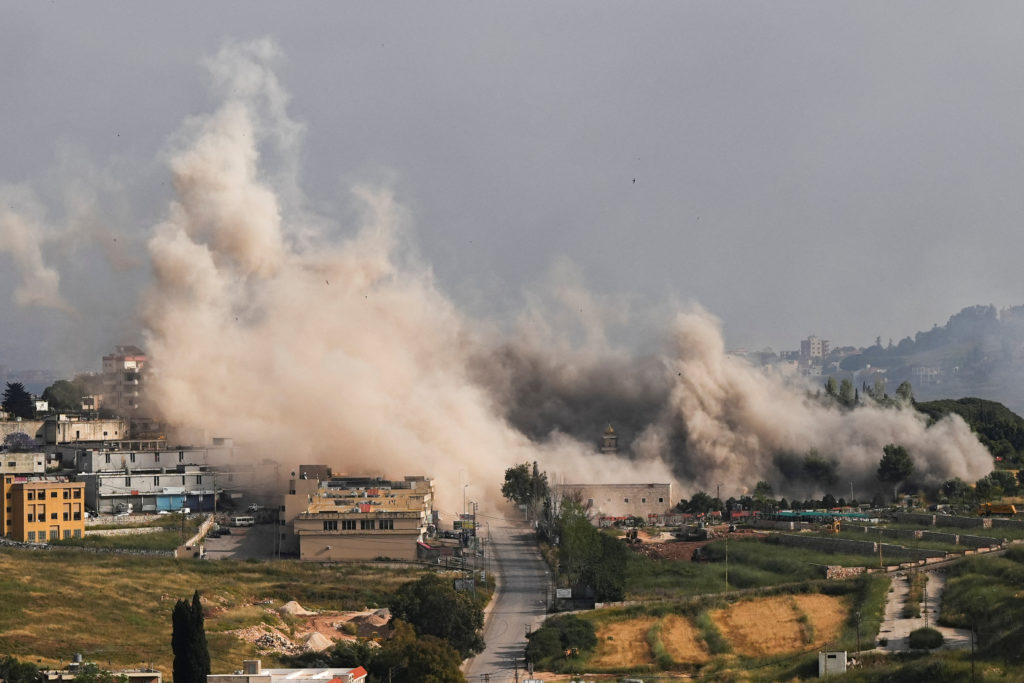
Clashes Escalate Between Israel and Hezbollah in Southern Lebanon
Ongoing tensions in southern Lebanon have escalated, marked by significant clashes between Israel’s military and the Iran-backed militant group Hezbollah. This surge in violence comes just days before crucial talks in Washington involving Lebanese and Israeli officials, raising questions about a sustainable solution to the ongoing conflict.
Escalating Military Operations and Casualties
On Tuesday, Israeli forces intensified their military operations along the Litani River, a critical geographical marker that has acted as an unofficial boundary within Lebanon. Despite an existing ceasefire that has held for over a month, Israel has initiated strikes targeting over 100 sites associated with Hezbollah in both southern Lebanon and the eastern Bekaa Valley. Prime Minister Benjamin Netanyahu has authorized these increased strikes, aiming directly at Hezbollah’s storage facilities and command centers, which are reportedly used for attacks against Israeli civilians and troops.
Tragically, one of the recent strikes in the eastern village of Mashghara resulted in the deaths of 12 individuals, including several family members, according to Lebanon’s state-run National News Agency. The Israeli military is working to reposition its resources, having called up an additional battalion in light of the rising tensions. While the Lebanese capital, Beirut, has been relatively unscathed by violence since the beginning of the ceasefire, the heightened military actions have led to pervasive fear among its residents.
Hezbollah’s Response and Regional Implications
In retaliation, Hezbollah has launched numerous rocket and drone attacks aimed at Israeli military vehicles along the river. The group’s media outlet, Al-Manar TV, claimed that Hezbollah successfully repelled multiple assaults targeting its positions along the banks. The evolving situation underscores the challenges for peace negotiations, particularly given Hezbollah’s insistence on continuing its military campaigns against Israeli forces until an end to hostilities is achieved.
Lebanon’s government, which came into power advocating for reform and disarming militant groups, is now in a precarious position. The Lebanese leadership seeks a lasting ceasefire and the withdrawal of Israeli troops, a move that Hezbollah vehemently opposes. The government fears that continued military escalation could jeopardize the fragile peace negotiations in Washington aimed at resolving broader regional conflicts.
Casualties and Displacements Amidst Ongoing Conflict
As the conflict intensifies, the humanitarian toll continues to rise. This war, ignited by Hezbollah’s early March rocket fire into northern Israel, has displaced over a million people in Lebanon. According to the Lebanese Health Ministry, the number of fatalities due to Israeli airstrikes has exceeded 3,185, with more than 9,600 injured since the conflict escalated. Israel has also faced casualties, reporting 23 soldiers and a defense contractor killed in operations in southern Lebanon, alongside civilian fatalities attributed to drone strikes.
Prime Minister Netanyahu reiterated his commitment to intensifying Israel’s military responses. His statements have contributed to growing unrest, as citizens in northern Israel and Lebanon remain on high alert for potential escalations. The volatile situation demands close monitoring and a concerted diplomatic effort to establish a more stable ceasefire and pave the way for enduring peace.
In summary, the violent clashes between Israel and Hezbollah are not only reshaping the geopolitical landscape in southern Lebanon but also posing profound humanitarian challenges. As both sides prepare for discussions in Washington, the hope remains that a diplomatic solution can bring about an end to the fighting and promote long-term stability in the region.