
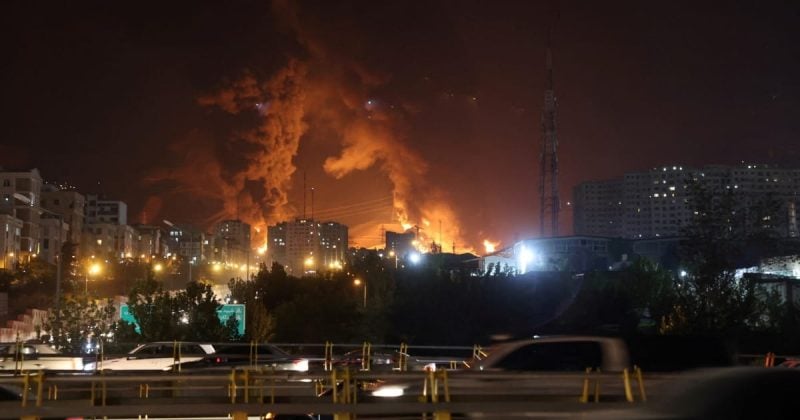
The unfolding military dynamics in the Gulf region have taken a dramatic turn, particularly regarding the United Arab Emirates (UAE) and its clandestine air operations against Iranian targets. Reports reveal that since late February 2026, the UAE has conducted numerous airstrikes against Iran, collaborating closely with the United States and Israel. This marks a new chapter in Emirati military engagement that has not been openly recognized by UAE officials.
Unveiling the Coordinated Airstrikes
The joint military campaign commenced on February 28, 2026, when the U.S. and Israel initiated airstrikes against Iranian assets. The UAE’s involvement, confirmed shortly thereafter, underscores a significant shift as it becomes the first Gulf nation to actively participate in offensive actions against Tehran. These strikes signify a growing assertiveness in Emirati foreign policy, particularly regarding its regional rival.
One of the most significant operations occurred in early April 2026, targeting Iran’s Lavan Island oil refinery. This attack caused extensive damage, rendering the facility inoperative for a substantial duration. Lavan Island holds strategic importance in Iran’s oil export network, making it a prime target for military engagement. Such operations indicate that the Emirates are willing to directly strike at the heart of Iranian resources amid increasing regional tensions.
Escalating Tensions and Fragile Ceasefires
The UAE’s military operations are a reaction to ongoing Iranian aggression, which escalated after Iran launched hundreds of missiles and drones aimed at Emirati territories. Iran retaliated with attacks on UAE oil infrastructure, including a significant drone strike in May 2026 that caused a fire at a strategic facility in Fujairah. This port, critical for oil transport, illustrates how vulnerable Emirati assets have become amidst heightened hostilities.
Although a fragile ceasefire was temporarily established around April 8, 2026, it ultimately collapsed due to renewed Iranian strikes in early May. The ceasefire’s failure reflects the volatile nature of the region, where diplomatic solutions seem increasingly elusive amid ongoing hostilities. As tensions resurface, the prospect of further military confrontation looms large.
The Shift in Regional Alliances
The UAE’s newfound military collaboration with Israel reflects a notable evolution in their relationship, solidified by the Abraham Accords initiated in 2020. Over the past six years, this partnership has transcended traditional diplomacy, focusing instead on military strategy to address shared concerns over Iranian aggression. The increase in military cooperation indicates a regional pivot that capitalizes on mutual interests in countering threats, rather than solely fostering economic ties.
The silence from the UAE government regarding its airstrikes is particularly telling. Historically, Abu Dhabi has emphasized a diplomatic stance characterized by neutrality and economic pragmatism. Public acknowledgment of military engagement against Iran would challenge its carefully maintained status as a global business hub, forcing it to reconcile its foreign policy with domestic trade and its significant Iranian expatriate population.
Implications for Global Markets
The increased military activity near the Strait of Hormuz has significant implications for global oil markets, given that approximately one-fifth of the world’s oil traverses this vital waterway daily. The strike on Lavan Island and the drone attack in Fujairah highlight the targeting of critical oil infrastructure in both the UAE and Iran, creating a precarious situation where any escalation could disrupt global supply chains.
In conclusion, as military actions intensify, regional stability remains uncertain. The potential for further conflict impacts both geopolitical alliances and economic stability, emphasizing the critical role of diplomacy in navigating these turbulent waters.