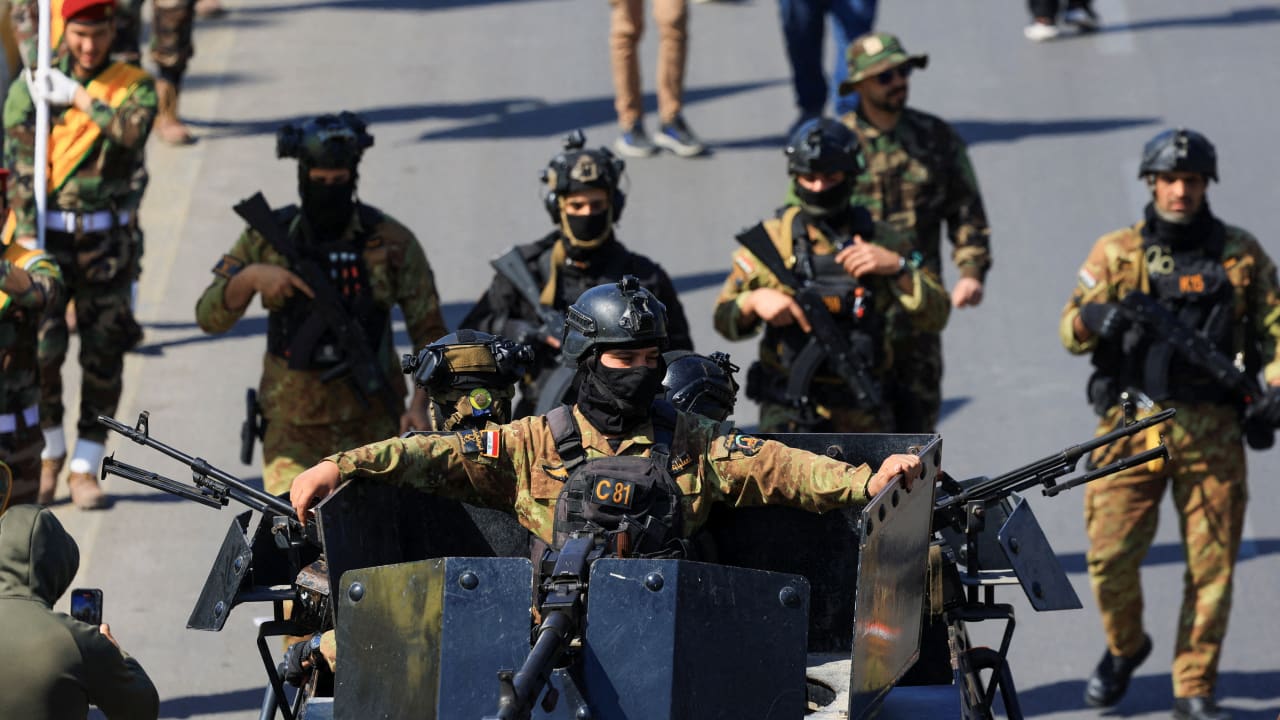
Pressure is mounting on Iranian-affiliated militias operating in Iraq to turn over their weaponry to government control. Observers suggest that these groups may attempt to feign compliance while retaining their capabilities.
### Kataib Hezbollah’s Role
Kataib Hezbollah, a faction known for its violent actions, has been vocal about the future of arms control in Iraq. The group gained infamy for its attacks on American interests in the region and involvement in the deaths of three Americans in Jordan. The U.S. has targeted Kataib Hezbollah previously, notably in 2020 when the U.S. executed the group’s leader, Abu Mahdi al-Muhandis, alongside Qasem Soleimani, a commander of the Iranian Revolutionary Guard Corps (IRGC), in Baghdad.
### Recent Developments
In a surprising turn, Rudaw media reported that Kataib Hezbollah expressed readiness to cooperate with the government’s efforts to consolidate weapons under state authority. They even proposed to take responsibility for specialist military equipment, offering to financially cover these weapons. As negotiations continue to oversee the demilitarization of armed groups, the group’s spokesperson has praised the decisions made by other factions to relinquish their arms.
### Claims of Oversight
Kataib Hezbollah suggests that it could assist in managing the weapons transfer, claiming that the Popular Mobilization Forces (PMF) — a paramilitary organization comprising Kataib Hezbollah fighters — could supervise the process. However, the irony lies in the fact that by handing over arms to the PMF, these groups are essentially transferring them to themselves, all while continuing their regional attacks under the PMF’s banner.
### Government’s Stance
Iraq’s Prime Minister Ali al-Zaidi has been engaged in indirect discussions with these Iran-aligned factions. The Shiite Coordination Framework has indicated that negotiations are ongoing with multiple groups operating outside the PMF structure, and a final accord is anticipated post-Eid al-Adha celebrations.
### Symbolic Gestures
Kataib Hezbollah’s offer includes a symbolic handover of specialized weapons, potentially rendering their arsenal more palatable to the state. This includes items like drones and anti-tank missiles—advanced capabilities that the Iraqi government may lack the expertise to manage. Disturbingly, the group hinted at a plan to repurchase these weapons, raising concerns about a façade of compliance and arms laundering.
### Resistance from Others
Despite the negotiations, some factions remain unwilling to disarm, illustrating the fragile nature of these discussions. Only time will tell whether these militias will ultimately comply with the government’s demands.
In this landscape, Iraq finds itself at a crossroads of control, sovereignty, and the endurance of its various armed groups. The unfolding of these events will undoubtedly shape the future of stability and governance in the region.