
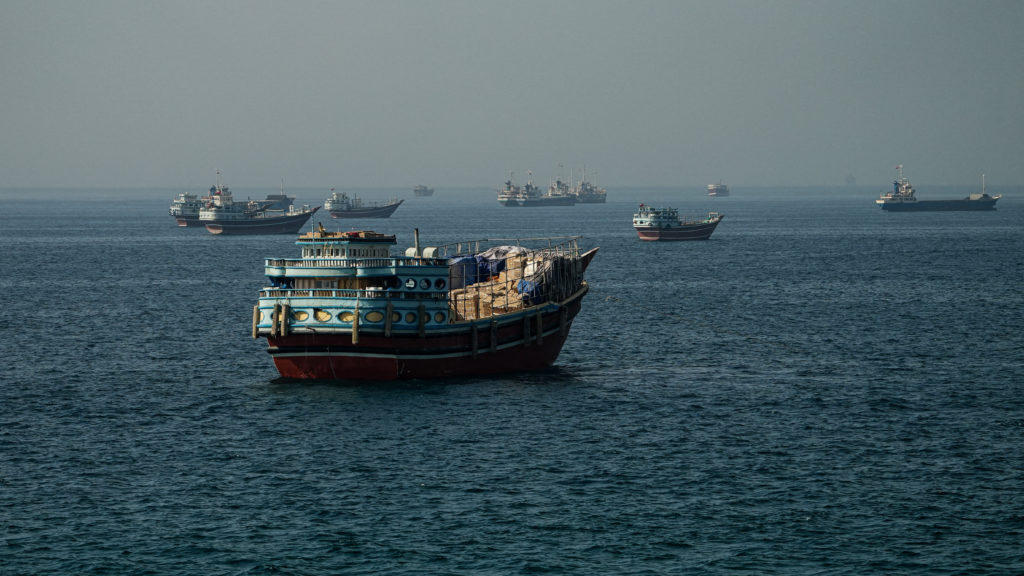
The U.S. military continues to enforce its blockade around Iranian ports, recently intercepting another vessel attempting to breach this maritime barrier. Reports confirm that the U.S. is taking decisive action to maintain its strategic maritime interests in the region.
Details of the Interception
On Saturday, a U.S. official disclosed to The Associated Press about the successful halt of the Gambia-flagged bulk carrier, Lian Star. This vessel disregarded multiple directives from U.S. forces while trying to gain entry into Iran’s coastal ports. U.S. aircraft disabled the ship in the Gulf of Oman, where it currently remains stranded and is yet to be boarded by American forces. This marks the sixth ship to be stopped under the ongoing blockade, with just one vessel being allowed passage.
Context of the U.S. Blockade
The blockade commenced on April 17 following escalating tensions in the region, particularly after the conflict intensified due to U.S. and Israeli military action against Iran on February 28. A tenuous ceasefire has been in effect since April 7, and global stakeholders are eagerly awaiting developments on whether the ceasefire will be extended by an additional 60 days while negotiations progress regarding Iran’s nuclear ambitions.
The geopolitical ramifications of the U.S. blockade are significant; the Strait of Hormuz has become a hotbed for tensions that are destabilizing global oil markets. Shipping routes essential for oil and gas supplies, as well as products like fertilizers, have been severely disrupted, ultimately impacting consumers and food producers across various markets.
Effects on Global Trade and Diplomacy
The U.S. intends to curtail Iran’s shipment capabilities as part of its broader strategy to inflict economic pressure, aiming to further strain an already weakened Iranian economy. Even as commercial shipping persists, activity through the Strait of Hormuz has dropped markedly compared to pre-conflict levels. Iran has issued warnings emphasizing that violations of its maritime regulations could jeopardize the safety of passing vessels. As assertions of control over maritime passages grow, Iran has attempted to impose hefty tolls on vessels transiting the strait, stirring debates surrounding the principle of free navigation in international waters.
Qatar’s deputy prime minister has publicly opposed these toll fees while suggesting that temporary arrangements could be acceptable if they contribute to essential operations, such as mine clearing. While Iran maintains its stance, there is a cautious optimism that negotiations might pave the way for a more stable maritime environment.
In summary, the ongoing situation in the Strait of Hormuz poses complex challenges for regional and global stability. The U.S. blockade represents a significant escalation in the maritime conflict, with implications reverberating far beyond the immediate area. As discussions about the ceasefire and Iran’s nuclear program continue, all parties involved will need to navigate these treacherous waters carefully.