
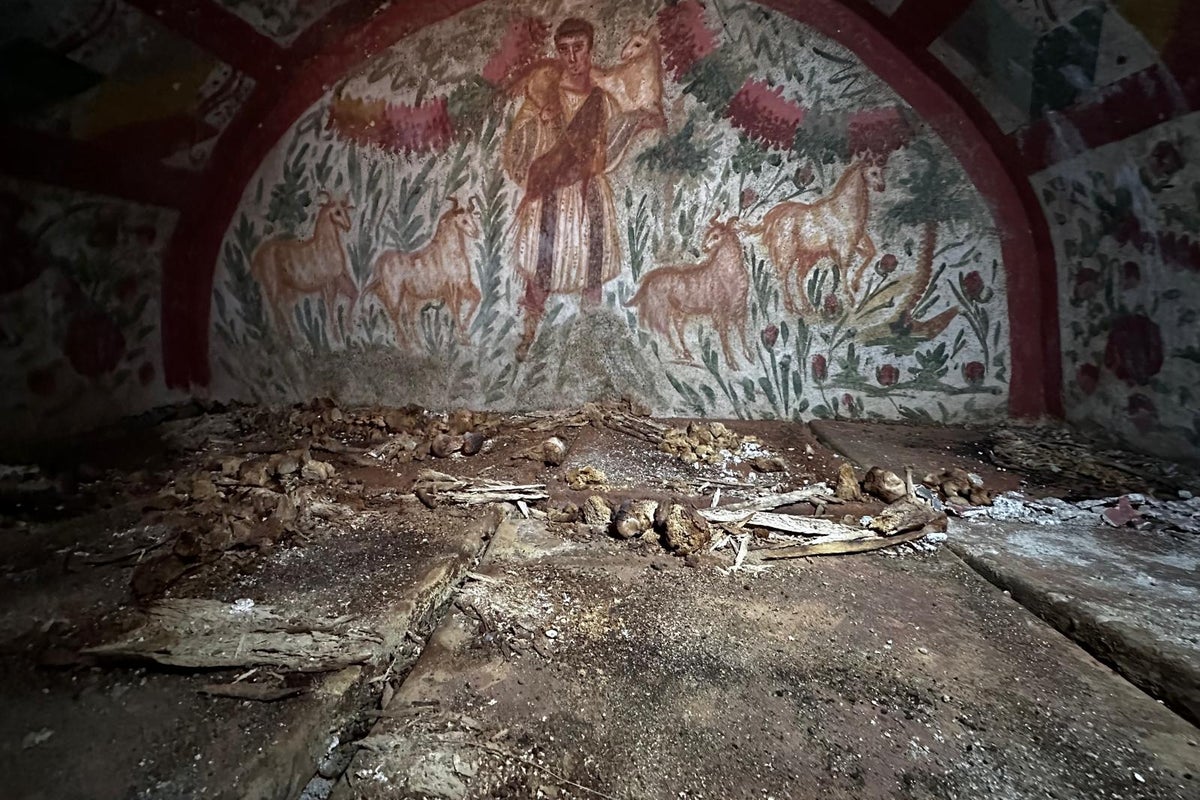
Recent archaeological excavations in Turkey are significantly enhancing our comprehension of early Christianity. These discoveries, which include the remarkable best-preserved early image of Christ, shed light on the initial stages of the faith and its expansive growth in the region.
Significant Discoveries in Anatolia
In the past two years, archaeologists have unearthed over a dozen churches in Anatolia, dating back to the fourth and fifth centuries AD. These sites have revealed ancient tombs and inscriptions, highlighting the area’s crucial role in the expansion of Christianity shortly after Christ’s crucifixion. The recent finds underscore Anatolia as a pivotal cradle for the faith, offering insights into how Christianity transitioned from a small sect to a dominant religion within a few centuries.
Among the most notable artifacts is the early image of Christ, depicted as the Good Shepherd. Discovered in Iznik, this fresco dates back to the early-to-mid-third century AD and is among the oldest representations of Jesus found worldwide. Its remarkable preservation is attributed to being sealed in an oxygen-depleted family tomb, allowing historians to gain a clearer understanding of early Christian iconography.
Understanding Early Christian Growth
Aside from tangible artifacts, recent historical research has explored the factors behind Christianity’s rapid rise. Contrary to common belief, persecution and martyrdom appear to have inadvertently fueled the religion’s expansion. Lower mortality rates from illness within Christian communities, coupled with robust social care systems, contributed to a higher conversion rate compared to pagan societies. This multifaceted growth narrative illustrates how socio-political dynamics and religious experiences intertwined.
Research has also delved into how the expansion of emperor worship provided early Christianity a platform to evolve into an anti-imperial movement. Archaeological evidence from various sites in Turkey reveals the impact of imperial cults, allowing early Christians to position their beliefs against a backdrop of Roman authority. Monumental statues, such as those of emperors Marcus Aurelius and Hadrian, have been discovered, further illustrating the cultural context within which Christianity emerged.
The Role of Ephesus and Other Ancient Cities
Among Turkey’s ancient cities, Ephesus stands out for its recent discoveries, including a section buried under ash that has remarkable parallels with Pompeii. This unique preservation offers a glimpse into the early Byzantine Christian world, filled with everyday items and religious artifacts. The findings reveal early Christian life, including pilgrim-related goods, shining a light on the growing influence of Christianity in a previously pagan-dominated society.
Moreover, ancient inscriptions found in cities like Smyrna illustrate the covert ways early Christians expressed their faith, revealing coded messages that reference key Christian beliefs. These artifacts provide invaluable evidence of how these communities navigated their beliefs amid pervasive Roman culture.
In summary, the significant archaeological work being conducted in Turkey is redefining our understanding of early Christianity. As experts like Professor Candida Moss have noted, Anatolia was a vital region for the nascent faith. These discoveries not only enrich our historical narrative but also illustrate the complex interactions between early Christians and the surrounding political and social landscape. The ongoing research continues to unveil layers of history, bringing to light the profound impact of this transformative period.