
Archaeological teams in Egypt’s Beni Suef Governorate have made significant discoveries in the ancient city of Ihnasya, shedding light on its long-term religious, political, and economic significance. Known as Heracleopolis Magna in ancient times, this city has played a vital role throughout various periods of Egypt’s history, spanning over a millennium.
Uncovering Historical Significance
The excavations, conducted by an Egyptian team from the Supreme Council of Antiquities, revealed multiple artifacts that affirms Ihnasya’s status as a center of power during the Ninth and Tenth Dynasties. Its significance continued into the Middle Kingdom, New Kingdom, and even during Greek and Roman influences. Among the most remarkable finds is a reused stone block inscribed with the cartouche of King Senusret III, a pivotal figure of the Twelfth Dynasty. This inscription confirms the king’s throne and birth names and highlights the site’s deep connections with ancient Egyptian spirituality, particularly relating to the god Osiris-Nefertem, who was worshipped here during significant historical epochs.
Architectural Discoveries Reflecting Cultural Evolution
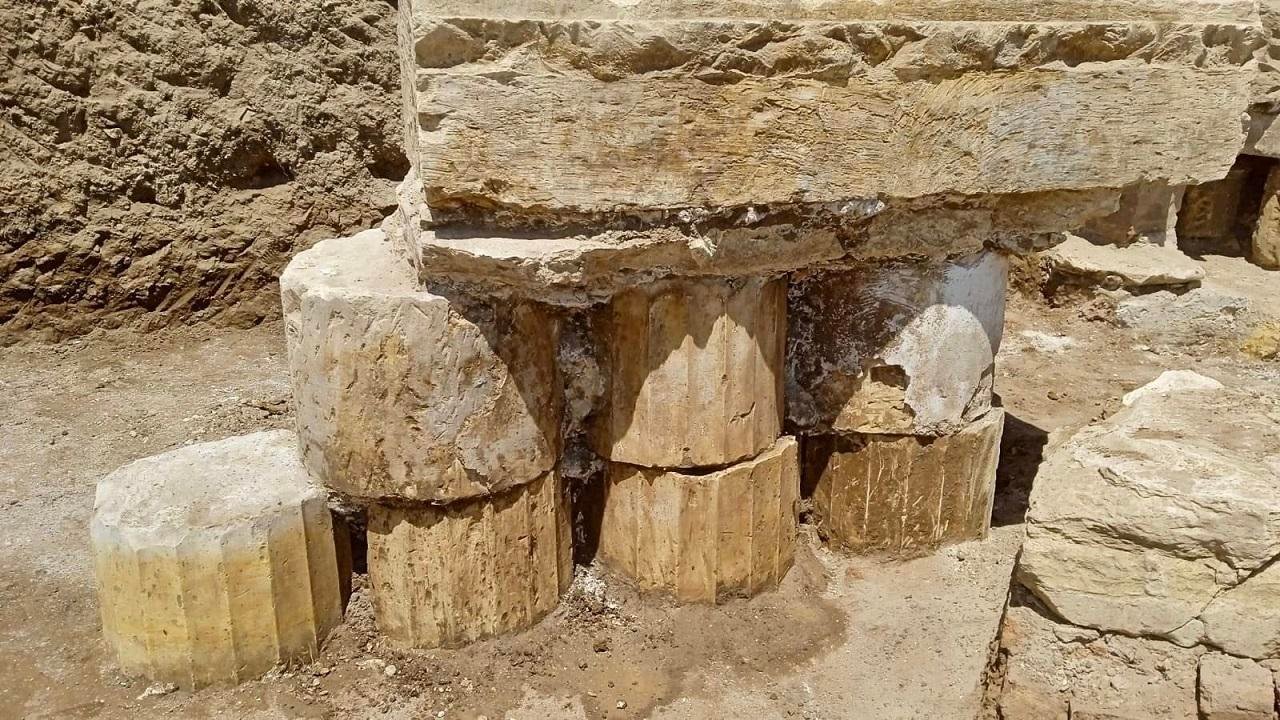
Among the noteworthy discoveries are traces of a Roman basilica, which showcase advanced architectural techniques. Excavations revealed that the basilica was built using elements from an older Doric temple, illustrating how ancient builders repurposed materials to create new structures. The use of large stone blocks suggests that builders aimed for durability and strength, as evidenced by the standing columns, some of which weigh approximately 45 tons. This architectural ingenuity reflects a blending of styles and customs influenced by various cultures over centuries.
A standout find from the site is a marble head representing Aphrodite, the Greek goddess of love and beauty. Measuring approximately 24 by 25 centimeters, this exquisite piece features finely detailed facial characteristics and is emblematic of classical artistry. The craftsmanship implies high artistic standards and a thriving cultural scene within the city during its later periods, suggesting that Ihnasya was not only a political nexus but also a significant cultural hub.
Continuity of Activity Through the Ages
Additional artifacts, including fragments of relief sculptures and architectural elements along with clay molds for coin production, mark the ongoing activity in Ihnasya long after the pharaonic era. This evidence points to an enduring local economy intertwined with regional trade and administrative functions. The archaeological record signals a complex societal structure where religious practices, civic duties, and economic activities flourished, adapting to various influences through epochs.
As researchers delve deeper into the remains of Ihnasya, they aim to illustrate the shifts in its religious spaces, public buildings, and urban infrastructure throughout time. These layers of history reflect how cultural interactions were navigated, with ancient Egyptian practices coexisting alongside Greek and Roman traditions.
The discoveries in Ihnasya not only enhance our understanding of ancient Egyptian civilization but also provide critical insights into how this prominent city evolved through myriad cultural influences. Ongoing studies will further shine a light on the adaptive strategies of its inhabitants in response to changing political and social landscapes over Egypt’s extensive history.