
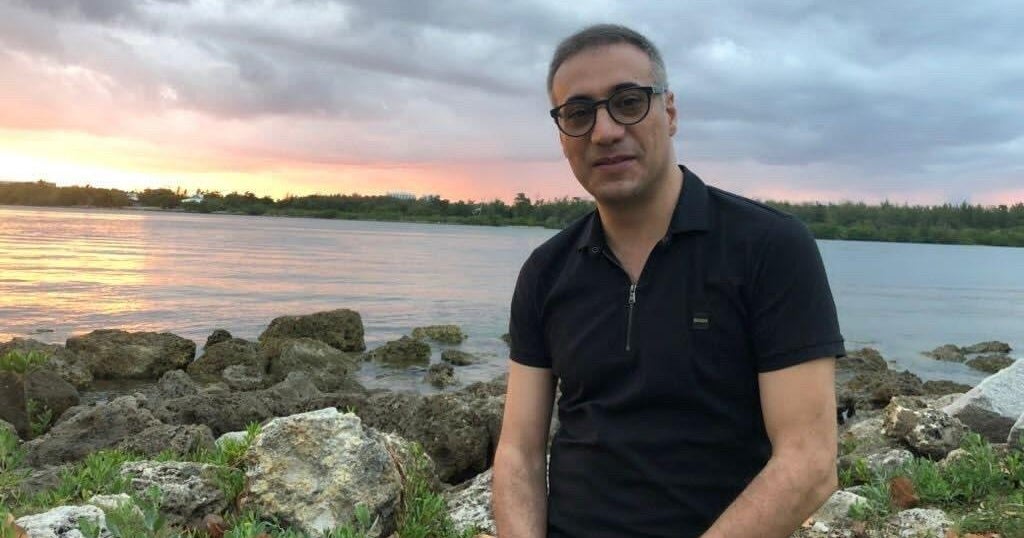
CBS News recently revealed a voice memo from Reza Valizadeh, an Iranian American journalist who has been imprisoned in Evin Prison in Tehran for over a year. Valizadeh’s timely message touches upon the release of 20 Iranian sailors by the U.S. and reflects his urgent plea for better medical treatment while he remains detained.
Valizadeh’s Plea for Justice
In his memo, Reza Valizadeh identifies himself as a colleague speaking from his cell in Evin Prison. He draws attention to the recent release of 20 Iranian sailors by the United States on May 21, contrasting their freedom with his ongoing detention alongside three other American citizens. Valizadeh expresses his disappointment that the U.S. government did not negotiate for their release in exchange.
Valizadeh emphasizes the dire health conditions faced by himself and his fellow detainees, who are suffering from multiple ailments without access to adequate medical care. He mentions that the U.S. could have at least demanded improved medical services for them in the negotiations, showing how critical their situation is while highlighting the inadequacies of their current living conditions.
The Implications of Negotiations
In his message, Valizadeh raises questions regarding the nature of U.S. concessions that led to the release of the Iranian sailors. He expresses curiosity about what exchange the U.S. government made, suggesting that if the priority was not the release of American hostages, it should have been. Valizadeh respects any strategic decisions but hopes for greater attention to the plight of imprisoned individuals like himself.
He articulates a poignant sentiment that even partial alleviation of the physical and psychological pressures they endure would signify a glimmer of hope. His words emphasize that the moral responsibility of ensuring humane conditions should accompany diplomatic negotiations.
The Context of His Message
Valizadeh’s memo alludes to an incident on May 21, potentially referring to the seizure of the merchant vessel Touska earlier that month. This seizure was noted by U.S. Central Command, which indicated that 22 crew members were taken for attempting to breach a U.S.-enforced blockade. This context illustrates the complex nature of U.S.-Iran relations and how individual lives can become collateral in broader geopolitical conflicts.
As Valizadeh concludes his message with a simple “thank you” and “goodbye,” it’s clear that he hopes his plea is heard, not just as an isolated cry for help but as a representation of the countless individuals suffering in similar situations around the world. His voice memo serves as a stark reminder of the often-overlooked human dimension in diplomatic engagements.
Valizadeh’s situation highlights the urgent need for individuals, governments, and organizations to consider the real consequences of foreign policy decisions, particularly those that involve human lives. As the conversation around U.S.-Iran relations continues, the focus should not only be on negotiations but also on ensuring the dignity and rights of those affected by such policies.