
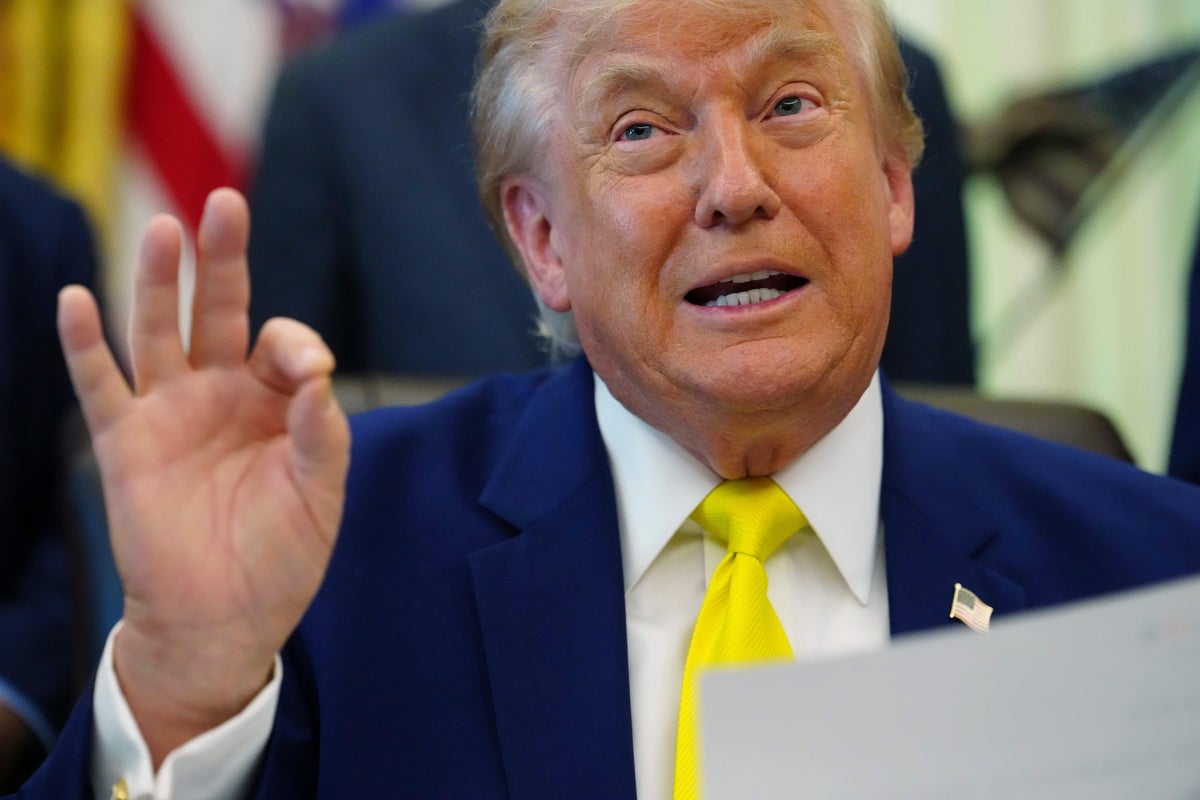
President Donald Trump recently made headlines by expressing his willingness to meet with Mojtaba Khamenei, the new supreme leader of Iran. This statement comes in light of the ongoing tension between the two nations, particularly after the U.S. executed air strikes that reportedly resulted in the deaths of Khamenei’s father, wife, and child.
Willingness to Engage Diplomatically
During a press conference, Trump stated, “I would be honored to meet him,” showcasing an openness to diplomatic dialogue despite the complex and fraught history between the two leaders. A reporter inquired whether Khamenei might harbor resentment due to recent military actions taken by the U.S., to which Trump responded with a hint of humor, acknowledging that he may not be Khamenei’s favorite person. However, he noted that Khamenei is a professional with a strong reputation in certain circles.
Recent Developments in the Middle East
The geopolitical landscape remains volatile. In a related incident, the U.S. State Department issued warnings for American citizens traveling in the Middle East due to heightened tensions in the region. An advisory highlighted that the security environment is unpredictable and subject to rapid changes, especially after Iranian strikes on Kuwait resulted in fatalities and injuries.
In another serious development, oil supply prospects have triggered alarms among executives in the energy sector. Since the commencement of military operations in Iran, gas prices have surged significantly. Experts predict that unless the conflict de-escalates, prices could spike further due to decreasing oil supplies. The Strait of Hormuz, a crucial route through which around 34% of the world’s oil is transported, has been effectively shut down by Iran.
Concerns Surrounding Nuclear Weapon Inspections
Amid these tensions, the UN nuclear watchdog, the International Atomic Energy Agency (IAEA), has reported challenges in conducting inspections of Iranian nuclear facilities. A confidential report revealed that the agency is currently unable to disclose any details regarding the country’s enriched uranium stockpile or whether Iran has halted its enrichment activities. The IAEA emphasized the urgency of Iran complying with its obligations under the Nuclear Non-Proliferation Treaty.
This situation has raised alarms internationally, particularly given the history of conflict in the region and the potential for further escalation if diplomatic avenues are not pursued. As the U.S. grapples with its foreign policy in the Middle East, stakeholders globally are watching closely to see how these complexities unfold.
In summary, Trump’s willingness to meet with Khamenei reflects a potential willingness for dialogue amid a backdrop of intense geopolitical tension. The situation remains precarious, with potential implications for global oil supply and regional security. The coming weeks will be crucial in determining whether diplomatic efforts can mitigate the escalating conflicts and their impact on global affairs.