
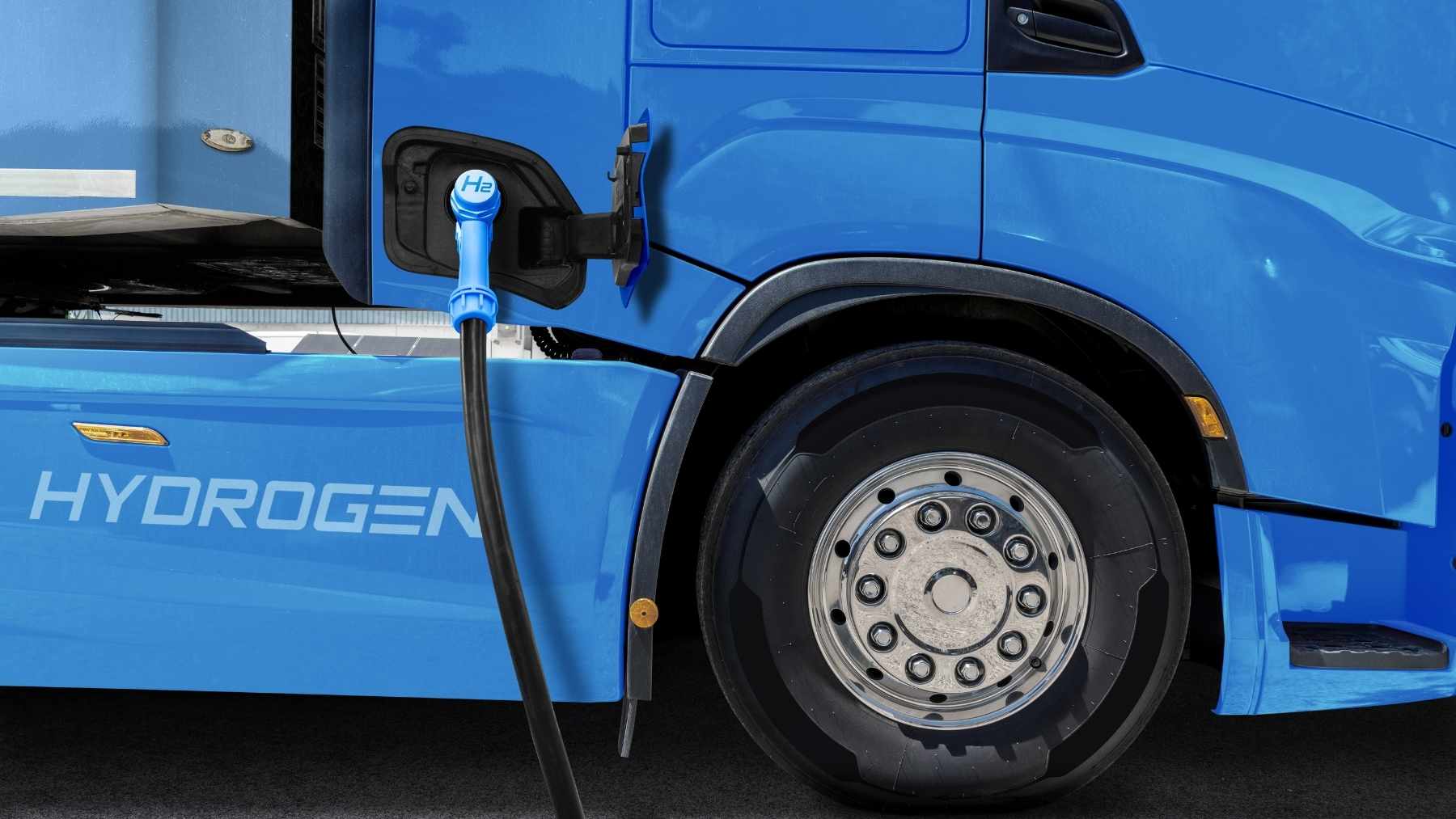
While discussions around hydrogen’s role in U.S. trucking are ongoing, the supply chain for Procter & Gamble (P&G) in Riyadh is already utilizing a self-driving hydrogen truck. This significant development highlights a widening gap in ambition between American fleet managers and international advancements in sustainable transportation. With a remarkable range of 930 miles, this truck not only surpasses Toyota’s longest hydrogen model but also challenges the long-held belief that diesel is indispensable for long-haul operations. The true innovation lies not only in the vehicle itself but in the commitment of a Fortune 500 company like P&G to invest in hydrogen as a strategic component of their logistics.
### A Game-Changing Model
The recent launch of a hydrogen-powered heavy-duty truck in Saudi Arabia represents a pivotal moment in freight logistics. Announced on June 4, 2026, by the Kingdom’s Transport General Authority, the project is a collaboration involving P&G, Saudi distributor Ismail Abudawood, and Chinese self-driving firm Hyperview. While U.S. fleets continue to debate hydrogen’s future, P&G has taken a significant step forward by integrating hydrogen freight into its operational framework. The impact of such a partnership could transform how logistics are approached in the U.S., shifting the narrative from theoretical discussions to practical applications.
### Real Numbers and Capabilities
According to the Transport General Authority, the truck is powered by clean hydrogen, emits zero carbon emissions, and has a refueling time of just minutes. With its ability to travel up to 1,500 kilometers—or about 930 miles—on a single fill, it comfortably exceeds the 500-mile threshold set by Toyota’s hydrogen truck in Southern California. This advancement brings the prospect of hydrogen-powered vehicles into serious consideration for long-haul routes.
The autonomous feature of the vehicle aims to enhance operational efficiency, allowing for more effective logistics management rather than fully replacing human drivers. This represents a balanced approach where advanced technology complements human capabilities rather than entirely eliminating them from the equation.
### The Necessity of Commitment
Historically, hydrogen trucking has faced challenges securing buyer commitments essential for justifying infrastructure investments. In Saudi Arabia, P&G’s involvement as an anchor shipper is crucial for establishing the necessary framework that supports hydrogen fuel cell technology. This collaboration eliminates the uncertainties that have plagued similar initiatives in the U.S., where partnerships and commitments often stall or fail to materialize.
A prime contrast exists in the U.S. market, where companies like Nikola and Hyzon have struggled with financial viability, leading to a stagnation of hydrogen trucking momentum. While companies such as Toyota continue to explore hydrogen solutions, the overall quantity of hydrogen trucks on American roads remains limited.
### Global Trends and U.S. Reactions
On a global scale, the transition to zero-emission trucks has been rapidly advancing, predominantly favoring battery-electric solutions. In the first half of 2025, nearly 90,000 zero-emission trucks were sold, with batteries constituting 97% of these units. This data underscores a pressing need for U.S. trucking to reevaluate its stance on hydrogen, especially as the American policy landscape has recently seen the withdrawal of significant funding for clean-energy initiatives. As a result, U.S. hydrogen adoption timelines have been pushed back, raising questions about the country’s position in developing sustainable freight solutions.
### The Future of Logistics with Hydrogen
The logistics challenges that hydrogen vehicles are addressing are particularly well-suited for environments where weight and range are critical. P&G’s Saudi route provides an ideal case study: long, straightforward logistics flows paired with ample capacity, thus justifying the investment in hydrogen infrastructure. This model contrasts sharply with the current U.S. landscape, where structural limitations and inconsistent commitments complicate hydrogen’s role in the logistics sector.
The introduction of autonomous driving technology further shifts the landscape, enabling hydrogen trucking to compete against traditional diesel trucks without the added cost of labor. As companies like Hyperview expand hydrogen truck manufacturing capabilities, the potential for the Gulf region to become a leading exporter of hydrogen technology before the North American market recovers becomes increasingly plausible.
As the domestic conversation about hydrogen’s viability continues, P&G’s experience in Riyadh has turned theoretical discussions into actionable logistics planning, posing a pivotal question: will American fleets take the lessons learned from this innovative model or remain hesitant while others advance?