
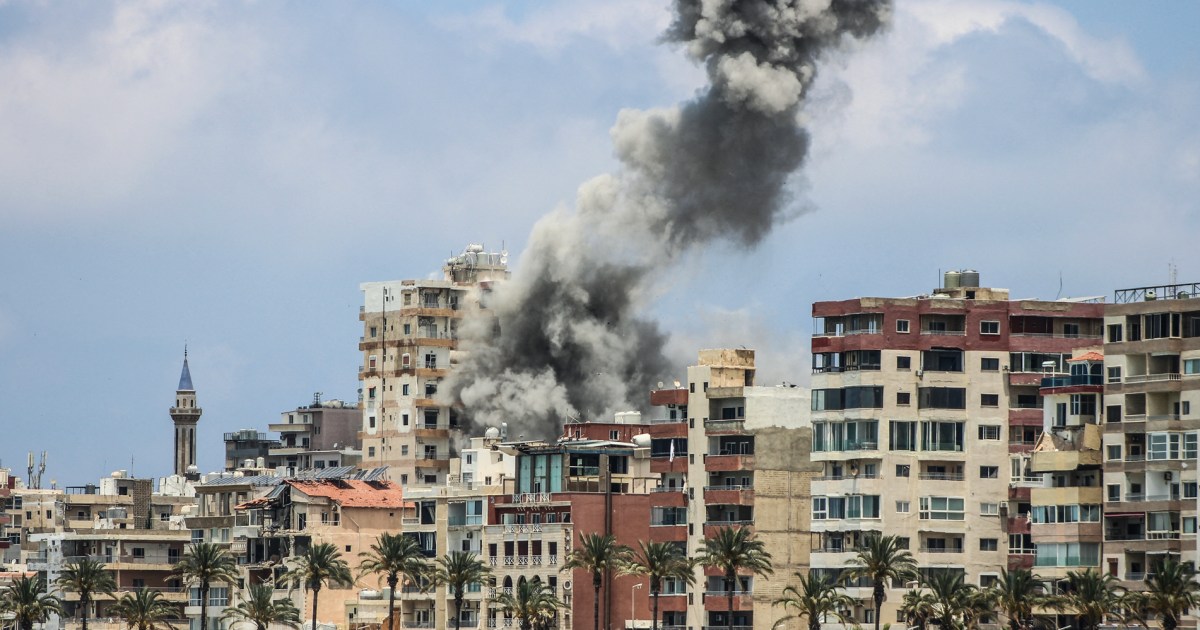
In the troubling landscape of ongoing conflicts, the resilience of individuals in affected areas is truly poignant. The stories emerging from Tyre, Lebanon, reflect a deep sense of anxiety and an unwavering attachment to their homes, even in the face of danger. As families navigate the uncertainties brought on by warfare, their struggles highlight the human costs of conflict.
Experiencing Fear and Uncertainty
One hotel employee in Tyre, who preferred to remain unnamed out of fear for his safety, shared that many guests have recently departed due to escalating tensions. “We have about ten people still here,” he mentioned. “Most want to remain in Tyre, while a few are at a loss regarding where to go next.” The worker himself has chosen to stay, saying that many families have fled the area. He acknowledged the palpable fear that many residents feel, a sentiment he described as entirely human, yet he chooses to hold his ground.
Impact of Past Conflicts
Lily Hawila, a 29-year-old English teacher from Al Houch, a neighborhood not far from Al Hara, has also been forced to leave. With her own apartment previously damaged during the violent clashes of 2024, she expressed uncertainty about its current state. “After we repaired it following the ceasefire in November, I now fear for its condition. All the buildings in our vicinity are now reduced to rubble.” As tensions reignited, she had to find temporary shelter for her mother and brother, who had come to visit from Poland, seeking refuge in the Chouf Mountains.
Hawila’s father remains in Tyre, choosing to stay with his elderly mother in Al Bass, another district facing significant instability. “I worry about him as Al Bass is also far from secure,” she confessed.
The Choices of Caregivers
Sana Abou Zeid, a mother of three, resides in the crowded area of Al-Masaken. She shared her routine of fleeing to her children whenever evacuation orders are issued. “When it’s safe, we return home, but the uncertainty is always present.” With one son serving in the Lebanese army and her younger child still in high school, her family embodies a strong commitment to their hometown despite the perilous circumstances. “My children are unwilling to leave Tyre, and I cannot abandon them.”
Tragically, while speaking with a reporter, Zeid learned that her street had just been bombed, resulting in fatalities. “We are continuously anxious,” she said, her voice heavy with concern. “We can only hope to remain where we are without further displacement and that, one day, we can go home again.”
In these narratives, the people of Tyre display remarkable strength amid devastation, prioritizing family ties and community resilience despite the immediate threats to their safety. Their stories illuminate the deep emotional stakes involved in any conflict, emphasizing that for many, home is not merely a location but a vital part of their identity and wellbeing.